

Photo Bert Kaufmann from Roermond, Netherlands, CC BY-SA 2.0
Roma · Lazio
Things to see in Rome – page 3
Page 3 of 15 of historic places in Rome.
Historic Centre of Rome, the Properties of the Holy See in that City Enjoying Extraterritorial Rights and San Paolo Fuori le Mura
- 1,372historic places
- 2,748,109inhabitants
- 21 maltitude
The town
Rome (Italian and Latin: Roma), the 'Eternal City', is the capital and largest city of Italy and of the Lazio region. It's the famed city of the Roman Empire, the Seven Hills, La Dolce Vita, the Vatican City and Three Coins in the Fountain. Rome, as a millennia-long centre of power, culture and religion, was the centre of one of the greatest civilisations ever, and has exerted a huge influence over the world in its circa 2500 years of existence.
The historic centre of the city is a UNESCO World Heritage Site.
Text from Wikivoyage, CC BY-SA, abridged · Wikivoyage
1372 places
Archaeological sites 650


Show all 43 places
 Roman houses of the Caelian
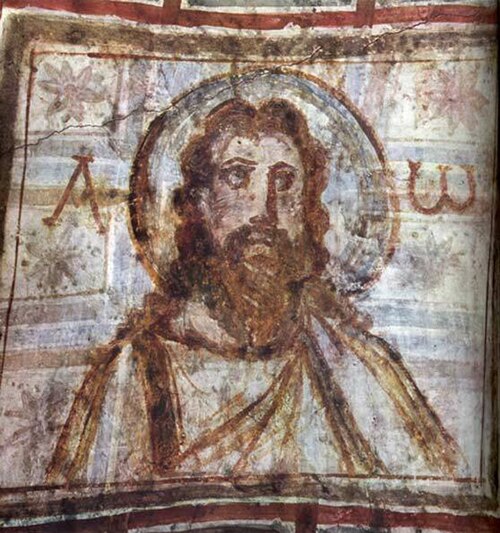 Catacomb of Commodilla
 Cloaca Maxima
 Temple of Castor and Pollux
 Baths of Trajan
 Licinian Tomb
 Villa Mazzanti
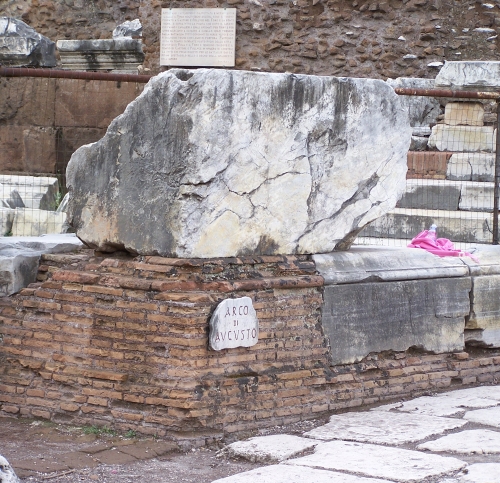 Arch of Augustus
 Comitium
 Flavian Palace
 Farnese Gardens
 Hypogeum of via Livenza
 Septizodium
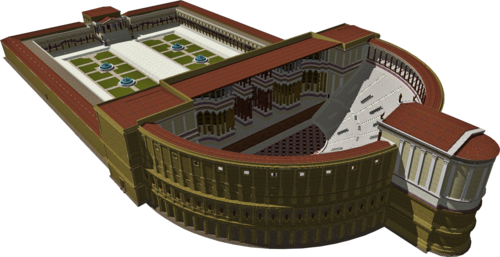 Theatre of Pompey
 Temple of Caesar
 Temple of the Sun
 Temple of Antoninus and Faustina
 Temple of Bellona
 Temple of Jupiter Tonans
 Temple of Vespasian and Titus
 Baths of Agrippa
 Aqua Anio Vetus
 Emporium
 Forum Boarium
 Domus aputa
 Ponte Milvio
 Portus
 Rostra
 Roman Theatre of Ostia
 Temple of Divus Augustus
 Baths of Nero
 Tomb of Geta
 Via Salaria
 Aqua Traiana
 Basilica of Neptune Domus Tiberiana
 Mausoleum of Maxentius
Villas and palaces 291


- UNESCO


Show all 27 places
 Villa Madama
 Casina di Raffaello
 Roman College
 Galleria Alberto Sordi
 Palazzo San Callisto
 Palazzo Massimo alle Colonne
 Villa Poniatowski
 Palazzo Brancaccio
 Palazzo Braschi
 Palazzo Cenci-Bolognetti
 Palazzo Muti
 Palazzo Pamphilj
 Palazzo INA & Palazzo INPS
 Palazzo detto dei Propilei
 Palazzo Serristori
 Palazzo Vidoni-Caffarelli
 Acquario Romano
 Palazzo Albertoni Spinola
 Palazzo del Governatorato
 Palazzo del Viminale
 Palazzo della Consulta
Museums 217


Fortresses and towers 98


Abbeys and monasteries 62

Castles 13


Getting there
By plane: Rome (ROM IATA) has two main international airports
Leonardo da Vinci-Fiumicino Airport (FCO IATA). Rome's main airport is modern, spacious, efficient, and well-connected to the city centre. A lot of carriers fly to this Airport. Also, low-cost carriers have flight to and from FCO Airport, like Sarajevo, Belgrade, Dortmund, Larnaca and Paris, Tirana (by Wizzair) and lot of destinations (by Ryanair) The main train station, Roma Termini, can be reached by a dedicated express train, the Leonardo Express (14€ each way, 30-minute non-stop journey). Be careful using the Leonardo Express, though, as many people online have complained of falling foul of its confusing rules and ended up being fined by the conductor once on the train. Coaches from several companies may stop at other places too; the average cost is 7€ if booked in advance, up to 9€; the journey takes up to an hour. Regional trains to Rome depart from the same station as the Leonardo Express; they cost significantly less (8€ to stations in Rome), but do not stop at Roma Termini. Taxis operate on a fixed fare to the centre (any point within the city's ancient Aurelian Walls). See the main airport article for more details.
Ciampino International Airport (CIA IATA) (Located to the southeast of the capital), ☏ +39 0794941. This small low-cost airport is closer to the city centre than Fiumicino and has no direct train connection.
Text from Wikivoyage, CC BY-SA, abridged · Wikivoyage
What to see, according to Wikivoyage
Italians are very fond of their landmarks; in order to make them accessible to everyone one week a year there is no charge for admittance to all publicly owned landmarks and historical sites. This week, known as "La settimana dei beni culturali", typically occurs in mid-May and for those 7 to 10 days every landmark, archaeological site and museum belonging to government agencies (including the Quirinale presidential palace and gardens, the Colosseum and all of the ancient Forum) is accessible and free of charge.
Government-owned museums and historical sites have free admission on the first Sunday of every month. There are also significant discounts for EU citizens aged 18 to 25, although this will require identification. Note that in 2026, tourist fees were introduced to some particularly busy attractions: the Trevi fountain costs €2 and a €5 Roma Mic card is required for some civic museums including the Napoleonic Museum and the Giovanni Barracco Museum of Ancient Sculpture.
Roma Pass: If you'll be staying in Rome for at least 3 days, consider purchasing the Roma Pass. It is valid for 3 days and costs €58.50 (Aug 2024).
Text from Wikivoyage, CC BY-SA, abridged · Wikivoyage · Underlined names link to our own pages.