



- UNESCO
- Free 1st Sunday
Photo: Public domain · Wikimedia Commons
Archaeological site
Building in Rome, Italy
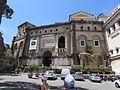
The Temple of Juno Moneta was an ancient Roman temple that stood on the Arx or the citadel on the Capitoline Hill overlooking the Roman Forum. Located at the center of the city of Rome, it was next to the place where Roman coins were first minted, and probably stored the metal and coins involved in this process, thereby initiating the ancient practice of associating mints with temples. In addition, it was the place where the books of the magistrates were deposited.
According to Livy, in 345 BC, at the beginning of hostilities with the Aurunci, the dictator Lucius Furius Camillus decided to summon the aid of the gods by vowing to build a temple to Juno Moneta. When he returned victorious to Rome, the senate appointed two commissioners to construct the temple on the Arx, on the site of the house of Marcus Manlius, who had repelled the attack of the Gauls a generation earlier. The temple was dedicated one year after the vow. Ovid in the Fasti records the same tradition:
The temple stored the Libri Lintei, the records of annually elected consuls, dating from 444 BC to 428 BC. From 273 BC, Roman silver mint and its workshops were attached to the temple. Moneta's guardianship of Roman coinage encouraged Roman moneyers to use this means as a true record for glorifying their families by commemorating heroic family legends.
If still in use by the 4th-century, it would have been closed during the persecution of pagans in the late Roman Empire.
According to legend, it was here that the Roman sibyl foretold the coming of Christ to the emperor Augustus, who was granted a heavenly vision of the Virgin Mary standing on an altar holding the Christ child. Augustus supposedly built an altar on the spot – the altar of heaven or ara coeli – and the church of Santa Maria in Aracoeli rose around it. The original structure cannot possibly date back to the time of Augustus (Rome did not become officially Christian until the 4th century), but by the 6th century the existing church was already considered old. It was later rebuilt, with the present structure dating from the 13th century.
Ancient sources agree that the temple was constructed on the Arx, the northern of the two peaks of the Capitoline hill (summa... in arce, according to Ovid, Fasti 6.183), but no remains of the building have been certainly identified and its precise location has been described as "one of the great enigmas in the topography of ancient Rome". Some scholars believe that it stood on the site now occupied by the church of Santa Maria in Aracoeli, although ancient walls discovered in the cellars beneath the church appear to belong chiefly to shops and houses. Others have argued that the temple was situated in the garden to the southeast of the church, where other walls of tufa and concrete are visible. Although Roman tradition placed the founding of the temple in the 4th century BC, two fragments of Archaic terracotta decoration found in the garden suggest the existence of an earlier building dating to the late 6th or early 5th century, although whether it represents an earlier phase of the temple is unclear.
Text from Wikipedia, the free encyclopedia, under CC BY-SA 4.0. Full article: «Temple of Juno Moneta».
Distances are as the crow flies, not walking or driving.


Temple of Juno Moneta is in Rome, in the province of Roma (Lazio), Italy. GPS coordinates: 41.89385, 12.48317.
Nearby you’ll find: Palazzo Nuovo (0 m away), Museo centrale del Risorgimento (100 m away), Convent of Aracoeli (100 m away).
Text. Wikipedia, the free encyclopedia (CC BY-SA 4.0).
Data. Wikidata (CC0); opening hours and contacts OpenStreetMap (ODbL).
Photos. Wikimedia Commons, author and licence on every image.
Updated 28 October 2026. All sources and licences