



- UNESCO
- Free 1st Sunday
Photo: PubblicUsername, CC BY 4.0 · Wikimedia Commons
Archaeological site
Building in Rome, Italy
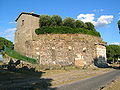
The Villa of the Quintilii (Italian: Villa dei Quintili) is a monumental ancient Roman villa situated beyond the fifth milestone along the Via Appia Antica just outside the traditional boundaries of Rome, Italy. It was first built by the rich and cultured Quintilii brothers Sextus Quintilius Valerius Maximus and Sextus Quintilius Condianus (consuls in 151 AD).
The ruins of this villa suburbana are of such an extent that when they were first excavated, the site was called Roma Vecchia ("Old Rome") by the locals, as they occupied too great a ground, it seemed, to have been anything less than a town. The villa included extensive thermae fed by its own aqueduct and, what was even more unusual, a garden-hippodrome, which dates to the fourth century, when the villa was Imperial property.
The nucleus of the villa was built by the Quintilii brothers Sextus Quintilius Valerius Maximus (proconsul of Asia in 168 AD) and Sextus Quintilius Condianus in the time of Hadrian (r.117-138), as shown by brick stamps found during the excavations of the reception rooms in 1984-87.
The emperor Commodus (r.177-192) coveted the villa so much that he put to death its owners in 182 and confiscated it for himself. Commodus and subsequent emperors then extended and embellished the estate.
From the end of the 4th century the site became a sort of quarry for building materials such as bricks, tuff, marble and metal clamps. Near the Great Exedra hundreds of marble fragments together with the chisel used to tear them from the walls were found.
In 1776 Gavin Hamilton, the entrepreneurial painter and purveyor of Roman antiquities, excavated some parts of the Villa of the Quintilii, still called "Roma Vecchia", and the sculptures he uncovered revealed the imperial nature of the site:
A considerable ruin is seen near this last upon the right hand, and is generally considered to have been the ruins of a Villa of Domitian's nurse. The fragments of Collossal Statues found near this ruin confirms me in this opinion, the excellent sculptour strengthens this supposition...
There he found five marble sculptures, including "An Adonis asleep", that he sold to Charles Townley and which has come to the British Museum and "A Bacchante with the tyger", listed as sold to Mr Greville. The large marble relief of Asclepius found at the site passed from Hamilton to the Earl of Shelburne, later Marquess of Lansdowne, at Lansdowne House, London. The "Braschi Venus" from the site was purchased by Pius VI's nephew, Luigi Braschi Onesti.
Today the archaeological site houses a museum with marble friezes and sculptures that once adorned the villa. The nympheum, the hall of the tepidarium and the baths may also be visited. A grand terrace overlooking the Via Appia Nuova, which dates back to 1784, commands a fine view of the Castelli Romani district. The villa's grounds extended even beyond the route of the Via Appia Nuova. …
The villa's earliest residential and reception areas of the Quintilii brothers are dated to the first decades of the 2nd century between the Hadrianic era and the reign of Marcus Aurelius. The various sectors of the villa were architecturally arranged on different levels connected by courtyards and gardens enclosed by porticoed corridors. The gardens were furnished with ornamental vegetable species and basins with water jets, of which a square-shaped example remains.
This sector belongs to the original nucleus of the villa and the magnificence of the marble coverings still in place indicates that these rooms were a sumptuous reception area where the owners received guests.
The large courtyard (36 x 12 m) was similar to the western sector of Nero's Domus Aurea and used as a meeting and discussion place similar to a small forum. It has Cipollino marble paving still intact and had a portico on one of the long sides. The main reception rooms are its north side and the main room was an octagonal tower with panorama over the rest of the residential part and connected to the upper level of the garden/amphitheatre. It was enlarged and renovated under Commodus. It had a domed roof and four open entrances, each with a vaulted passage, and was heated by a hypocaust. It is probable that this room was used as a winter triclinium (banquet hall) or at least as a discussion area, from which it was possible to observe the landscape towards the valley and any visitors in the open courtyard below. This reception area was on the upper level and connected to the service rooms below (only partially excavated) by a porticoed corridor the walls of which were decorated with marble slabs and lintels in greco scritto and rosso antico. …
Text from Wikipedia, the free encyclopedia, under CC BY-SA 4.0. Full article: «Villa of the Quintilii».
Distances are as the crow flies, not walking or driving.


Villa of the Quintilii is in Ciampino, in the province of Roma (Lazio), Italy. Address: Via Appia Nuova, 1092, Roma. GPS coordinates: 41.83143, 12.55248.
According to OpenStreetMap the opening hours are: Monday to Friday: 9:00–18:00; Saturday: 9:00–14:00. Always check the official website before your visit.
There is an admission charge. Up-to-date prices are on the official website.
Nearby you’ll find: Pyramid of via Appia (600 m away), Casal Rotondo (1.2 km away), Tomb of Rabirii (1.3 km away).
Text. Wikipedia, the free encyclopedia (CC BY-SA 4.0).
Data. Wikidata (CC0); opening hours and contacts OpenStreetMap (ODbL).
Photos. Wikimedia Commons, author and licence on every image.
Updated 28 October 2026. All sources and licences