

Photo Xerones, CC BY 2.0
Palermo · Sicily
Things to see in Palermo
In Palermo the atlas lists 182 historic places: 70 historic villas and palaces, 48 museums, 23 fortresses and towers, 15 archaeological sites, 15 historic theatres, 5 castles, 4 abbeys and monasteries and 2 lighthouses.
Of these, 22 list opening hours, 3 have free entry and 4 are part of a UNESCO World Heritage Site.
Don’t miss: Teatro Massimo Vittorio Emanuele (1897), opera house in Palermo, Italy.
By date of construction, the most common period is the Modern era (59% of dated places) and the Early modern period (28% of dated places).
Arab-Norman Palermo and the Cathedral Churches of Cefalú and Monreale
- 182historic places
- 630,167inhabitants
- 14 maltitude
The town
Palermo (Sicilian: Palermu) is on the northern coast of the Italian island of Sicily. It is a city with a thousand years of history, beautiful Arab-Norman architecture, amazing food, and lively neighbourhoods. It is a bit scruffy around the edges, but a visit of a few days will make you want to stay for weeks.
Text from Wikivoyage, CC BY-SA, abridged · Wikivoyage
182 places
Villas and palaces 70


Show all 46 places
 Palazzo Ajutamicristo
 Natoli Palace
 Cuba Palace
 Villino Favaloro
 Villino Florio
 Palazzo Branciforte
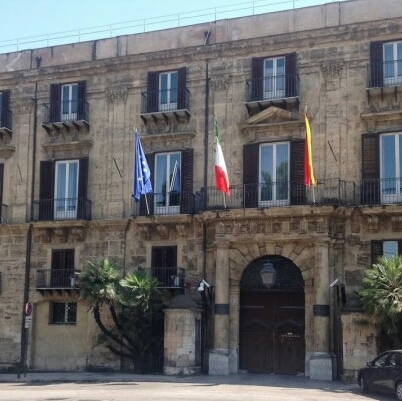 Palazzo d'Orleans
 Villa Castelnuovo
 Palazzo Ziino
 Villa Montalbo Boscogrande
 Villa Trabia alle Terre Rosse
 Palazzo Comitini
 Villa Napoli
 Palazzo Sant'Elia
 Palazzo Isnello
 Palazzo Valguarnera-Gangi
 Villa Raffo
 Villa Virginia Caruso
 Villa Niscemi
 Palazzo Artale
 Palazzo Sclafani
 Villa Sofia
 Palazzo Alliata di Villafranca
 Archbishop's Palace
 Palazzo Asmundo
 Bonocore Palace
 Palazzo Campofranco
 Palazzo Jung, Palermo
 Villa Alliata di Pietratagliata
 Category:Palazzo del Monte di Pietà (Palermo)
 Palazzo Drago Ajroldi
 Mirto Palace
 Palazzo Sambuca
 Palazzo Scavuzzo
 Palazzo Tomasi di Lampedusa
 Palazzina dei Quattro Pizzi
 Palazzo Moncada di Paternò
 Villa Alliata Cardillo
 Hotel de France
 Palazzo Conte Federico
Museums 48


- UNESCO


Show all 21 places
 Sicilian Ethnographic Museum Giuseppe Pitrè
 Museum of palenteology and geology Gaetano Giorgio Gemmellaro
 Chiesa di San Cataldo
 Museo dell'Islam
 Museo del Risorgimento Vittorio Emanuele Orlando
 Pietro Doderlein museum
 Palazzina Cinese
 Santa Maria dello Spasimo
 Oratorio dei Bianchi
 Cantieri Culturali alla Zisa
 Palatine Chapel
 Albergo Delle Povere
 Palermo Museum
 Centro Internazionale di Fotografia Stanze al Genio
Fortresses and towers 23


Archaeological sites 15


Historic theatres 15


Castles 5

- UNESCO


Getting there
By plane: Palermo Airport (PMO IATA Falcone–Borsellino Airport) (32 km west of the city at Punta Raisi), ☏ +39 0917020273. Has flights incoming from other Italian centres and major European cities on a regular basis. Purchase bus ticket from the ticket office next to the bus at the airport. From city centre to the airport, purchase ticket from the driver. There are 1-2 buses per hour, 50 minutes, €6.30 one way (€10 return if bought online). The usual taxi and car rental services are also available at the airport. Trenitalia also offers regular service at the airport at the Punta Raisi station located in the basement of the terminal. Cost to take the train to Palermo Centrale is €6.50 (March 2023). A trip to Palermo Centrale takes just under an hour, whether by bus or by train.
By ferry: Ferries steam between the port of Palermo and the following several Italian ports on a regular basis: Genoa, Civitavecchia, Naples and Cagliari (Sardinia). International routes are available from Valletta (Malta) and Tunis (Tunisia). You can view and compare schedules and prices for ferries to Palermo on Ferryhopper.
By train: There are overnight through trains from Rome, Naples and even Milan via the train ferry across the Strait of Messina. The main railway station, Palermo Centrale, is located at Piazza Giulio Cesare.
Text from Wikivoyage, CC BY-SA, abridged · Wikivoyage
What to see, according to Wikivoyage
Because of its variety of monuments, attesting to its long and rich history, and the number of other cultural and naturalistic attractions, Palermo can offer a very interesting experience to the visitor interested in exploring it. The Cathedral of Monreale, the Royal Palace and Palatine Chapel, the Church of San Giovanni degli Eremiti, the Church of Santa Maria dell’Ammiraglio, the Church of San Cataldo, the Palermo Cathedral, the Zisa Palace and the Admiral’s Bridge, comprise together with the cathedral in Cefalù the world heritage site “Arab-Norman Palermo and the Cathedral Churches of Cefalù and Monreale”.
Palermo Cathedral. Honey-coloured and Catalan influenced. Frederick II, Barbarossa's grandson, died in 1250 and is buried here, far from his ancestral home above Hohenstaufen, Germany. Frederick's sarcophagus is of porphyry dyed with imperial purple. Palatine Chapel (Cappella Palatina). It's one of the artistic gems of Palermo: a chapel with magnificent mosaics and Arabian-style decorations, among the most beautiful in the world. It is inside of Palazzo dei Normanni. included in the Normans palace tickets. Palazzo dei Normanni (Palace of the Normans).
Text from Wikivoyage, CC BY-SA, abridged · Wikivoyage · Underlined names link to our own pages.