

Photo: Unknown author Unknown author, Public domain · Wikimedia Commons
At a glance
- Type
- Museum
- Period
- Modern era, 1927
- Founder
- Alessandro Lualdi
- Protection
- Italian national heritage
- Coordinates
- 38°06′49″ N, 13°21′20″ E
- Address
- Via Matteo Bonello, 2, 90100 Palermo
History and description
The Diocesan Museum of Palermo (Italian - MUDIPA or Museo diocesano di Palermo) is a museum of religious art in Palermo on Sicily, housed in a number of rooms in the Palazzo Arcivescovile opposite Palermo Cathedral.
Layout
This houses the welcome desk as well as artworks from the Norman and Swabian eras.
This contains works from the 14th and 15th centuries as well as imported 14th century Pisa works:
1171, Madonna of the Pearl, tempera on panel, anonymous, from Santa Maria del Cancelliere church
13th century, Madonna della Spersa, tempera on parchment mounted on panel, anonymous, from San Nicolò all'Albergheria church
1388, Roll of Dead Brothers, tempera on panel, Antonio Veneziano, commissioned by the Confraternita dei Disciplinanti, from San Nicolò lo Reale church
1419, Coronation of the Virgin Mary with St John the Baptist and St Nicholas of Bari, tempera on panel, Master of the Coronations, from San Nicolò lo Reale church.
15th century, Abraham and the Three Angels with a Commissioner, with an inscription "tres vidit et unum adoravit" (three see and one adores), tempera on panel, Master of the Coronations, from the basilica della Santissima Trinità del Cancelliere known as la Magione.
15th century, Madonna and Child, tempera on panel, anonymous Tuscan painter, from San Giovanni dei Napoletani church.
As its current name suggests, it houses crosses.
Objects from excavations at the Archepiscopal Palace from the Archaic age, Byzantine period and medieval era.
This houses 15th-century sculptures by artists such as Domenico Gagini, Pietro de Bonitate and Francesco Laurana. Those by Gagini are:
Madonna, marble with a loggia
Scenes from the Lives and Martyrdoms of Saint Christina and Saint Nympha, eight panel marble bas-relief, Domenico Gagini.
XVI secolo, Saint Christina, marble half-bust.
This contains 16th-century sculptural fragments from Palermo Cathedral by Antonello Gagini and his workshop, removed during Ferdinando Fuga's rebuilding, along with a plaster reconstruction by Prof. Salvatore Rizzuti and his students at the Accademia di Belle Arti di Palermo and the sculptures from the Tribuna of Antonello Gagini in the cathedral.
Marble candelabra, Antonello Gagini.
Christ Falling and Crucifixion, marble bas-relief which inspired Raphael's Christ Falling on the Way to Calvary, Antonello Gagini.
The Flight into Egypt, marble bas-relief, Antonello Gagini.
1544, Scenes from the Passion, marble bas-reliefs, Fazio and Vincenzo Gagini. …
Selected works
1685–1686, Abraham and the Three Angels, oil on canvas, Pietro Aquila.
1622, Visitation, painting on panel, produced for the Congregazione di Santa Maria di Gesù, Pietro D'Asaro.
14th century, Virgin Mary with Saints, triptych, Jacopo di Michele
14th century, Saint Anne with Saints, triptych, Jacopo di Michele
15th century, Aedicula with the Virgin Mary Adoring the Christ Child, with God the Father Blessing, glazed terracotta relief, Andrea della Robbia, from San Nicolò al Borgo church
Restored works with temporary exhibitions:
15th century, Saint Barbara, painting on panel, originally from the cathedral and housed in the 'Antialcova (temporary exhibition), Cristofaro Faffeo.
1580–1581, Madonna of the Rosary with Saints, painting on panel from San Giacomo dei Militari church and housed in the Sala Torre (temporary exhibition space), Simone de Wobreck.
17th century, Saint Cecilia, painting on canvas, from the former Istituto del Sacro Cuore, then the villa Pignatelli Aragona Cortes at Olivuzza, now housed in the Sala Rossa of the bishops' rooms or in the Sala Novelli, attributed to Andrea Carreca.
17th century, Portrait of Monsignor Ferdinando Bazan y Manriquez, Archbishop of Palermo, oil on canvas, housed in the Sala Verde (temporary exhibitions)
Text from Wikipedia, the free encyclopedia, under CC BY-SA 4.0. Full article: «Museo Diocesano of Palermo».
Timeline
- 1927Founded
Events and people from Wikidata (CC0).
Photos
Getting there
Palazzo Reale-OrleansTrain, nearest
500 m as the crow flies
Museo Diocesano of PalermoVia Matteo Bonello, 2, 90100 Palermo
Palermo (Siremar)1.6 km
Aeroporto di Palermo Falcone e Borsellino23.4 km
Distances are as the crow flies, not walking or driving.
Loading map…
Nearby
See on the mapMore museums in Sicily


- UNESCO


Frequently asked questions
Where is Museo Diocesano of Palermo?
Museo Diocesano of Palermo is in Palermo, in the province of Palermo (Sicily), Italy. Address: Via Matteo Bonello, 2, 90100 Palermo. GPS coordinates: 38.11374, 13.35561.
What are the opening hours of Museo Diocesano of Palermo?
According to OpenStreetMap the opening hours are: Monday to Saturday: 9:30–18:00; Sunday: 10:00–18:00. Always check the official website before your visit.
How much does it cost to visit Museo Diocesano of Palermo?
There is an admission charge. Up-to-date prices are on the official website.
Is Museo Diocesano of Palermo wheelchair accessible?
According to OpenStreetMap data, the site is wheelchair accessible.
How old is Museo Diocesano of Palermo?
Wikidata dates it to 1927.
What else is there to see near Museo Diocesano of Palermo?
Nearby you’ll find: Archbishop's Palace (0 m away), Palazzo Asmundo (100 m away), Palazzo Artale (200 m away).
Sources and licences
Text. Wikipedia, the free encyclopedia (CC BY-SA 4.0).
Data. Wikidata (CC0); opening hours and contacts OpenStreetMap (ODbL).
Photos. Wikimedia Commons, author and licence on every image.
Credits for the 7 photos
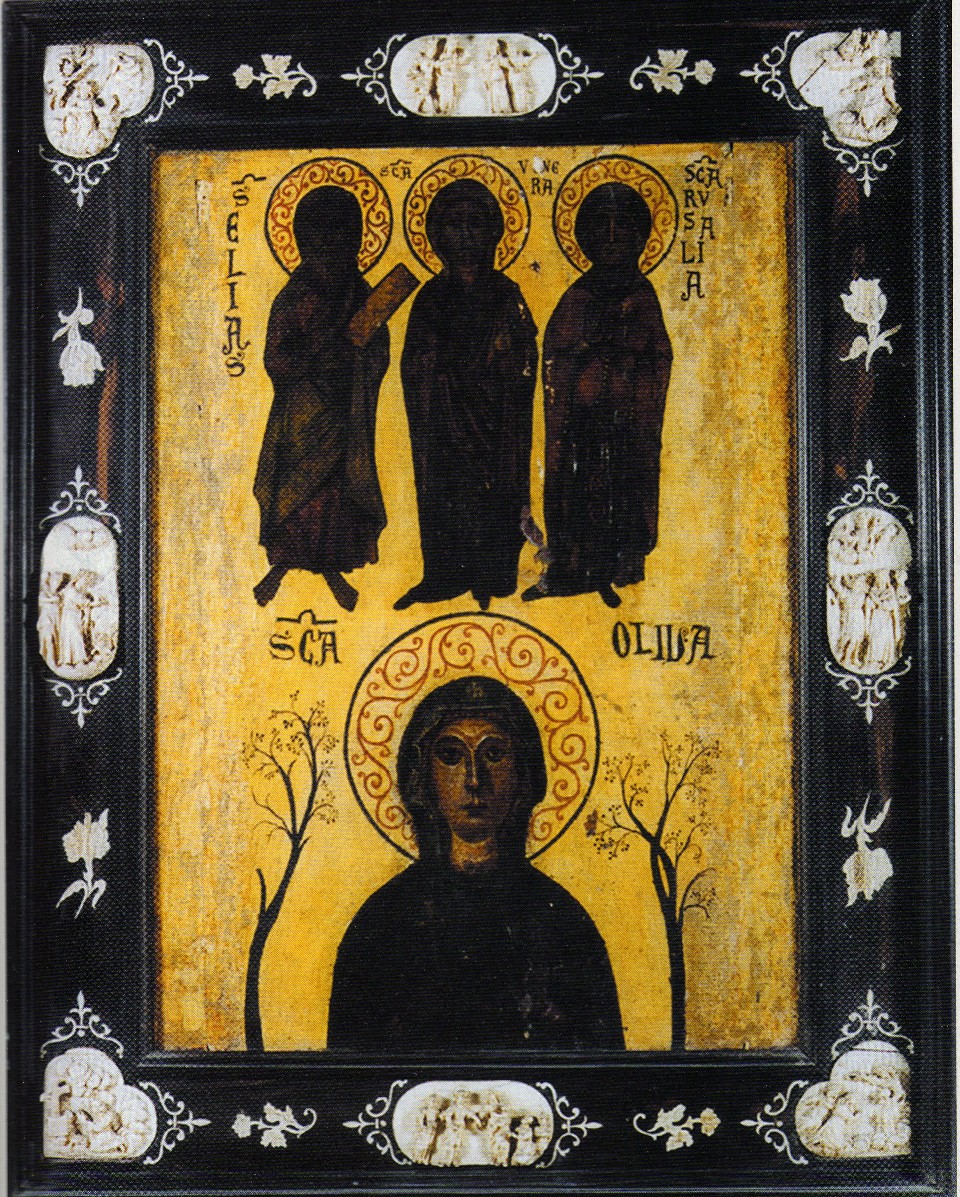
- Oliva Rosalia001rid — Unknown author Unknown author, Public domain
- Giacomo serpotta, allegoria della clemenza (palermo, museo diocesano) — Sailko, CC BY 3.0
- Giacomo serpotta, allegoria della fede (palermo, museo diocesano) — Sailko, CC BY 3.0
- Sant'Agata fine del XV secolo Scuola di Domenico Gagini Prov. Cattedrale di Palermo (cappella di S. Cristina) Museo Diocesano di Palermo P3260365 (50911787718) — Teresa Grau Ros from Barcelona, CC BY-SA 2.0
- Gevaert Edizione Randazzo N. 0978 - Palermo - Via Matteo Bonello. Verso de la cartolina postale italiana — unbekannter Fotograf für Gevaert, Public domain
- Silizien. 2, Palermo 1905 (139963973) — Max Georg Zimmermann, Public domain
- Madonna dell'Itria (25844682387) — Teresa Grau Ros from Barcelona, CC BY-SA 2.0
Updated 28 October 2026. All sources and licences