




Photo: Enzian44, CC BY 3.0 · Wikimedia Commons
Museum, 1909
Sicilian Ethnographic Museum Giuseppe Pitrè
Museum in Palermo, Sicily, Italian
At a glance
- Type
- Museum
- Period
- Modern era, 1909
- Area
- 1,200 m²
- Protection
- Italian national heritage
- Coordinates
- 38°10′01″ N, 13°19′49″ E
- Address
- Via Duca Degli Abbruzzi, 1 Via Delle Pergole, 74, - Palermo
History and description
The Sicilian Ethnographic Museum Giuseppe Pitrè (Italian: Museo Etnografico Siciliano Giuseppe Pitrè) is a museum in Palermo, Italy.
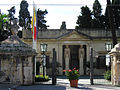
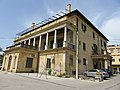
The museum has two locations: the main part is located in one of the Palazzina Cinese's guesthouse, inside La Favorita Park, and another is in the Albergaria quarter, within the historic centre of Palermo.
The museum was founded by the scholar Giuseppe Pitrè in 1909 and is named after him. It houses a rich library containing more than 30,000 volumes and provides many types of documentation about Sicilian culture, traditions and folklore.
Costumes
The costume section opens with men's clothes. The most primitive is that of shepherds consisting of a jacket and breeches (vrachi) formed with goat skins. Animal skin also the pocket, carried crossbody, where wine and food were placed, and the typical footwear, the pilu scarpi. Various models of festive costume, of which the breeches (càusi), the waistcoat ('u cileccu), the jacket, the cap (birritta) or a turban (turbanti) are some of the typical elements. The museum has different types of hats, related to street life and fields, such as curina cappeddu, worked with straw filaments. Shirts and underpants are part of a newer kit. With fine linen, the shirt is wide and wide, while the underpants are always long and white. The base of heavier garments, including the scappularu, a long cloak with a hood, was orbace, a heavy woolen fabric, which in Sicily was almost always colored in black. Of orbace for example is the typical costume of the peasants of Modica.
On display in the museum are disparate simple women's costumes for fabrics and cutting, sumptuous for brocades and sewers. Those of the peasants were usually composed of a cotton bust (dispersals), the petti coat (baschina) and an apron (falaro).
Text from Wikipedia, the free encyclopedia, under CC BY-SA 4.0. Full article: «Sicilian Ethnographic Museum Giuseppe Pitrè».
Timeline
- 1909Founded
Events and people from Wikidata (CC0).
Photos
Getting there
Palermo San Lorenzo ColliTrain, nearest
1.3 km as the crow flies
Sicilian Ethnographic Museum Giuseppe PitrèVia Duca Degli Abbruzzi, 1 Via Delle Pergole, 74, - Palermo
Molo per imbarco Napoli (ascensore)4.6 km
Aeroporto di Palermo Falcone e Borsellino20.1 km
Distances are as the crow flies, not walking or driving.
Loading map…
Nearby
See on the mapMore museums in Sicily


- UNESCO


Frequently asked questions
Where is Sicilian Ethnographic Museum Giuseppe Pitrè?
Sicilian Ethnographic Museum Giuseppe Pitrè is in Palermo, in the province of Palermo (Sicily), Italy. Address: Via Duca Degli Abbruzzi, 1 Via Delle Pergole, 74, - Palermo. GPS coordinates: 38.16683, 13.33038.
Is Sicilian Ethnographic Museum Giuseppe Pitrè wheelchair accessible?
According to OpenStreetMap data, the site is partly wheelchair accessible.
How old is Sicilian Ethnographic Museum Giuseppe Pitrè?
Wikidata dates it to 1909.
What else is there to see near Sicilian Ethnographic Museum Giuseppe Pitrè?
Nearby you’ll find: Palazzina Cinese (0 m away), Villa Lampedusa (400 m away), Villa Niscemi (400 m away).
Sources and licences
Text. Wikipedia, the free encyclopedia (CC BY-SA 4.0).
Data. Wikidata (CC0); opening hours and contacts OpenStreetMap (ODbL).
Photos. Wikimedia Commons, author and licence on every image.
Credits for the 2 photos
- Palermo23 — Enzian44, CC BY 3.0
- 2012-11-03 Museo Pitre Ingresso 2560x1920 — Robitabu, CC BY-SA 3.0
Updated 28 October 2026. All sources and licences