




Photo: tato grasso, CC BY-SA 3.0 · Wikimedia Commons
At a glance
- Type
- Museum
- Period
- Early modern period, 1806
- Style
- Eclectic architecture
- Architect
- Giuseppe Venanzio Marvuglia
- Commissioned by
- Ferdinand I of the Two Sicilies
- Area
- 930 m²
- Coordinates
- 38°09′60″ N, 13°19′49″ E
- Address
- Viale Duca Degli Abruzzi 1, 90146 Palermo
History and description
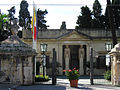
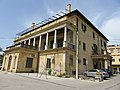
The Chinese Palace (Italian: Palazzina Cinese), also known as Real Casina alla Cinese, is a former royal residence of the House of Bourbon-Two Sicilies designed in the style of Chinoiserie. It is located in Palermo, inside the park of La Favorita. The Ethnographic Museum of Sicily, named after Giuseppe Pitrè, is located in one of the Palace's guesthouses.
History
The building was designed in 1799 by the architect Giuseppe Venanzio Marvuglia on commission by the King Ferdinand III of Sicily. The ruler had previously bought land and a house that was Chinese in design, belonging to the Baron Benedetto Lombardo and designed by Marvuglia himself. The architectural complex and its garden were completed between 1800 and 1806.
In 1860, as a result of the Unification of Italy, the residence passed to the House of Savoy. Then, it became the property of the Comune of Palermo and has been converted into a museum.
Description
The apartments of the Palace are distributed on three floors. On the first floor, there is the entry hall, a small office, a dining room (with a "magical" table) and the King's bedroom. The second floor was dedicated to the servants and has a much lower ceiling and no frescos: male workers on one side and female workers on the other. The third floor contains the apartments of the Queen Maria Carolina of Austria. including a reception room and her private chambers. The Queen's floor is entirely surrounded by an open-air terrace giving a view of the gardens, accessible either from the interior or from two external circular staircases. The 4th and uppermost floor is an octagonal terrace covered like a pagoda.
The grand reception hall (or ballroom), bathing room, and magical table room are found semi-underground, beneath the king's living quarters.
The building is decorated with paintings and frescoes of Giuseppe Velazquez, Vincenzo Riolo, and other artists.
Text from Wikipedia, the free encyclopedia, under CC BY-SA 4.0. Full article: «Palazzina Cinese».
Timeline
- 1806Founded
Events and people from Wikidata (CC0).
Photos
Getting there
Palermo San Lorenzo ColliTrain, nearest
1.3 km as the crow flies
Palazzina CineseViale Duca Degli Abruzzi 1, 90146 Palermo
Molo per imbarco Napoli (ascensore)4.6 km
Aeroporto di Palermo Falcone e Borsellino20.1 km
Distances are as the crow flies, not walking or driving.
Loading map…
Nearby
See on the mapMore museums in Sicily


- UNESCO


Frequently asked questions
Where is Palazzina Cinese?
Palazzina Cinese is in Palermo, in the province of Palermo (Sicily), Italy. Address: Viale Duca Degli Abruzzi 1, 90146 Palermo. GPS coordinates: 38.16655, 13.33037.
How old is Palazzina Cinese?
Wikidata dates it to 1806.
What else is there to see near Palazzina Cinese?
Nearby you’ll find: Sicilian Ethnographic Museum Giuseppe Pitrè (0 m away), Villa Lampedusa (300 m away), Villa Niscemi (300 m away).
Sources and licences
Text. Wikipedia, the free encyclopedia (CC BY-SA 4.0).
Data. Wikidata (CC0); opening hours and contacts OpenStreetMap (ODbL).
Photos. Wikimedia Commons, author and licence on every image.
Credits for the 7 photos
- Palazzina cinese 0001 — tato grasso, CC BY-SA 3.0
- Palazzina cinese - esterni 01 — Davide Mauro, CC BY-SA 4.0
- Palazzina Cinese - panoramio (1) — Filippo Piazza, CC BY-SA 3.0
- Palazzina cinese 0002 — tato grasso, CC BY-SA 3.0
- Palermo - Palazzina Cinese - 2025-09-10 23-04-44 001 — SilviaPen, CC BY-SA 4.0
- PalazzinaCinese — Enzian44, CC BY 3.0
- PalermoFavorita35 — Enzian44, CC BY 3.0
Updated 28 October 2026. All sources and licences