

Photo User:EdoM, CC BY-SA 3.0
Mantova · Lombardy
Things to see in Mantua
In Mantua the atlas lists 79 historic places: 36 historic villas and palaces, 17 museums, 15 fortresses and towers, 4 abbeys and monasteries, 3 archaeological sites, 2 castles and 2 historic theatres.
Of these, 11 list opening hours and 1 has free entry.
Don’t miss: Palazzo del Te (1536), palace in the suburbs of Mantua, Italy.
By date of construction, the most common period is the Modern era (33% of dated places) and the Middle Ages (33% of dated places).
- 79historic places
- 48,653inhabitants
- 19 maltitude
The town
Mantua (Italian: Mantova, Lombard: Mantua) is a world heritage listed city in Lombardy, Italy not far from Emilia-Romagna and Veneto. Because of the power and influence of the Gonzaga family, which used to own the city for over 400 years, Mantua was considered one of the most important cultural cities in the Renaissance and it maintains a lot of the buildings that made it famous during that period.
Text from Wikivoyage, CC BY-SA, abridged · Wikivoyage
79 places
Villas and palaces 36
-

- Free 1st Sunday


Show all 36 places
 House of Giulio Romano
 Palazzo Andreani
 Palazzo Sordi
 Palazzo Cavriani
 Palazzo degli Studi
 Palazzo del Podestà
 Palazzo Bonacolsi
 Palazzo della Ragione
 Palazzo Canossa (Mantua)
 Mantua Courthouse
 Casa del mercante Boniforte da Concorrezzo
 Casa del mercato
 Palazzo Arrivabene
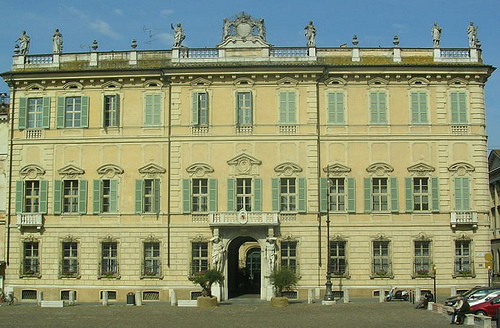 Palazzo Bianchi
 Palazzo dell'Accademia nazionale virgiliana
 Palazzo Municipale (Mantova)
 Palazzo del Mago
 Palazzo Guidi di Bagno
 Palazzo Strozzi
 Casa della Cervetta
 Palazzo Acerbi
 Casa Menozzi
 Ca' degli Uberti
 Palazzo della Banca Agricola Mantovana
 Villa Margherita
 Palazzo San Sebastiano
 Palazzo Valentini
 Palazzo Capilupi Palazzo Aldegatti Palazzo del Massaro
Museums 17

- Free 1st Sunday


Show all 17 places
 Ducal Palace Museum
 Galleria arte e arti della Camera di commercio di Mantova Museo numismatico della Fondazione Banca agricola mantovana
 Andreas Hofer Museum Museo Palazzo d'Arco Museo Virgilio Sonnabend Collection Mantova Ex chiesa di Santa Maria della Vittoria Casa di Rigoletto Museo del Risorgimento e della Resistenza MASTeR
Fortresses and towers 15


Abbeys and monasteries 4


Archaeological sites 3
Castles 2


Historic theatres 2


Getting there
By plane: The nearest airport to Mantua is 1 Valerio Catullo Airport near Verona, on the Brennero's Highway, 25 minutes away from the city.
Other options are Guglielmo Marconi Airport, near Bologna, 1 hour away, and Orio al serio Airport, near Bergamo, reachable in less than 1½ hours via Highway.
The airport in Verona served by some low-cost airlines such as WizzAir (to Bucharest), EasyJet (from London-Gatwick, Paris-Charles de Gaulle) and VoloTea (from Bari, Palermo). Other big carriers such as ITA Airways and Lufthansa serve this airport daily. Airports in Bologna and Bergamo are served by the low-cost carrier Ryanair.
By train: The Verona-Modena railway line passes through 2 Mantova railway station, located in Piazza Don Leoni. It is also the end of the line for trains arriving from Monselice and Cremona. Train service from Milan is available everyday, every two hours and it costs €10.75. For Verona the frequency is every 40 minutes and the price is €3.15.
Via Verona you can get to Mantua from Venice, Brescia, Trento, Bolzano and via Modena you can reach Parma, Reggio Emilia, Bologna and all southern cities.
If you want to arrive from Bologna quickly, so you don't want to use the railway line Verona-Modena and change the train, a good idea would be to get the train on the Verona-Bologna line to the Nogara station, 20 minutes away by car from the city centre of Mantua.
Text from Wikivoyage, CC BY-SA, abridged · Wikivoyage
What to see, according to Wikivoyage
Palazzo Ducale (Ducal Palace). This complex is a marvel of medieval and Renaissance architecture and artistry. It was the home of the Gonzaga family from 1328 to 1707, extended through the period, and including more than 500 rooms. The famous Camera degli Sposi (Bridal Chamber) is limited to 1,500 visitors per day. Castello di San Giorgio. The castle is a part of the Ducal Palace. It hosts the Museum of Modern and Contemporary Arts. Palazzo Te (Palazzo del Te). The "Palazzo del T", as it used to be called, is a splendid palace in the south end of Mantua, it is an acknowledged masterpiece of the architect Giulio Romano. The palace is a fine example of Renaissance implementation of Villa Suburbana (suburban residence). It is also famous for its grotesque frescos in a mannerist style, which are rare example of secular paintings of that time. Basilica Di Sant'Andrea. This world-famous church (dating from 1472 onwards) is the work of the architect Leon Battista Alberti, one of the founders of Renaissance architecture. Cattedrale di San Pietro apostolo (Duomo), Piazza Sordello. Built in different architectural styles, from Romanesque, to Renaissance and Baroque.
Text from Wikivoyage, CC BY-SA, abridged · Wikivoyage · Underlined names link to our own pages.