



- Free 1st Sunday
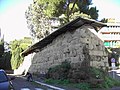
Photo: Lalupa, CC BY-SA 3.0 · Wikimedia Commons
Museum, 1995
Art museum
The Palazzo Massimo alle Terme is the main of the four sites of the Roman National Museum, along with the original site of the Baths of Diocletian, which currently houses the epigraphic and protohistoric section, Palazzo Altemps, home to the Renaissance collections of ancient sculpture, and the Crypta Balbi, home to the early medieval collection.
It is located in the Esquilino district, near Termini Station.
Palazzo Massimo was rebuilt between 1883 and 1886 by architect Camillo Pistrucci on the Villa Montalto-Peretti as the site of a college for the Jesuits, which remained there until 1960.
After ups and downs it was purchased by the state in 1981 and restored, based on a design by architect Costantino Dardi. This was made possible by funding from a special law for the protection of the Roman archaeological heritage.
The building has four floors and an underground one, much of which is devoted to the display of the collections, as well as providing a series of offices, a library, and a conference room.
The museum building was opened in 1995 (when only the ground floor was opened) and completed in 1998 with the opening of the first and second floors in addition to the basement.
The exhibition area occupies four of the floors from which the building consists, the other rooms being reserved for offices of the Soprintendenza Speciale Archeologia Belle Arti e Paesaggio di Roma. The museum layout is divided into subsections that illustrate the most important moments in the artistic production of ancient Rome.
The museum houses the "ancient art section" with figurative works from the late republican, imperial and late antique periods on the ground floor, first and second floors (including works of art from the great residences of the senatorial order, with Greek originals brought to Rome in ancient times) as well as a "numismatics and goldsmithing section" on aspects of the Roman economy in the basement.
The ground floor houses masterpieces of Roman art, from the late Republican age (with works belonging to the ruling classes of the 2nd-1st centuries B.C.), to the time of the Julio-Claudian dynasty. Immediately after the ticket office one encounters a colossal statue of a seated female deity. It comes from the slopes of the Aventine and is composed of numerous types of ancient colored marbles, using a technique highly prized by Roman sculptors. This statue is from the Augustan age and has been restored as Minerva, whose face has been remade in plaster in the likeness of the Athena Carpegna. According to recent studies, however, it seems that the statue depicted Magna Mater-Cybele, an ancient Anatolian deity whose main center of her worship was Pessinus in Phrygia and who, beginning in the Second Punic War, began protecting the Romans.
According to the oracles of the Sibylline Books, the introduction of the Magna Mater cult was a precondition for finally achieving the expulsion of the Carthaginian enemy from Italy. In April 204 B.C., the black stone of Pessinus reached Ostia and was delivered to Publius Cornelius Scipio Nasica, cousin of Publius Scipio and son of Gnaeus Scipio.
The "Gallery I" displays numerous anonymous male and female portraits. The arrangement evokes a gallery of ancestors, based on what really happened in the dwellings and funerary monuments of ancient Rome. These portraits include that of an elderly woman (from Palombara Sabina) and of a mid-1st century B.C. priest of Isis (found in the Tiber), characterized by a shaved head and a typical vertical scar. The stern and strong-willed portrait proves the spread of the Egyptian cult in Rome, often opposed by the nobilitas, eventually imposed in the capital by the association of Isis with the goddess Fortuna.
Also in "Gallery I," one finds the center of a mosaic floor of a Roman villa (Tor Bella Monaca, Rome), which depicted an episode from the Argonauts myth, in which Hylas, the young companion of Hercules, draws water and a Nymph is about to drag him into the spring. …
The first floor is reached by a wide staircase where statues (copies or reworkings from Greek originals) of the most important deities of the Roman-Greek religion from the villas of Latium are displayed in some niches: Jupiter, Apollo, Dionysus, and Athena.
On display are masterpieces of Roman statuary, from the age of the Flavians to late antiquity, as well as numerous sarcophagi, both pagan and Christian, including the sarcophagus of Portonaccio. In a large hall, the ancient "hall of masterpieces" of the "Museum of the Baths" is repurposed, displaying some important works on "ideal" sculpture, used as valuable furnishings of villas of the Roman aristocracy, such as the Crouching Venus, two copies of the Discobolus and some Greek originals (including the Maiden of Anzio).
In "Gallery I" are found numerous portraits from Hadrian's Villa, the imperial residence commissioned and built by Hadrian in Tivoli. On display are some of the portraits of his successors: from Marcus Aurelius, found in the Golden Square, to Bruttia Crispina, the wife of Commodus, to Caracalla in his mature years (212-217 A.D.), whose image departs from that of the Antonine dynasty, having a short beard, a sullen face and a slight twist of the face to the left to recall the portrait of Alexander the Great.
According to a phenomenon that could already be seen on the ground floor regarding the Julio-Claudian dynasty, the central power increasingly used the medium of iconography for propaganda and publicity purposes.
"Room I" contains works devoted to the image of the Flavian emperors (69-96 A.D.), Vespasian, Titus and Domitian, and of Nerva (96-98), who initiated the adoptive emperors (96-192). Among these portraits, one of the most important is that of Vespasian, found in the Tiber (inv. 53), which belongs to the realist current, so cherished in the late republican period, in which the emperor is depicted old and wrinkled, in contrast to what had happened after the classicism of the Julio-Claudian age. The significance of this change in the style of this ruler is explained as a return to the ancient values of the mos maiorum of the Republican period. By contrast, with his son, Domitian, there is a return to pro-Hellenism.
One of the most valuable statuary works in this room is that of Julia, daughter of Titus. …
Text from Wikipedia, the free encyclopedia, under CC BY-SA 4.0. Full article: «Museum Palazzo Massimo alle Terme».
Events and people from Wikidata (CC0).
Distances are as the crow flies, not walking or driving.


Museum Palazzo Massimo alle Terme is in Rome, in the province of Roma (Lazio), Italy. Address: Largo di Villa Peretti, 2 - 00185 Roma. GPS coordinates: 41.90136, 12.49836.
There is an admission charge, but entry is free on the first Sunday of the month (Domenica al museo). Up-to-date prices are on the official website.
Wikidata dates it to 1995.
Nearby you’ll find: Palazzo Massimo alle Terme (0 m away), Horti Lolliani (100 m away), Baths of Diocletian (200 m away).
Text. Wikipedia, the free encyclopedia (CC BY-SA 4.0).
Data. Wikidata (CC0); opening hours and contacts OpenStreetMap (ODbL).
Photos. Wikimedia Commons, author and licence on every image.
Updated 28 October 2026. All sources and licences