





- Most beautiful villages
Photo: Geobia, CC BY-SA 3.0 · Wikimedia Commons
Historic village
Italian comune
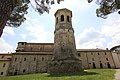
Montone is a comune (municipality) in the Province of Perugia in the Italian region Umbria, located about 35 km north of Perugia. It is one of I Borghi più belli d'Italia ("The most beautiful villages of Italy").
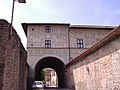
Montone is a walled medieval village with a small industrial and housing estate surrounding the walled town center. The town is the origin of the Fortebracci condottieri family, whose most famous member was Braccio da Montone.
Montone likely originated in the 10th century, when its first documented existence is also recorded. Montone was an ancient fief of the marquises Del Monte.
By the mid-12th century it had developed into an autonomous community under the control of Perugia, governed by a general council and two consuls.
In the later medieval period, the town's history became closely tied to the fortunes of the Fortebracci family. The family, whose earliest known member is Ugolino (born around the 12th century), were aligned with the Guelph faction and maintained alliances with Perugia. They were opposed by the Olivi family of Montone, leaders of the Ghibelline party and supported by the Ubaldini della Corda.
In 1280 Fagiolo Olivi entered Montone by force, killing Fortebraccio Fortebracci along with members of his family, before being killed himself.
The period of greatest prominence of Montone came in the early 15th century under Braccio da Montone, a notable mercenary leader. On 28 August 1414, Montone was raised to the County of Montone by Antipope John XXIII and granted to Braccio and his heirs. In 1424 the title was renewed by Pope Martin V for Carlo, the son of Braccio.
In 1607 Montone was elevated to a marquisate under the Vitelli family, whose rule lasted until 1640.
During the French period the town formed part of the canton of Umbertide. It later returned to the rule of the Papal States, which continued until 1860, when Montone became part of the unified Kingdom of Italy.
In 1895 Montone had a population of 2,364 inhabitants.
The church of San Francesco was rebuilt at the end of the 14th century. Its entrance portal was carved in 1519 by Antonio Bencivenni. Inside is a painted banner created by Bonfigli and dated 1482, depicting Christ between two angels, the Virgin sheltering devotees beneath her mantle, and various saints, with a view of Montone below. The stone altar is finely worked and gilded. A magistrate's bench in intarsia dating to 1505 is preserved within the church. Decorative elements include sculpted stone bearing the emblem of the Fortebraccio family.
The church of San Fedele contains a painting of the Holy Family, copied from Poussin, and an altarpiece of the Annunciation by Tommaso da Cortona and Vittore Cirello.
In the church of the Sacramento, the high altar features a panel of the Last Supper painted in 1611 by Calvart. The sacristy preserves a finely worked chalice dated 1549.
Montone also includes the collegiate church of Santa Maria and San Gregorio.
The town's patron saints are Saint Roch and the Holy Thorn, whose festivals are celebrated on 16 August and on the second day of Easter.
The Rocca d'Aries was built by the Fortebracci family on the remains of an earlier fortification. Over time it followed the broader historical fortunes of Montone, functioning across the centuries both as a defensive stronghold and as a residence, though from the 16th century it became independent of the town.
The building has a rectangular plan with a circular tower on one side. It has undergone various alterations to make it suitable for habitation, while still preserving the imposing mass of its fortified structure. The site is documented from as early as the year 1000, but from 1376 its history becomes closely tied to the Fortebracci: in that year Oddo III, father of Braccio da Montone, captured it and brought it back under the influence of nearby Città di Castello. Soon afterward Perugian magistrates regained possession and decided to make the rocca substantially more massive and difficult to take; they entrusted the direction of the work to Oddo III Fortebracci. By 1380 the enlarged structure was completed, and in the years that followed it was repeatedly contested between Perugia and Città di Castello. …
Text from Wikipedia, the free encyclopedia, under CC BY-SA 4.0. Full article: «Montone».
Distances are as the crow flies, not walking or driving.


Montone is in Montone, in the province of Perugia (Umbria), Italy. Address: Comune, Piazza Fortebraccio, 3, 06014 Montone PG. GPS coordinates: 43.36394, 12.32692.
Nearby you’ll find: Complesso museale di San Francesco (0 m away), Rocca of Umbertide (6.4 km away), Santa Croce (6.6 km away).
Text. Wikipedia, the free encyclopedia (CC BY-SA 4.0).
Data. Wikidata (CC0); opening hours and contacts OpenStreetMap (ODbL).
Photos. Wikimedia Commons, author and licence on every image.
Updated 28 October 2026. All sources and licences