




- UNESCO
- Free 1st Sunday
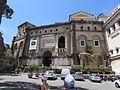
Photo: Wilfredor, CC0 · Wikimedia Commons
Archaeological site
Triumphal arch located in the Capitoline Hill
The Arch of Marcus Aurelius (Latin: Arcus Marci Aurelii) was a Roman triumphal arch in Rome, probably in the region of the Campus Martius, near the modern Piazza Colonna and the Column of Marcus Aurelius.
The Arch of Marcus Aurelius, dedicated to the emperor Marcus Aurelius by the Roman Senate is known through literary sources and an inscription. It was decreed by the Senate at the end of the first phase of the Marcomannic War which ended with a triumph celebrated by the emperor and his son Commodus over the Marcomanni and Sarmatians in December 176.
The existence of an arch dedicated to Marcus Aurelius is based on a cycle of twelve reliefs that would have been used to decorate it, eight of which were reused in the Arch of Constantine, three that are preserved in the Palazzo dei Conservatori (Capitoline Museums) and a final one that was destroyed and of which only a fragment remains, currently preserved in Copenhagen. The reliefs, carved in two tranches in 173 and 176, were previously attributed to an "arcus aureus" or the "arcus Panis Aurei in Capitolio". This arch was quoted in medieval sources and which would have been located at the foot of the Capitoline Hill, at the intersection of the Via Lata and the Clivus Argentarius not far from the church of Santi Luca e Martina, the location where the three reliefs now in the Capitoline Museums had been reused.
Another possible location where the arch may have originally been is near the Column of Marcus Aurelius, serving as a monumental entrance to the portico that surrounded the column and the Temple of Marcus Aurelius in the Campus Martius.
The reliefs that would have been part of the Arch of Marcus Aurelius depict the story of the emperor's military victories during the Marcomannic Wars. The emperor appears in all of them, and always in the company of a character who has been identified as his son-in-law and, for a time, his successor in pectore, Tiberius Claudius Pompeianus. The existence of both figures across all of the reliefs has been used to support the premise that there was a common origin for the reliefs.
Text from Wikipedia, the free encyclopedia, under CC BY-SA 4.0. Full article: «Arch of Marcus Aurelius».
Distances are as the crow flies, not walking or driving.


Arch of Marcus Aurelius is in Rome, in the province of Roma (Lazio), Italy. GPS coordinates: 41.89440, 12.48420.
Nearby you’ll find: Basilica Argentaria (0 m away), Porta Fontinalis (0 m away), Temple of Venus Genetrix (100 m away).
Text. Wikipedia, the free encyclopedia (CC BY-SA 4.0).
Data. Wikidata (CC0); opening hours and contacts OpenStreetMap (ODbL).
Photos. Wikimedia Commons, author and licence on every image.
Updated 28 October 2026. All sources and licences