





Photo: Lalupa, CC BY-SA 3.0 · Wikimedia Commons
Historic villa / palace
Palazzo Pallavicini-Rospigliosi
Palace and art gallery in Rome, Italy
- Within the UNESCO World Heritage Site “Historic Centre of Rome, the Properties of the Holy See in that City Enjoying Extraterritorial Rights and San Paolo Fuori le Mura”
At a glance
- Style
- Renaissance architecture
- Architect
- Flaminio Ponzio
- Commissioned by
- House of Pallavicini
- Protection
- Italian national heritage
- Coordinates
- 41°53′54″ N, 12°29′16″ E
History and description
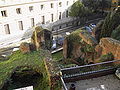
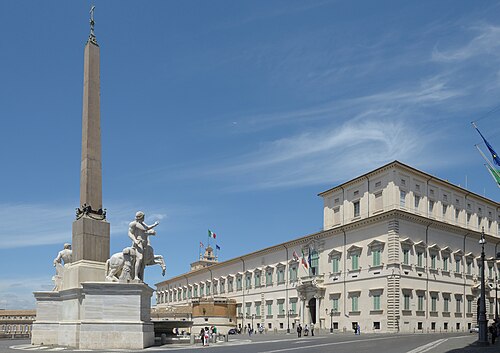
The Palazzo Pallavicini-Rospigliosi is a palace in Rome, Italy. It was built by the Borghese family on the Quirinal Hill; its footprint occupies the site where the ruins of the baths of Constantine stood, whose remains still are part of the basement of the main building, the Casino dell'Aurora. Its first inhabitant was the famed art collector Cardinal Scipione Borghese, the nephew of Pope Paul V, who wanted to be housed near the large papal Palazzo Quirinale. The palace and garden of the Pallavicini-Rospigliosi were the product of the accumulated sites and were designed by Giovanni Vasanzio and Carlo Maderno in 1611–16. Scipione owned this site for less than a decade, 1610–16, and commissioned the construction and decoration of the casino and pergolato, facing the garden of Montecavallo. The Palace has also been the scene of important cultural and religious events.
The Casino dell'Aurora and L'Aurora fresco by Guido Reni
The palace's main attraction, beside the art gallery, is the Casino dell'Aurora. The casino was designed by Vasanzio is located overlooking the Piazza del Quirinale. On the walls are four frescoes of the Seasons by Paul Bril, and two Triumphs by Antonio Tempesta. Its ceiling displays what is considered the Bolognese painter Guido Reni's fresco masterpiece (1614), commonly called L'Aurora. It is surrounded by a painted frame or quadro riportato and depicts Apollo in his Chariot preceded by Dawn (Aurora) bringing light to the world. The incorporated heraldic symbols were meant to link Scipione with Apollo. The work is classically restrained and mimics poses from ancient Roman sarcophagi, many of which are part of the museum's collection. The chariot procession, which recalls the Annibale Carracci paintings in the Farnese Gallery in the Farnese Palace, shows even more restraint. There is little concession to perspective, and if anything the vibrantly colored style is an affront to the tenebrism of Caravaggio's followers, despite this being a pavilion commissioned by one of Caravaggio's early patrons, Scipione Borghese. The pergolato is decorated by Paul Bril.
The architect Vasanzio succeeded in achieving a perfect balance between the architectural structure and the lavish decoration of the façade. It is characterised by slabs from Roman sarcophagi of the 2nd and 3rd centuries AD, which recount ancient mythological tales linked to the subject of love-death and the immortality of the soul. The central part of the façade is enhanced by big windows, which create charming transparency between outdoors and indoors and open onto the big central hall with its ceiling decorated with the Aurora fresco.
The same room holds other beautiful frescoes: the Triumph of Fame and the Triumph of Love by Antonio Tempesta, the Cardinal's coat of arms and Cherubino Alberti's putti, the Four Seasons by Paul Bril, 17th-century marble busts and sculptures from the Roman era, including the famous Artemis the Huntress and the Rospigliosi Athena. The ceilings of the two side halls are frescoed by Domenico Passignano with the Battle between Rinaldo and Armida and Giovanni Baglione with the Tale of Armida and some paintings from the Pallavicini Collection are still kept there. …
Art gallery
The art gallery, the Galleria Pallavicini, was begun by Cardinal Lazzaro Pallavicini, and includes more than 540 paintings, designs and sculptures. Aside from the collections of the Doria-Pamphili and Colonna families, this is the largest private collection in Rome. The rooms are frescoed by Paul Bril, and a loggia in a garden is decorated with frescoes by Orazio Gentileschi and Agostino Tassi. Among the paintings that remain in the collection, following some sales and losses in previous centuries, are works by artists such as:
Botticelli
Johann van Bloemen with a veduta of the Colosseum.
Paul Bril with veduta of coast.
Abraham Brueghel III with a Still life with apples, pomegranate, grapes and a man.
Annibale Carracci
Giuseppe Bartolomeo Chiari with Flight from Egypt.
Domenichino, Anthony van Dyck with a Santa Rosalia.
Ludovico Gimignani with an “Ester who faints in front of Assuero” and another completed with help by David de Coninck: Boy with greyhound.
Luca Giordano with Helen's escape.
Guercino has eight paintings including San Francis praying, Fruit-seller and child and Flora.
Lorenzo Lotto: Madonna with Child and Saints Jerome and Nicholas of Tolentino.
Benedetto Luti with a portrait of Cardinal Fabroni.
Simone Pignoni has an attributed a Cefalo and Procris.
Poussin
Mattia Preti with a Christ before Pontius Pilate.
Ferdinand Voet with a portrait of Vincenzo Rospigliosi.
Text from Wikipedia, the free encyclopedia, under CC BY-SA 4.0. Full article: «Palazzo Pallavicini-Rospigliosi».
People
Events and people from Wikidata (CC0).
Photos
Getting there
Roma TerminiTrain, nearest
1.2 km as the crow flies
Palazzo Pallavicini-Rospigliosi
Aeroporto di Roma-Ciampino14.0 km
Distances are as the crow flies, not walking or driving.
Loading map…
Nearby
See on the mapMore historic villas and palaces in Lazio

- Free 1st Sunday


Frequently asked questions
Where is Palazzo Pallavicini-Rospigliosi?
Palazzo Pallavicini-Rospigliosi is in Rome, in the province of Roma (Lazio), Italy. GPS coordinates: 41.89833, 12.48789.
What else is there to see near Palazzo Pallavicini-Rospigliosi?
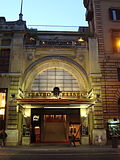
Nearby you’ll find: Baths of Constantine (0 m away), Teatro Eliseo (100 m away), Palazzo della Consulta (100 m away).
Sources and licences
Text. Wikipedia, the free encyclopedia (CC BY-SA 4.0).
Data. Wikidata (CC0); opening hours and contacts OpenStreetMap (ODbL).
Photos. Wikimedia Commons, author and licence on every image.
Credits for the 6 photos
- Monti - Palazzo Rospigliosi-Pallavicini 1020787 — Lalupa, CC BY-SA 3.0
- Palazzo pallavicini rospigliosi (54071538) — Anthony Majanlahti from Rome, Italy, CC BY 2.0
- Palazzo pallavicini rospigliosi, ivy (54068789) — Anthony Majanlahti from Rome, Italy, CC BY 2.0
- Palazzo pallavicini rospigliosi, retaining wall (54070658) — Anthony Majanlahti from Rome, Italy, CC BY 2.0
- Palazzo pallavicini rospigliosi, wall decoration (54072172) — Anthony Majanlahti from Rome, Italy, CC BY 2.0
- Adrien manglar, il gioco del pallone nel cortile di palazzo rospigliosi, 1740, 00 — Francesco Bini, CC BY-SA 4.0
Updated 28 October 2026. All sources and licences