





Photo: Llorenzi, CC BY-SA 3.0 · Wikimedia Commons
Fortress / Tower
Fortress Campo Luserna
Austro-Hungarian military fortress in Luserna, Italy
Luserna (TN), Trentino-South Tyrol
At a glance
- Type
- Fortress / Tower
- Period
- Modern era, 1908
- Protection
- Italian national heritage
- Coordinates
- 45°55′36″ N, 11°20′11″ E
- Address
- località Campo ‒ 38040 Luserna (TN)
History and description
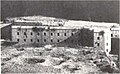
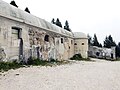
Fort Lusern (Italian: Forte Campo, German: Werk Lusern) is an Austro-Hungarian fort built south of Trento to bar the way towards the city. The fort was built in the Lavarone-Folgaria group of fortifications, and was one of the strongest on the front. The fort was built between 1908 and 1912, and cost 2.2 million Austro-Hungarian krone to build. The fort was built out of concrete, occasionally reinforced by iron. The fort was surrounded by a moat that was 8m deep and surrounded the whole fort. The fort was built in a Trapezoidal shape with 3 floors, 2 above ground, 1 below ground.
Construction
The bottom floor consisted of: 2 team rooms, provisional depot, lamp chamber, workshop, depot, engine room, fuel depot, guard station, entrance poitrene, and a casemate with room for 2 MGs for moat defense.
The middle floor consisted of: 2 gunstands and standby rooms, artillery depot, signal stations, barracks, fuel depot, ammunition well for machine guns, kitchen, provisions storeroom, and a toilet.
The upper floor consisted of: A fuel depot, commander’s room, 4 barracks, an infirmary with doctor’s office and medical office, ammunition magazine for Howitzer towers III and IV, telephone exchange, standby room for 21 men, and a rotatable observation stand.
The battery block consisted of: A rotating observation turret, 4 M09 T.H (Tower Howitzers), a standby room (in the casemate), armored dome for 2 machine guns, the ammunition magazine for T.H No.I and II, among other things.
The fort had a small 2-story blockhouse connected by trenches. On the ground floor, it was armed with 2 6cm M10 field guns, and on the top floor, there was a machine gun casemate that could fire on the front and flank trenches. Meanwhile, there was another exterior fortification outside the fort. This was the Melee facility Oberweisen. This had an armored casemate, with 2 slots for machine guns and a 35cm spotlight. In addition to the armored casemate, there were 2 other casemates like it but without the 35cm spotlight. There was an optical signal station and officers' quarters. There was another emplacement like Oberwiesen; this was Melee Station Viaz. Viaz was sparsely armed compared to Oberwiesen, only sporting a single armored machine gun turret. Viaz also had visual contact with the Italian Forte Casa Ratti.
Armament
Fort Lusern and its small outlying fortifications together were armed with:
4 10cm M.09 Tower Howitzers
2 8cm M5/9 minimum ridge cannons as a flanking battery, not immediately noticeable to an assaulter, facing in the direction of Fort Verle
World War I
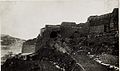
In the days after the Italian declaration of war the fort was engulfed by heavy shellfire. From May 25th-28th, 1915, the fort was fired upon by the 149mm guns of Forte Campolongo, in addition to the 28cm batteries of Costa del Civello and Spelonca Delle Neve. By May 28th, the fort had received 700 28cm shells and 600 149mm shells. In total, the grounds of the main works received almost 1,000 shells, with 320 hitting the concrete roof, and 4 hitting the metal storage tanks. On May 26th, a 28cm shell smashed through the tower of howitzer No. III, killing 1 man and wounding 2. The next day, a shell struck tower howitzer No. II and lifted the turret out, rendering it temporarily inoperable. Both armored observation stands received shells, with the battery aisle showing cracks and signs of damage.
Five days after the fighting started, the fort commander, Lieutenant Emmanuel Nebesar, broke on May 28, thinking that the heavy shelling had rendered his position untenable. This is when he wrote a report to his superior, Major Jelinek, who also agreed that the fort should be abandoned without consulting his superiors. When Nebesar received Jelinek’s reply, he sent orders for the guns and parts of the fort to be rendered useless. Subsequently he raised the white flag and began extracting his men from the fort. Once Nebesar’s affairs became known, the brigade command ordered barrages from the forts of Beldevere Gschwent and Verle to strike around the fort to keep Italian infantry from seizing it. The Italians didn't notice the white flag or the artillery barrage, and their infantry attack was repelled from the trenches surrounding the fort. The fort was reoccupied by the Austrian crew led by Lieutenant Schaufler. Meanwhile, Patrol Leader Otto Jochler removed the white flag under heavy fire, an action which earned him the Silver Medal of Valor. Lieutenant Nebesar was arrested, and 4 military court cases were brought against him, of which Nebesar was eventually acquitted. He was never punished for his actions of almost surrendering Fort Lusern. …
Post-war
Fort Lusern was not involved in any fighting the rest of the war. After the war, the Italian Army was given control of the fort, which was sold in 1927. Due to the steel embargo imposed by the League of Nations because of Italy’s invasion of Ethiopia, the fort was salvaged for steel. The extraction of steel began on June 3rd, 1935, with the battery block and the upper floor of the casemate block, along with the facilities at Oberwiesen and Viaz being demolished. Since 1990, the municipality of Luserna and the Labor Office of Trento have undertaken extensive efforts to uncover the fort and the facilities Oberwiesen and Viaz. As a result, some parts of Fort Lusern are open to the public.
Text from Wikipedia, the free encyclopedia, under CC BY-SA 4.0. Full article: «Fortress Campo Luserna».
Timeline
- 1908Built
Events and people from Wikidata (CC0).
Photos
Getting there
Levico TermeTrain, nearest
9.1 km as the crow flies
Fortress Campo Lusernalocalità Campo ‒ 38040 Luserna (TN)
Distances are as the crow flies, not walking or driving.
Loading map…
Nearby
See on the mapMore fortresses and towers in Trentino-South Tyrol


Frequently asked questions
Where is Fortress Campo Luserna?
Fortress Campo Luserna is in Luserna, in the province of Trento (Trentino-South Tyrol), Italy. Address: località Campo ‒ 38040 Luserna (TN). GPS coordinates: 45.92667, 11.33639.
How old is Fortress Campo Luserna?
Wikidata dates it to 1908.
What else is there to see near Fortress Campo Luserna?
Nearby you’ll find: Luserna (1.1 km away), Forte Belvedere-Gschwendt (3.8 km away), Forte Campolongo (5.8 km away).
Sources and licences
Text. Wikipedia, the free encyclopedia (CC BY-SA 4.0).
Data. Wikidata (CC0); opening hours and contacts OpenStreetMap (ODbL).
Photos. Wikimedia Commons, author and licence on every image.
Credits for the 3 photos
- Forte luserna1 — Llorenzi, CC BY-SA 3.0
- Forte Campo Luserna 01 — Syrio, CC BY-SA 4.0
- Werk Lusern 1 — anonymous photographer during World War I, Public domain
Updated 28 October 2026. All sources and licences