





- Free 1st Sunday
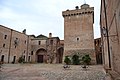
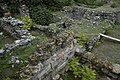
Photo: Alessandro Antonelli, CC BY 3.0 · Wikimedia Commons
Archaeological site, 431 BC
Ancient city of Magna Graecia
Policoro (MT), Basilicata
Heraclea, also Heracleia or Herakleia (Ancient Greek: Ἡράκλεια), was an ancient city. It was situated on the Gulf of Taranto between the rivers Aciris (modern Agri) and Siris (modern Sinni). The ruins of the city are located in the modern comune of Policoro in the Province of Matera, Basilicata, Italy.
It was a Greek colony, but founded at a period considerably later than most of the other Greek cities in this part of Italy. The territory in which it was established had previously belonged to the Ionic colony of Siris, and after the fall of that city seems to have become the subject of contention between the neighboring states. The Athenians had a claim upon the territory of Siris, and it was probably in virtue of this that their colonists the Thurians, almost immediately after their establishment in Italy, advanced similar pretensions. These were, however, resisted by the Tarentines; and war ensued between the two states, which was at length terminated by an arrangement that they should found a new colony in the disputed district, which, though in fact a joint settlement, should be designated as a colony of Tarentum (modern Taranto). The few remaining inhabitants of Siris were added to the new colonists, and it would appear that the settlement was first established on the ancient site of Siris itself, but was subsequently transferred thence, and an ancient, but new city founded about 24 stadia from the former, and nearer the river Aciris, to which the name of Heraclea was given. Siris did not cease to exist, but lapsed into the subordinate condition of the port or emporium of Heraclea. The foundation of the new city is placed by Diodorus in 432 BCE, fourteen years after the settlement of Thurii; a statement which appears to agree well with the above narrative, cited by Strabo from Antiochus of Syracuse. Diodorus, as well as Livy, calls it simply a colony of Tarentum. Antiochus is the only writer who mentions the share taken by the Thurians in its original foundation. Pliny erroneously regards Heraclea as identical with Siris, to which it had succeeded; and it was perhaps a similar misconception that led Livy, by a strange anachronism, to include Heraclea among the cities of Magna Graecia where Pythagoras established his institutions. …
The bronze tablets commonly known as the Tables of Heraclea (Tabulae Heracleenses), were found a short distance from the site of Heraclea, between it and Metapontum. They are significant in the study of Roman Law.
Heraclea is generally regarded as the native country of the celebrated painter Zeuxis, though there is much doubt to which of the numerous cities of the name that distinguished artist really owed his birth. But the flourishing state of the arts in the Lucanian Heraclea (in common with most of the neighbouring cities of Magna Graecia) is attested by the beauty and variety of its coins, some of which may deservedly be reckoned among the choicest specimens of Greek art; while their number sufficiently proves the opulence and commercial activity of the city to which they belong.
Text from Wikipedia, the free encyclopedia, under CC BY-SA 4.0. Full article: «Heraclea Lucania».
Events and people from Wikidata (CC0).
Distances are as the crow flies, not walking or driving.


Heraclea Lucania is in Policoro, in the province of Matera (Basilicata), Italy. Address: Via Colombo, 75025 Policoro. GPS coordinates: 40.21302, 16.67830.
According to OpenStreetMap the opening hours are: Mo, We-Su 09:00-(sunset-1:00); Tu 14:00-(sunset-1:00). Always check the official website before your visit.
Wikidata dates it to 431 BC.
Nearby you’ll find: Museo nazionale della Siritide (Policoro) (800 m away), Monastero dei Francescani (12.3 km away), Castello di San Basilio (12.4 km away).
Text. Wikipedia, the free encyclopedia (CC BY-SA 4.0).
Data. Wikidata (CC0); opening hours and contacts OpenStreetMap (ODbL).
Photos. Wikimedia Commons, author and licence on every image.
Updated 28 October 2026. All sources and licences