





Photo: Asia, CC BY-SA 3.0 · Wikimedia Commons
At a glance
- Type
- Archaeological site
- Elevation
- 4 m above sea level
- Protection
- Italian national heritage
- Coordinates
- 40°24′58″ N, 16°49′00″ E
History and description
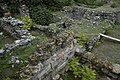
Metapontum or Metapontium (Ancient Greek: Μεταπόντιον, romanized: Metapontion) was an ancient city of Magna Graecia, the area of southern Italy colonized by Greeks. It was situated on the gulf of Tarentum between the river Bradanus and the Casuentus (modern Basento). It was about 20 km from Heraclea and 40 from Tarentum. The ruins of Metapontum are located in the frazione of Metaponto, in the comune of Bernalda, in the Province of Matera, Basilicata region, southern Italy.
History
Though Metapontum was an ancient Achaean Greek colony, various traditions assigned a much earlier origin. Strabo and Gaius Julius Solinus ascribe its foundation to a body of Pylians who had followed Nestor in the Trojan War. Justin, conversely, tells us it was founded by Epeius; in proof of which the inhabitants showed, in a temple of Minerva, the tools which the hero had used to build the Trojan Horse. Another tradition, reported by Ephorus, says that the town was founded by Phocians under the leadership of Daulius, tyrant of Crisa. Other legends carried back its origin to a still more remote period. Antiochus of Syracuse said that it was originally named after the hero Metabus, who appears to have been identified with Metapontus, husband of Melanippe and father of Aeolus and Boeotus.
Whether there may have really been a settlement on the spot more ancient than the Achaean colony, is impossible to be determined. It is known that at the time of the foundation of this city the site was unoccupied; the Achaean settlers at Crotona and Sybaris were therefore desirous to colonize it, in order to prevent the Tarentines from taking possession of it. With this view a colony was sent from the mother-country, under the command of a leader named Leucippus, who, according to one account, was compelled to obtain the territory by a fraudulent treaty. Another and a more plausible statement is that the new colonists were at first engaged in a contest with the Tarentines, as well as the neighbouring tribes of the Oenotrians, which was at length terminated by a treaty, leaving them in the peaceable possession of the territory they had acquired. The date of the colonization of Metapontum cannot be determined with certainty; but it was evidently, from the circumstances just related, subsequent to that of Tarentum, as well as of Sybaris and Crotona: hence the date assigned by Eusebius, who would carry it back as far as 774 BCE, is wholly untenable; nor is it easy to see how such an error can have arisen. It may probably be referred to about 700-690 BCE. …
Coinage
The coins of Metapontum, as already observed, are very numerous; and many of the later ones of very beautiful workmanship. Those of more ancient date, like the early coins of Crotona and Sybaris, have an incuse fabric; that is to say that the relief design of the obverse is repeated intaglio on the reverse. Some have speculated that this feature was devised by Pythagoras. The die axes are always aligned.
The more common type on later obverses is the head of Ceres but in the mid-late 4th century BCE, the head of the hero Leucippus, the reputed founder of the city appears for the first time. This is thought to be related to the expedition of Alexander I of Epirus to Southern Italy.
Text from Wikipedia, the free encyclopedia, under CC BY-SA 4.0. Full article: «Metapontum».
Photos
Getting there
MetapontoTrain, nearest
5.3 km as the crow flies
Metapontum
Distances are as the crow flies, not walking or driving.
Loading map…
Nearby
See on the mapMore archaeological sites in Basilicata

- UNESCO

- Free 1st Sunday

- Free 1st Sunday


- UNESCO
Frequently asked questions
Where is Metapontum?
Metapontum is in Bernalda, in the province of Matera (Basilicata), Italy. GPS coordinates: 40.41608, 16.81676.
What are the opening hours of Metapontum?
According to OpenStreetMap the opening hours are: Mo 14:00-(sunset-1:00); Tu-Su 09:00-(sunset-1:00). Always check the official website before your visit.
Can I visit Metapontum for free?
Yes: entry is free on the first Sunday of every month, under the Italian “Domenica al museo” scheme.
What else is there to see near Metapontum?
Nearby you’ll find: Tavole Palatine (0 m away), Temple of Apollo (3.6 km away), Torre Mattoni (4.4 km away).
Sources and licences
Text. Wikipedia, the free encyclopedia (CC BY-SA 4.0).
Data. Wikidata (CC0); opening hours and contacts OpenStreetMap (ODbL).
Photos. Wikimedia Commons, author and licence on every image.
Credits for the 9 photos
- Hera Temple at Metaponto (Italy) — Asia, CC BY-SA 3.0
- Area archeologica di Metaponto — Revol Web, CC BY-SA 2.0
- Gli scavi e il teatro complesso archeologico metaponto — Manuele Dellanave, CC BY-SA 4.0
- Greek colonies in South Italy — Asia, CC BY-SA 4.0
- Metaponto, parco archeologico — Luigi Catalani, CC BY-SA 4.0
- Metaponto — Rabih omeiri, CC BY-SA 4.0
- Metapontum manteion AvL — AlexanderVanLoon, CC BY-SA 3.0
- Metapontum residential quarters AvL — AlexanderVanLoon, CC BY-SA 3.0
- Metapontum temples AvL — AlexanderVanLoon, CC BY-SA 3.0
Updated 28 October 2026. All sources and licences