




- UNESCO
- Free 1st Sunday
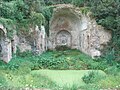
Photo: Livioandronico2013, CC BY-SA 4.0 · Wikimedia Commons
Archaeological site
Circus
The Circus of Maxentius (known until the 19th century as the Circus of Caracalla) is an ancient structure in Rome, Italy, part of a complex of buildings erected by emperor Maxentius on the Via Appia between AD 306 and 312. It is situated between the second and third miles of the Via Appia, between the basilica and catacombs of San Sebastiano and the imposing late republican tomb of Caecilia Metella, which dominates the hill that rises immediately to the east of the complex. It is part of the Appian Way Regional Park.
The Circus of Maxentius is the best preserved circus in the area of Rome, and is second only in size to the Circus Maximus in Rome. The only games recorded at the Circus were its inaugural ones and these are generally thought to have been funerary in character. They would have been held in honour of Maxentius' son Valerius Romulus, who died in AD 309 at a very young age and who was probably interred in the adjacent cylindrical tomb (tomb of Romulus). The imperial box (pulvinar) of the Circus is connected, via a covered portico, to the villa of Maxentius, whose scant remains are today obscured by dense foliage, except for the apse of the basilical audience hall, which pokes out from the tree tops. The complex was probably never used after the death of Maxentius in AD 312 (archaeological excavations indicate the tracks were covered in sand already in antiquity).
The Circus is constructed, after the fashion of many Roman buildings of this period, in concrete faced with opus vittatum. The putlog holes which held the scaffolding are evident in many places in the walls, which stand several metres high in places. The modern-day visitor enters the Circus from the west end, where the remains of the two still imposing towers are located. These would have contained the mechanism for raising the carceres (starting gates), which were positioned on an arcuated course between the towers. Once out of the gates, the chariots would race down the track, the full 503 metres (550 yd) length of which can still be seen. The track was excavated in the 19th century by Antonio Nibby, whose discovery of an inscription to the 'divine Romulus' led to the Circus being positively identified with Maxentius. The spina, the barrier running down the middle of the track, is exactly 1000 Roman feet (296 m) long, and would have been cased in marble. Its many ornaments, including cones, metae and obelisks, would have cast shadows across the track in the late afternoon sun. In the centre stood the Obelisk of Domitian which Maxentius presumably had moved from the Isaeum as part of the tribute to his son. Covered in hieroglyphs and lying broken in five pieces it was much discussed during the Renaissance and engraved by Etienne du Perac among others. The Collector Earl of Arundel paid a deposit for the pieces in the 1630s and attempted to have them removed to London but Urban VIII forbade its export and his successor Innocent X had it erected in the Piazza Navona by Bernini. …
Text from Wikipedia, the free encyclopedia, under CC BY-SA 4.0. Full article: «Circus of Maxentius».
Distances are as the crow flies, not walking or driving.


Circus of Maxentius is in Rome, in the province of Roma (Lazio), Italy. GPS coordinates: 41.85478, 12.52069.
Nearby you’ll find: Villa Maxentii (100 m away), Mausoleum of Maxentius (200 m away), Vigna Randanini (300 m away).
Text. Wikipedia, the free encyclopedia (CC BY-SA 4.0).
Data. Wikidata (CC0); opening hours and contacts OpenStreetMap (ODbL).
Photos. Wikimedia Commons, author and licence on every image.
Updated 28 October 2026. All sources and licences