


- Most beautiful villages
Photo: pietro scerrato, CC BY 3.0 · Wikimedia Commons
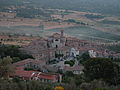
Castro dei Volsci (Ciocaro: Cascetre) is a comune (municipality) in the Province of Frosinone in the Italian region Lazio, located about 90 kilometres (56 mi) southeast of Rome and about 14 kilometres (9 mi) southeast of Frosinone. It takes its name from the Latin word Castrum (meaning "Castle") and the Volsci, who lived here in ancient times.
Castro dei Volsci borders the following municipalities: Amaseno, Ceccano, Ceprano, Falvaterra, Lenola, Pastena, Pofi, Vallecorsa and Villa Santo Stefano. It is one of I Borghi più belli d'Italia ("The most beautiful villages of Italy").
It is located in the Sacco River valley. It is the birthplace of the actor Nino Manfredi.
Text from Wikipedia, the free encyclopedia, under CC BY-SA 4.0. Full article: «Castro dei Volsci».
Distances are as the crow flies, not walking or driving.


Castro dei Volsci is in Castro dei Volsci, in the province of Frosinone (Lazio), Italy. GPS coordinates: 41.51667, 13.40000.
Nearby you’ll find: Museum of Prehistory in Pofi (5.7 km away), Museo della Civiltà contadina e dell'Ulivo (9.2 km away), Museo dell'Energia di Ripi (10.3 km away).
Text. Wikipedia, the free encyclopedia (CC BY-SA 4.0).
Data. Wikidata (CC0); opening hours and contacts OpenStreetMap (ODbL).
Photos. Wikimedia Commons, author and licence on every image.
Updated 28 October 2026. All sources and licences