




- UNESCO
- Free 1st Sunday
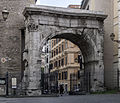
Photo: IV century artist, Public domain · Wikimedia Commons
Archaeological site
Civil basilica on the Esquiline Hill in Rome
The Basilica of Junius Bassus (Latin: basilica Iunii Bassi) was an ancient Roman civic basilica on the Esquiline Hill in Rome, on a site now occupied by the Pontifical Oriental Institute near the Piazza di Santa Maria Maggiore. It is best known for its surviving opus sectile mosaics that are preserved in the Capitoline Museums and the Museo Nazionale Romano.
According to an inscription, the basilica was built on the estate of Junius Bassus in 331 at the start of his consulship. After serving as years as praetorian prefect for over a decade, his promotion to consul warrented his new status as a public benefactor, allowing him to construct a public basilica on his estate. The new public space signalled the new consul's willingness to engage with the public while displaying his aristocratic virtues.
It consisted of a simple apsidal hall with high clerestory windows, entered through a narthex with rounded ends and marble ornamentation throughout the interior. While none of the original structure survived after urban development on the site in 1930, a drawing by Renaissance artist Giuliano da Sangallo provides a glimpse into the interior decoration.
The marble ornamentation that survives, done in the technique known as opus sectile, depicts scenes of lions attacking calves, the abduction of Hylas, and a portrait of Junius Bassus on a chariot. This portrait, depicting Junius Bassus wearing his consular robes, presents the basilica's patron as a generous supporter of public entertainment. This, paired with the lion mosaics, reminded viewers of Junius Bassus's civic virtues and concern for the public welfare.
In the fifth century, a Romanized Gothic member of the city's elite named Valila acquired the property, possibly through a marriage alliance with the Bassus gens. After donating the basilica to the bishop, the structure was dedicated to Saint Andrew and proceeded to serve as a Christian place of worship. The inscription dedication to Junius Bassus remained, reflecting Valila's desire to transfer the honor of his predecessor to his own patronage of the Christian church and preserve the memory of Junius Bassus. The mosaics, with their pagan iconography, were also curiously preserved in syncretism with the new Christian imagery in the church. Art historian Gregor Kalas hypothesizes that the Christians reinterpreted the sexually violent imagery found in the panel depicting the abduction of Hylas as an allegory for the transformation of Rome from pagan to Christian in late Antiquity. A homily written during the time of Pope Gregory I (r. 590–640) describes the church in relation to the former ancient Roman basilica, reflecting a lasting memory of the site's pagan past.
After being slowly dismantled over the centuries, the structure was ultimately destroyed in the construction of the Pontifical Oriental Institute in 1930. Prior to that, the opus sectile mosaics were removed from the site and placed on display in the staircase of the Palazzo dei Conservatiri in 1903.
Text from Wikipedia, the free encyclopedia, under CC BY-SA 4.0. Full article: «Basilica of Junius Bassus».
Events and people from Wikidata (CC0).
Distances are as the crow flies, not walking or driving.


Basilica of Junius Bassus is in Rome, in the province of Roma (Lazio), Italy. GPS coordinates: 41.89770, 12.50014.
Nearby you’ll find: Palazzo Brancaccio (100 m away), Macellum Liviae (200 m away), Acquario Romano (200 m away).
Text. Wikipedia, the free encyclopedia (CC BY-SA 4.0).
Data. Wikidata (CC0); opening hours and contacts OpenStreetMap (ODbL).
Photos. Wikimedia Commons, author and licence on every image.
Updated 28 October 2026. All sources and licences