




- Most beautiful villages
Photo: Hagai Agmon-Snir حچاي اچمون-سنير חגי אגמון-שניר, CC BY-SA 4.0 · Wikimedia Commons
Historic village
Town in the region Umbria, in Italy
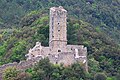
Arrone is a comune (municipality) in the Province of Terni in the Italian region Umbria, located about 70 km southeast of Perugia and about 10 km east of Terni in the Valnerina. It is one of I Borghi più belli d'Italia ("The most beautiful villages of Italy").
The settlement of Arrone originated in 880, when a Roman in exile named Arrone is said to have founded a castle there. He became gastald (lord) of the Valnerina, historically also referred to as Giuseppenca after a descendant named Giuseppe II.
From the 9th to the 11th century the Arroni family expanded their power, extending control over surrounding castles.
Submission to Spoleto followed in 1229, when Arrone swore an oath of loyalty. Relations with Spoleto were marked by repeated clashes between the 12th and 14th centuries, alternating with periods of enforced peace. The Arroni family disappeared from the records in 1341, having relocated to Spoleto, after which Arrone passed fully under the authority of the Spoletan community during the 14th century.
Municipal statutes were drafted in 1347 and later renewed in 1542. During the 16th century Arrone remained subject to the Papal States through the authority of Spoleto.
Local history in the 17th and 18th centuries was largely tied to that of the surrounding district, with minor disputes over taxation with Spoleto. In 1799 the town was sacked by French forces for having aided insurgents.
During the Napoleonic period Arrone was included in the Department of Trasimeno, within the district of Spoleto and the canton of Terni. The Restoration brought a return to the pre-Napoleonic administrative system. The events of the Roman Republic had limited impact locally, with a provisional municipal commission operating between 1849 and the 1850s.
In 1860 Arrone voted unanimously for annexation to the Kingdom of Sardinia.
In 1895 Arrone had a population of 2,202 inhabitants.
The feast of the patron saint, Saint John the Baptist, is celebrated on 24 June.
The parish church of Santa Maria Assunta stands in the newer district of Santa Maria, which developed outside the medieval nucleus of Arrone centered on the castle known as the Terra. The building has a four-pitched façade with a bell gable and three portals; the central portal is dated 1493 and preserves in its lunette a fresco of the Madonna and the angels. The interior has three naves ending in three apses and is decorated with frescoes mostly from the 17th century. The church also preserves the predella belonging to a triptych by the Maestro di Arrone dated 1487.
The church was built in the 15th century in worked stone, though later altered by restorations. The baptismal font, in carved limestone in Baroque style, dates to the 16th century. The church contains paintings attributed to the school of Gherardo da Rieti, as well as works influenced by the Zuccari and by Lo Spagna. Other decorations include glazed terracottas of the 16th century and fresco cycles depicting scenes from the life of the Virgin and of Christ, including an imitation of a composition by Filippo Lippi in the cathedral of Spoleto. The church has canvases by Giuseppe Bastiani, Francesco Cozza, Vincenzo Tamagni, Giovanni di Pietro da Spoleto, and Jacopo Siculo.
The church of San Giovanni Evangelista has a façade with a decorated portal and a circular window in red limestone, dating to the late 14th century. Its interior consists of a single nave with a wooden roof and a polygonal apse with ribbed vaulting. Frescoes on the walls date back to at least 1480 and include scenes such as the Evangelists, the Virgin and Child, episodes from the life of Saint John the Baptist, and other sacred figures. Above the altar is a tempera triptych depicting the Virgin, Christ, and Saint Anthony Abbot, bearing a 14th-century date.
The church of San Giovanni Battista is a Gothic construction of the 13th–14th centuries, with a square tower and a polygonal apse. The interior has a single nave with a wooden roof supported by three trusses. The walls are painted with figures of saints commissioned by families of Arrone as votive images for favors received. The painter to whom these works, including the apse frescoes, are attributed is conventionally known as the Maestro del trittico di Arrone. …
Text from Wikipedia, the free encyclopedia, under CC BY-SA 4.0. Full article: «Arrone».
Distances are as the crow flies, not walking or driving.


Arrone is in Arrone, in the province of Terni (Umbria), Italy. GPS coordinates: 42.58284, 12.76916.
Nearby you’ll find: Museo delle mummie (4.5 km away), Castle of Matterella (4.9 km away), Castello Nobili Vitelleschi (6.8 km away).
Text. Wikipedia, the free encyclopedia (CC BY-SA 4.0).
Data. Wikidata (CC0); opening hours and contacts OpenStreetMap (ODbL).
Photos. Wikimedia Commons, author and licence on every image.
Updated 28 October 2026. All sources and licences