



- UNESCO
- Free 1st Sunday
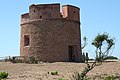
Photo: Zanner, Public domain · Wikimedia Commons
Antium was an ancient coastal town in Latium, south of Rome. An oppidum was founded by people of Latial culture (11th century BC or the beginning of the 1st millennium BC), which then became the main stronghold of the Volsci until it was conquered by the Romans.
The territory of Roman Antium corresponded almost entirely to modern Anzio and Nettuno.
In some versions of Rome's foundation myth, Antium was founded by Anteias, a son of Odysseus by Circe.
The Latin-Volscian town stood in the Capo d'Anzio (modern Anzio), on a higher ground and somewhat away from the shore, though it extended down to it. This was defended by a deep ditch, which can still be traced, and by walls, a portion of which, on the eastern side, constructed of rectangular blocks of tufa, was brought to light in 1897. The fortification of the town would included the acropolis, to which it would be adjacent to the east, isolated but connected. The Latin colony of 467 BC, of which it will be said later, would be installed alongside the fortified Latin-Volscian oppidum, also to the east.
A coeval port town, Caenon, was the port under the control of Antium (which did not have a natural harbour of its own): according to alternative theories, the port of Caenon would be located in the Capo d'Anzio, or the port town very north of it, or the town on a hill near Nettuno to the east, and the port over the mouth of the nearby river Loricina.
The settlement of Roman Antium was certainly present in the area of the Capo d'Anzio (in particular, a presumed extensive town since the mid-republican age, the imperial colony and the great harbour of Nero), but a parallel agricultural settlement, with the same name, was likely to be in the same position as modern Nettuno since the colony of 338 BC; so from 60 AD the colonia Antium of Nero in the Capo d'Anzio would coexisted with a supposed, more ancient, civitas Antium in Nettuno, which in the 4th century AD would have been the only real town: a thesis that has found some perplexities or an opposition.
According to a theory, the Volsci controlled the Antiates area since the 7th century BC, but the common orientation thinks about an occupation at the beginning of the 5th century BC, (likely in 493 BC) or shortly before. As said in the beginning, for a long time Antium was the capital of the Antiates Volsci, settled on the Thyrrenian coast.
In 493 BC the Roman consul Postumus Cominius Auruncus fought and defeated two armies from Antium and as a result captured the Volscian towns of Longula, Pollusca and Corioli (to the north of Antium).
According to Plutarch the Roman leader Coriolanus, who fought at Corioli, took refuge at Antium to the noble Attius Tullius Aufidius, when the Roman had been accused of disloyalty to Rome and the Volsci. Aufidius obtained consent that, by Volscian hand, Coriolanus was first tried, then assassinated before the end of the trial.
In 469 BC the town Caenon was destroyed by the Roman consul Titus Numicius Priscus.
In 468 BC Antium was captured by the Roman consul Titus Quinctius Capitolinus Barbatus following a war started by the Volsci, and the mentioned Latin colony was planted there the next year. Three Roman ex-consuls were appointed as commissioners to allocate the lands (triumviri coloniae deducendae) amongst Roman colonists. They were Titus Quinctius, the consul of the previous year who had captured Antium from the Volsci; Aulus Verginius Tricostus Caeliomontanus, the consul of 469 BC; and Publius Furius Medullinus Fusus, the consul of 472 BC.
In 464 BC the Antiates were suspected of allying with the Aequi against Rome. The chief men of Antium were summoned to Rome but they did not give adequate explanations. Antium was asked to contribute emergency troops for the Roman war against the Aequi, however the force of 1,000 troops from Antium arrived too late to help.
In 338 BC the consul Gaius Menius Publius suddenly attacked and defeated the troops of Aricia, Lanuvium and Velitres as they were joining the Antiates next to the river Astura. Antium was finally defeated and its warships seized, a part taken to the arsenals in Rome, while the others burned. The town was banned from navigation, and Gaius Menius had the rostra of the burned ships mounted in the Roman Forum as ornaments of the speaker's platform thenceforth called the Rostra. …
Text from Wikipedia, the free encyclopedia, under CC BY-SA 4.0. Full article: «Antium».
Distances are as the crow flies, not walking or driving.


Antium is in Anzio, in the province of Roma (Lazio), Italy. GPS coordinates: 41.44831, 12.62861.
Nearby you’ll find: Anzio beachhead museum (100 m away), Villa Adele (200 m away), Paradiso sul mare (600 m away).
Text. Wikipedia, the free encyclopedia (CC BY-SA 4.0).
Data. Wikidata (CC0); opening hours and contacts OpenStreetMap (ODbL).
Photos. Wikimedia Commons, author and licence on every image.
Updated 28 October 2026. All sources and licences