

Photo Freddyballo, CC BY-SA 3.0
Lecce · Puglia (Apulia)
Things to see in Otranto
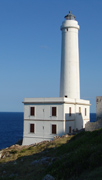
In Otranto the atlas lists 20 historic places: 11 fortresses and towers, 2 abbeys and monasteries, 2 museums, 2 archaeological sites, 1 historic village, 1 castle and 1 lighthouse.
For most of these places we don’t have verified opening hours yet: always check the official website before you go.
Don’t miss: Otranto, Italian comune.
By date of construction, the most common period is the Renaissance (67% of dated places) and the Modern era (33% of dated places).
Most beautiful villages in Italy
- 20historic places
- 5,587inhabitants
- 15 maltitude
The town
Otranto is a town of about 5,500 people (2025) in the Apulia region of Italy, on the Adriatic coast of Salento peninsula. It is the easternmost town of Italy.
This small town has become a main tourist destination in Apulia, representing a true gem to discover from the medieval walls of its historic center to the fine sands of the Adriatic coast.
The first settlement was founded by the Messapians, the native population of Salento peninsula, probably with the name of Odra. It was then rebuilt by the Greeks that renamed it as Hydrus (Ὑδροῦς – meaning "water"), becoming one of the centres of Magna Graecia. After the Roman conquest the city was called Hydruntum and became soon an important commercial port, due to its location in the easternmost point of Italy.
Text from Wikivoyage, CC BY-SA, abridged · Wikivoyage
20 places
Fortresses and towers 11


Abbeys and monasteries 2


Historic villages 1

- Most beautiful villages
Castles 1

Lighthouses 1

Getting there
By plane: Brindisi Airport (BDS IATA). It is the closest airport (95 km) and provides efficient connections through buses.
By train: Trainline.
Otranto railway station, Via Stazione, 16. The town is served by the trains of Ferrovie del Sud Est (FSE), a regional railway company that provides a link to Lecce.
By car: Reaching Otranto from the airport of Brindisi requires more or less an hour.
Text from Wikivoyage, CC BY-SA, abridged · Wikivoyage
What to see, according to Wikivoyage
Old town: Aragonese Castle (Castello Aragonese). A majestic fortress with three cylindrical towers and imposing rampants, deeply reinforced after the siege in 1481. You can visit the courtyard, various halls, the roof and even the dungeons. For detailed information about prices check the website. Cathedral (Duomo di Otranto). An interesting church consecrated in 1088, and built on the remains of a Messapic village, a Roman domus and an early Christian temple. It represents an interesting mixture of Byzantine and Romanesque elements, and contains an enormous mosaic pavement, relics of the Martyrs, and a crypt resembling the Mezquita of Córdoba. Free. Church of San Pietro (Chiesa di San Pietro). One of the most important examples of Byzantine art in the whole southern Italy. Free. Monument erected to the Heroes and Martyrs, Lungomare degli Eroi. It consists of a bronze statue of a woman holding the flag and the cross, symbol of the Christianity defended till the death by almost 800 citizens, killed by the Ottoman invaders in 1480. Porta Terra, Via Vittorio Emanuele/Largo Porta Alfonsina. Daily.
Text from Wikivoyage, CC BY-SA, abridged · Wikivoyage · Underlined names link to our own pages.