




- UNESCO
- Free 1st Sunday
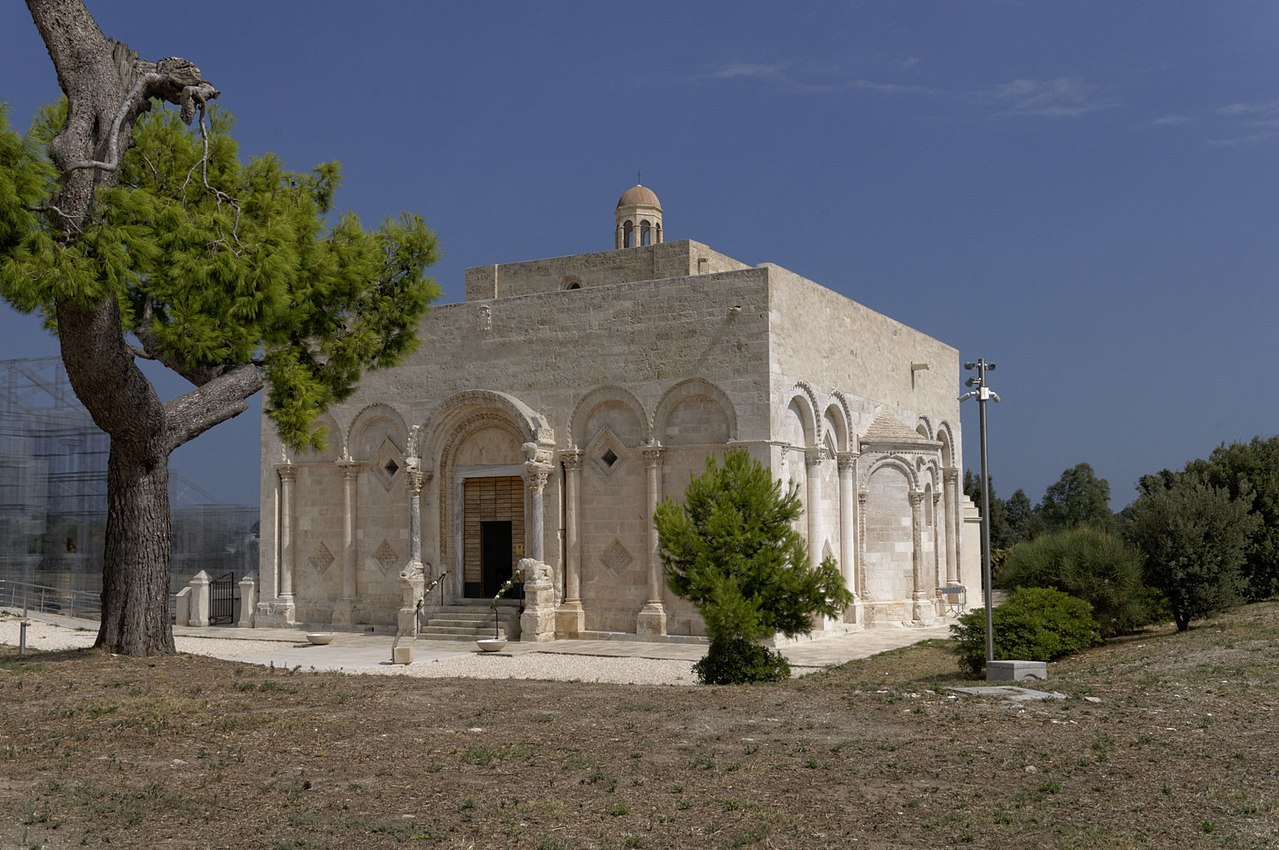
Photo: © Ra Boe / Wikipedia, CC BY-SA 3.0 de · Wikimedia Commons
Archaeological site
Human settlement in Manfredonia, Province of Foggia, Apulia, Italy
Manfredonia (FG), Puglia (Apulia)
Siponto (Latin: Sipontum, Ancient Greek: Σιπιούς) was an ancient port town and bishopric of Magna Graecia in Apulia, southern Italy. The town was abandoned after earthquakes in the 13th century; today the area is administered as a frazione of the comune of Manfredonia, in the province of Foggia. Siponto is located around 3 km south of Manfredonia.
According to ancient mythological writings, Sipontum was founded by Diomedes, product of the union of the Homeric hero of the same name with the daughter of the king of the Daunians. In reality, it is believed that Siponto was founded by the Daunians, an Iapygian tribe that inhabited northern Apulia in classical antiquity.
After falling into the hands of the Samnites, it was taken in about 335 BC by King Alexander of Epirus, uncle of Alexander the Great. In 189 BC it became a Roman colony with the name Sipontum. The name Sipious was used in Byzantine times. In 663 AD it was taken and destroyed by the Slavs.
In the ninth century, Sipontum was for a time in the power of the Saracens. In 1042 the Normans made it the seat of one of their twelve counties. The latter won a decisive victory there over the Byzantine general Argyrus in 1052.
Michael of Zahumlje on 10 July 926 sacked Siponto, which was a Byzantine town in Apulia. It remains unknown if he did this by Tomislav's supreme command as suggested by some historians. Apparently, Tomislav sent the Croatian navy under Michael's leadership to drive the Saracens from that part of southern Italy and free the city.
Before the second half of the 12th century, the Knight Templar and the Hospitalier Order founded their first Italian fincas in the area of Capitanata, which spanned from Siponto to Foggia, including Spinazzola, Borgonioni, Salpi, Trinitapoli, Santa Maria de Salinis, Belmonte, Lama and Bersentino. They were devoted to animal husbandry, the commerce of marine salt, the depot of dietary goods, the olive and vineyard cultivation, as well to the use of natural waterfalls through mills. Such a skilful administration of their assets, grew the economic and military potential of the Orders, who were engaged in the Crusades and in the protection of local communities.
Some of the Knight Templar's masserie survived until the 21st century.
Lastly, Siponto produced one of the greatest medieval Jewish scholars, Rabbi Isaac ben Melchizedek, who composed one of the earliest commentaries on the Mishnah, a compendium of ancient Jewish oral law.
In 1223, a major earthquake centered on Monte Gargano destroyed nearly every building in Siponto. The tremors continued for another two years, until, by 1225, everything was in ruins.
Text from Wikipedia, the free encyclopedia, under CC BY-SA 4.0. Full article: «Siponto».
Distances are as the crow flies, not walking or driving.


Siponto is in Manfredonia, in the province of Foggia (Puglia (Apulia)), Italy. GPS coordinates: 41.60694, 15.89583.
Nearby you’ll find: Hypogea in Siponto (400 m away), Archeological Park of Siponto (600 m away), Castello svevo angioino (3.4 km away).
Text. Wikipedia, the free encyclopedia (CC BY-SA 4.0).
Data. Wikidata (CC0); opening hours and contacts OpenStreetMap (ODbL).
Photos. Wikimedia Commons, author and licence on every image.
Updated 28 October 2026. All sources and licences