


- Free 1st Sunday
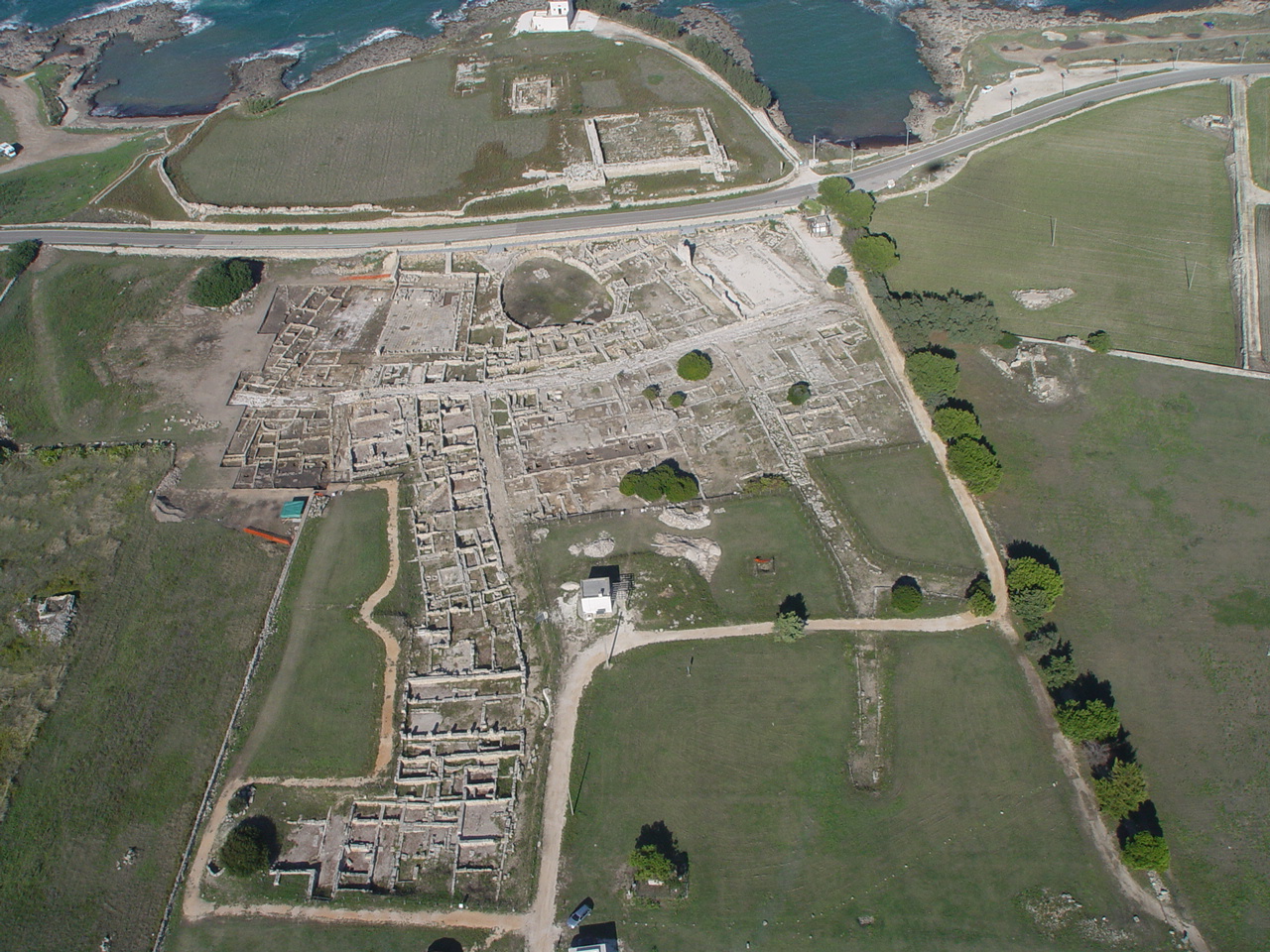
Photo: parolediburro, CC BY-SA 2.0 · Wikimedia Commons
Gnatia, Egnatia or Ignatia (Ancient Greek: Egnatia) was an ancient city of the Messapii, and their frontier town towards the Salentini. As Egnazia Appula, it was a medieval bishopric, which remains a Latin Catholic titular see.
It is located near the modern Fasano, in Salento, the southern part of Puglia (Apulia) region in southern Italy.
The first settlement known in the place dates from the Bronze Age (15th century BC). In the 11th century BC it was invaded by the Iapyges, while the Messapic (another Iapyyg tribe) era of the town (as well as for the whole Salento) began in the 8th century BC, to end in the 3rd century BC, with the Roman conquest.
Under the Romans, it was of importance for its trade, lying as it did on the sea, at the point where the Via Traiana joined the coast road, 50 kilometers (31 mi) southeast of Barium (Bari). It was famed for its solar and fire cult, which was described by Pliny and ridiculed by Horace.
The city, an early bishopric (see below), was abandoned in the Middle Ages due to the spread of malaria in the area, or to Vandal and Saracen attacks, or even given the last blow by Holy Roman Emperor Louis II of Italy (who also conquered Bari on Byzantium in 871).
It is last explicitly mentioned by a Ravenna author about 700, and Benedictine historian Paul the Deacon mentions successor see Monopoli as eagerly contested between Byzantines and Longobards as late as 763.
The ancient city walls were almost entirely destroyed over a century ago to provide building material. The walls have been described as being 8 yards (7.3 m) thick and 16 courses high. The place is famous for the discoveries made in its tombs. A considerable collection of antiquities from Gnatia is preserved at Fasano, though the best are in the museum at Bari.
Text from Wikipedia, the free encyclopedia, under CC BY-SA 4.0. Full article: «Gnatia».
Distances are as the crow flies, not walking or driving.


Gnatia is in Fasano, in the province of Brindisi (Puglia (Apulia)), Italy. Address: Fasano. GPS coordinates: 40.88780, 17.39110.
According to OpenStreetMap the opening hours are: March · every day: 8:30–17:30; April to September · every day: 8:30–19:15; October · every day: 8:30–18:00; November to February · every day: 8:30–16:30. Always check the official website before your visit.
There is an admission charge, but entry is free on the first Sunday of the month (Domenica al museo). Up-to-date prices are on the official website.
Nearby you’ll find: National Archaeological Museum of Egnatia (100 m away), Town hall of Fasano (6.5 km away), Museo della Casa alla Fasanese (6.5 km away).
Text. Wikipedia, the free encyclopedia (CC BY-SA 4.0).
Data. Wikidata (CC0); opening hours and contacts OpenStreetMap (ODbL).
Photos. Wikimedia Commons, author and licence on every image.
Updated 28 October 2026. All sources and licences