




- Free 1st Sunday
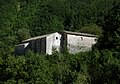
Photo: FAM1885, CC BY-SA 4.0 · Wikimedia Commons
Sentinum was a Roman town now located about a kilometre south of the present-day town of Sassoferrato in the Marche region of Italy.
Two areas of the town, the forum/urban baths and the suburban baths, can be visited today protected as an archaeological park.
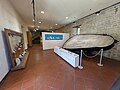
The local museum contains many finds from Sentinum.
The location of the original settlement of Sentinum is unknown and it was probably of Umbrian origin but from 390 BC the Senone Gauls ousted the Umbrians living in this region (between Ariminum and Ancona) and settled there. Sentinum was advantageously located at the confluence of ancient roads that came from Umbria to reach the Adriatic.
The town is best known for the great and decisive Battle of Sentinum which took place nearby during the 3rd Samnite War in 295 BC: the Romans lost 8,700 men but defeated a coalition of Samnites and Senones. In 283 BC after a series of victories, the Romans expelled the Senones from the region after which it became Gallia Togata.
During the civil wars of the 40s BC Sentinum sided with Mark Antony but in 41 BC was taken and destroyed by Quintus Salvidienus Rufus who was leading troops of Octavian. The town was soon rebuilt with a Hippodamian orthogonal plan and Augustan walls in opus vittatum over Roman concrete. It flourished under the Empire as a municipium.
The considerable wealth of the ancient city is evident from the archaeological record, amongst which is the large number of mosaics found in public and private buildings both inside and outside the walls.
Civic life at Sentinum seems to have collapsed at the time of the invasion of Alaric I and not to have recovered.
Since the early Middle Ages the ruins of Sentinum were used as a quarry for construction materials in Sassoferrato and the surrounding areas. The first to take an interest in local antiquities and to rediscover the site were Flavio Biondo and Ciriaco d'Ancona.
The opening of the Fabriano-Urbino railway line cut the city in two and numerous discoveries were made, leading to archeological excavations in 1890 which unearthed city gates, a road, cisterns, and the remains of houses. Notable finds include several mosaic pavements and inscriptions from the second half of the 3rd century AD, including three important tabulae patronatus, records of legal appointments of official patrons.
More recent excavations in 2005-8 found a large circular fountain at the crossroads of the cardo maximus and the decumanus maximus. Among important finds were two marble heads, one from the Julio-Claudian era now in the archaeological museum and a very fine one of a young ephebe.
Of the many mosaics found, some are still in situ and visible such as those in the baths of the archaeological area of Santa Lucia, mostly with black and white tesserae, while others have been preserved in museums.
The most famous mosaic is that of Aion, the young man standing on the left who personifies the eternity of time placed in the circle of the Zodiac, and Terra, Mother Earth, sitting in the right corner with the four seasons. It was found in the insula del Pozzo (for the proximity to an ancient well) in 1806 and preserved in the Glyptothek, Munich. When Aion is associated with the Zodiac and the Seasons, "eternity" is understood as a cyclical, uninterrupted return of events and things: a concept that goes hand-in-hand …
Text from Wikipedia, the free encyclopedia, under CC BY-SA 4.0. Full article: «Sentinum».
Distances are as the crow flies, not walking or driving.


Sentinum is in Sassoferrato, in the province of Ancona (Marche), Italy. GPS coordinates: 43.41846, 12.85235.
Nearby you’ll find: Sassoferrato (1.1 km away), Civica Raccolta d'Arte (2 km away), Sant'Emiliano in Congiuntoli (5.7 km away).
Text. Wikipedia, the free encyclopedia (CC BY-SA 4.0).
Data. Wikidata (CC0); opening hours and contacts OpenStreetMap (ODbL).
Photos. Wikimedia Commons, author and licence on every image.
Updated 28 October 2026. All sources and licences