


- Free 1st Sunday
Archaeological site, Pesaro (PU)
43°51′53″ N, 12°56′03″ E
No photo on Wikimedia Commons yet
The Necropolis of Novilara is an archaeological site in the Province of Pesaro and Urbino, Italy. It is one of the most well-studied funerary sites of the ancient Picene culture.
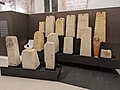
In 1860, a limestone stab depicting a naval scene was uncovered in San Nicola in Val Manente, near Novilara, though this discovery only became known to the broader archaeological community in 1871. In 1865, another slab—this one engraved with geometric and spiral designs—was uncovered in the courtyard of don Romolo Molaroni, the priest of Novilara. Spurred by these two finds, in 1873, Count Dario Bonamini attempted to excavate the site and, although he did uncover several graves, all documentation of the discoveries has been lost. In 1891, an archaeologist named Francesco Gamurrini heard reports that, 18 years prior, certain artifacts were discovered on the estate of Countess Servici at Novilara. Gamurrini conducted a one-day-long excavation in the area, which only yielded two new graves. Nevertheless, the results of his research were published in the Notizie degli Scavi in 1892, where they then attracted the attention of the archaeologist Edoardo Brizio, who recognized the tombs as typologically similar to other graves uncovered at Numana.
Brizio was appointed by the Italian government to conduct excavations in the area, which began in July 1892 and ended in 1893. Brizio subdivided the necropolis into two regions, which were dubbed the Servici and Molaroni areas according to the names of the original landowners. Brizio discovered at least 263 graves, 142 in the Molaroni area and 121 in the Servici, most of which dated to around the 8th or 7th-centuries BCE. During the 1892–1893 excavations, the archaeologist Raniero Mengarelli sought to classify the graves according to gender and age class. He determined gender based on the burial goods, and the age class based upon the size of the skeleton, which itself partially relied upon estimates of height obtained from measurements of the femur. Later in 1893, the anthropologist Giuseppe Sergi himself sought to identify the sex and age of the deceased, basing his analysis upon examination of the skulls and estimations of stature that employed the Manouvrier method, which was—at this time—the foremost technique for such studies. The majority of the artifacts discovered during the 1892–1893 excavation were stored in the Oliveriano Museum. However, the artifacts did not remain entirely safe: The museum suffered damages from an earthquake in 1916 and later it was looted during World War II. German soldiers stole 6 boxes containing grave goods from Novilara, though much of the material was eventually recovered. …
With the exception of one cremation burial, all of the deceased were laid on their right side in fetal position within simple trenches, almost always with wooden planks both covering and running across the sides of the tomb. Given the highly compacted position of the deceased, it is likely that they were wrapped in a shroud tightened with laces. Typically, items connected to social status—including genderized goods—were positioned next to the corpse, while any personal adornments were often situated above the body, and vessels were most usually placed either between the feet or in the corner of the trench beside the head. In general, any garments were placed near the body parts they had adorned in life—necklaces were placed near the necks, rings near the fingers, bracelets on the arms, fibulae on the chest, and earrings beside the head. According to Delpino, the high degree of similarity across most of the burials implies the existence of shared cultural ideals dictating such behavior and potentially even authorities capable of enforcing such rules.
In about 5% of the burials unearthed during the 2012–2013 excavations, a layer of sea pebbles covered the bottom of the tomb. This type of interment is not restricted to Novilara and appears across Picenum, though—within Novilara—it is confined to exclusively the northeastern section of the cemetery. It is possible that this burial type was connected with some distinct cultural group or social status; they are usually accompanied by more luxurious grave goods than other burials. Another tomb from the Servici cemetery contains a layer of lime and pebbles placed at the bottom of the grave, thereby preventing direct contact between the ground and the deceased. …
Genetic analysis of the burials at the necropolis revealed that they belonged to mitochondrial DNA (mtDNA) haplogroups typical of Western Eurasia such as H, H1, HV1, J1, and K. Moreover, the nucleotide diversity of the Novilaran sample—measuring at 0.0087 ± 0.005—was somewhat smaller than that of modern Italians, a result supported by additional resampling analysis. Based on a multidimensional scaling (MDS) analysis comparing the mtDNA of the first hypervariable region in the Novilaran population to samples of Italians who lived in 1833, it was determined that the former group displayed close genetic affinities with the 19th-century inhabitants of areas such Macerata, Ancona, Foligno, Terni, and Ascoli Piceno. The similarities between the different groups implies a level of genetic continuity between the ancient Novilaran populus and later occupants of the Marche region in Italy, itself indicating that later Roman, Celtic, and Gothic migrations had a limited impact upon the local gene pool. However, since the study exclusively surveyed mtDNA sequences, it can only support such continuity for the maternal lineages of the examined peoples, whereas other research on Y-chromosome DNA haplogroups in Italy has suggested greater variability amongst the paternal lineages. It is likely that these discrepancies result from differing histories of the male and female populations. …
Text from Wikipedia, the free encyclopedia, under CC BY-SA 4.0. Full article: «Novilara necropolis».
Distances are as the crow flies, not walking or driving.
We are missing the opening hours and photos. The data comes from open projects: if you add it there, it appears here at the next update.


Novilara necropolis is in Pesaro, in the province of Pesaro e Urbino (Marche), Italy. GPS coordinates: 43.86461, 12.93422.
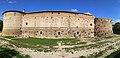
Nearby you’ll find: Lucus Pisaurensis (3.7 km away), Teatro Rossini (5.2 km away), Rocca Costanza (5.2 km away).
Text. Wikipedia, the free encyclopedia (CC BY-SA 4.0).
Data. Wikidata (CC0); opening hours and contacts OpenStreetMap (ODbL).
Updated 28 October 2026. All sources and licences