

- Free 1st Sunday
Photo: Unknown author Unknown author, Public domain · Wikimedia Commons
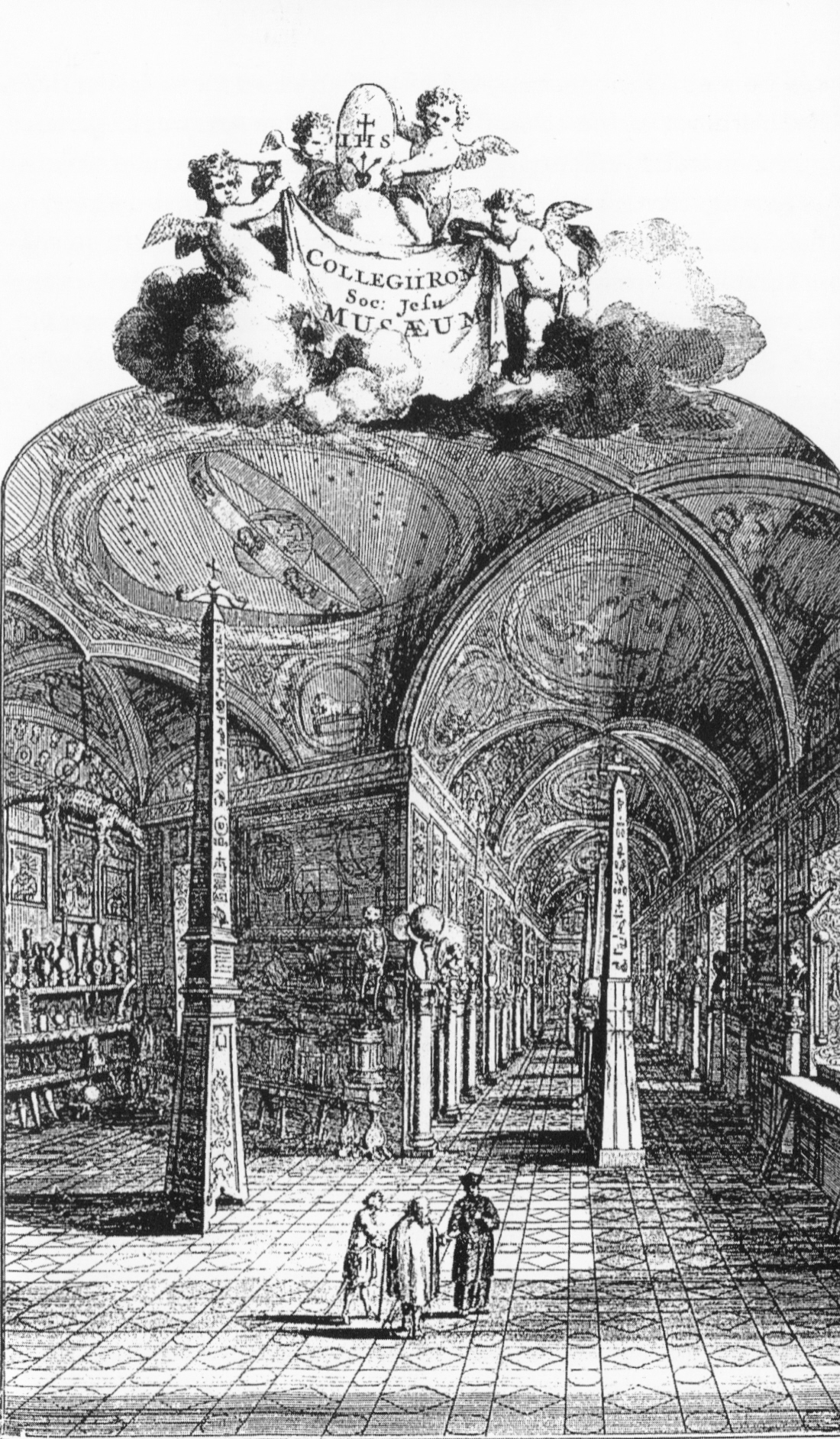
The Kircherian Museum was a public collection of antiquities and artifacts, a cabinet of curiosities, founded in 1651 by the Jesuit father Athanasius Kircher in the Roman College. Considered the first museum in the world, its collections were gradually dispersed over the centuries under different curatorships. After the Unification of Italy, the museum was dissolved in 1916 and its collection was granted to various other Roman and regional museums.
In 1651, Italian aristocrat and antiquarian Alfonso Donnini donated his "cabinet of curiosities" to the members of the Roman College. The collection contained "various curious and precious things so that they can take care of it and their studies may benefit from it." Father Athanasius Kircher (1602–1680), professor of mathematics, physics, and oriental languages, took care of the collection and transformed it into a museum of antiquity, technology, art, science, and archeology.
Famous and admired by the most enlightened minds of his time and by his students at the Roman College for his scientific knowledge and philosophical eclecticism, Kircher added natural history objects collected during his expeditions to Sicily (1630) and Malta (1636), musical instruments, and even machines of his own invention. He used his contacts, particularly Jesuits abroad, to augment ethnographic collections with exotic objects from overseas missions.
The museum quickly became popular and hosted many visitors. The first catalog was published in 1678 by Giorgio de Sepibus and included some illustrated tables, today the only evidence of the museum's layout. After Kircher's death in 1680, the museum went through a period of neglect. It took on new life and vigor thanks to the activity of the new curator Filippo Bonanni who published a second catalog in 1709. By comparing the two catalogs, it is clear that many objects had already disappeared from the collection. Over time the museum regained its former glory and thanks to the aid received and the many donations, it became the seat of many important collections on fields of knowledge from experimental philosophy to esotericism to technology. Fathers Orazio Borgondio (1725-1741), Contuccio Contucci (1741-1761) and Antonio Maria Ambrogi (1761-1772) succeeded Bonanni as curators; during this period the Marquis Alessandro Gregorio Capponi and King August of Poland added their donations to the museum. The archaeology collection was expanded by the Jesuit Contuccio Contucci, director of the museum between 1741 and 1761. …
An exhibition dedicated the Kircherian museum was held in Rome at the Palazzo Venezia in 2001. The Italian Ministero della Cultura published a catalog with photos of objects in the Kircher collection that had been dispersed to other institutions. In recent years, the teachers and pupils of the Liceo Visconti have prepared a museum layout that recalls the historic Kircherian museum.
Text from Wikipedia, the free encyclopedia, under CC BY-SA 4.0. Full article: «Kircher Collection».
Events and people from Wikidata (CC0).
Distances are as the crow flies, not walking or driving.


Kircher Collection is in Rome, in the province of Roma (Lazio), Italy. Address: Piazza del Collegio Romano 4. GPS coordinates: 41.89895, 12.48456.
Wikidata dates it to 1651.
Nearby you’ll find: Forum Suarium (100 m away), Palazzo San Felice (100 m away), Temple of Serapis (100 m away).
Text. Wikipedia, the free encyclopedia (CC BY-SA 4.0).
Data. Wikidata (CC0); opening hours and contacts OpenStreetMap (ODbL).
Photos. Wikimedia Commons, author and licence on every image.
Updated 28 October 2026. All sources and licences