



- Free 1st Sunday
Photo: Stefano Puzzuoli, CC BY-SA 4.0 · Wikimedia Commons
Museum, 1866
Italian natural history museum at Pisa
The Natural History Museum of the University of Pisa, located in Calci, about 9 kilometres (6 mi) east of Pisa, is dedicated to the study and display of natural history. The museum is home to one of the largest collections of cetacean skeletons in Europe. In addition to its extensive cetacean holdings, the museum's oldest collections include seashells amassed by the Italian invertebrate scientist, Niccolò Gualtieri.
The museum has the largest freshwater aquarium in Italy at 60,000 liters. The first sector of the exhibition is entirely dedicated to Lake Tanganyika and hosts various specimens of cichlids belonging to the Tropheus. The second section houses dipnoi, arowana, some freshwater puffers, an axolotl colony, a softshell turtle and a mata mata specimen. The third sector is the largest tank and is dedicated to Koi carp. The fourth and fifth sectors show off world fish biodiversity with Asian giant gourami, the American Oscar fish and the alligator pike.
There is a 50 thousand-year-old fossil skeleton of Hippopotamus antiquus. Also, there is a reconstruction of Indohyus, a terrestrial mammal ancestor of modern cetaceans. The exhibition then continues with the cast of a skeleton and the reconstruction of an Ambulocetus natans, an ancient cetacean that was probably able to both swim and walk.
There is a holotype of Aegyptocetus tarfa found in 2002 by a marble cutter of Pietrasanta in a block of Egyptian limestone. The path then ends with a series of casts of fossils belonging to Cynthiacetus.
The museum dates back to the 16th century when the Grand Duke of Tuscany Ferdinando I de 'Medici set up a cabinet of curiosities attached to the Giardino dei Semplici.
The direction was entrusted to Luca Ghini, founder and curator of the botanical garden. In 1595, Ferdinando ordered that the various Florentine naturalistic collections was brought into the museum and founded one of the first museums in the world.
The museum was enriched with new collections: in particular, in 1747, Francis I of Lorraine bought an important part of the malacological collection for the museum of the Florentine physician Niccolò Gualtieri, including more than three thousand specimens collected by the Dutch naturalist Georg Eberhard Rumphius.
In the 19th century, the museum had its period of maximum expansion. In 1814, the University of Pisa decided to separate the chairs of scientific teaching, entrusting Gaetano Savi with that of Botany and Giorgio Santi that of zoology, paleontology and geology. This separation of the chairs meant that the museum, which also included the botanical collections under a single direction, was divided into two distinct administrations with greater decision-making autonomy.
Under the direction of Paolo Savi, the collections were enriched, the exhibition spaces were enlarged, and hundreds of writings were published. Savi called upon the Neapolitan Leopoldo Pilla to fill the museum and this brought a large number of Vesuvian rocks and crystals with him.
The museum was shaken by the world wars. During the Second World War, some of the collections were damaged by Allied bombings.
Text from Wikipedia, the free encyclopedia, under CC BY-SA 4.0. Full article: «Natural History Museum of the University of Pisa».
Events and people from Wikidata (CC0).
Distances are as the crow flies, not walking or driving.


Natural History Museum of the University of Pisa is in Calci, in the province of Pisa (Tuscany), Italy. Address: Via Roma, 79, 56011 Calci. GPS coordinates: 43.72188, 10.52271.
According to OpenStreetMap the opening hours are: Oct-May Mo-Sa 09:00-19:00; Oct-May Su 09:00-20:00; Jun-Sep 10:00-20:00. Always check the official website before your visit.
There is an admission charge. Up-to-date prices are on the official website.
According to OpenStreetMap data, the site is partly wheelchair accessible.
Wikidata dates it to 1866.
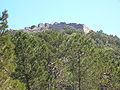
Nearby you’ll find: Pisa Charterhouse (0 m away), Rocca della Verruca (1.9 km away), San Michele alla Verruca (2.2 km away).
Text. Wikipedia, the free encyclopedia (CC BY-SA 4.0).
Data. Wikidata (CC0); opening hours and contacts OpenStreetMap (ODbL).
Photos. Wikimedia Commons, author and licence on every image.
Updated 28 October 2026. All sources and licences