


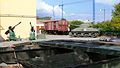
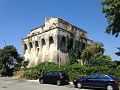


Photo: Pivari.com, CC BY-SA 4.0 · Wikimedia Commons
Museum
National Archeological Museum of Pontecagnano
Museum in Pontecagnano Faiano, Italy
Pontecagnano Faiano (SA), Campania
At a glance
- Type
- Museum
- Protection
- Italian national heritage
- Coordinates
- 40°38′24″ N, 14°52′45″ E
- Address
- Via Lucania, 84036 Pontecagnano
History and description
The Pontecagnano National Archaeological Museum is a museum in Pontecagnano Faiano, in the province of Salerno, Italy that opened in 2007. Since December 2014, the museum has been managed by the Campania Museum Complex.
History
The museum houses archaeological material found during the excavations of an ancient Villanovan settlement perhaps called "Amina" on which rose the ancient Picentia and the funerary assemblages of about 9,000 tombs of the necropolis discovered in the area, dating from 3000 BCE to the third century CE.
With the systematic excavation of the necropolis started by Bruno D'Agostino in 1962, a new chapter of the ancient history of Campania has opened. The vast necropolis, which, from the end of the 10th to the beginning of the 9th century BCE, was distributed around a large living space, are the most eloquent testimony of the expansion of Etruscan people in southern Italy in advance and then in conjunction with the process of Greek colonization of the coastal strip. The great center of Pontecagnano constitutes the most advanced point of that expansion and, at least since the end of the 6th century BCE had true urban characteristics. The considerable quantity of imported objects found in the funerary objects, both from the Greek and Near Eastern world and from the Greek and Italian ones, testify to its function as an emporion and its cultural richness.
The realization of the museum, which illustrates in a strictly scientific but at the same time suggestive and attractive, the evidence returned by the ancient settlement, comes from an intense and profitable collaboration between the Superintendence for Archaeological Heritage of the provinces of Salerno, Avellino and Benevento, the University of Naples "l'Orientale" and the University of Salerno. The Museum has been created for functional lots thanks to the funding assured in all these years by the Ministry for Cultural Assets and Activities and by the Campania region, while the Municipality of Pontecagnano has acquired the land on which the new building is located. …
Text from Wikipedia, the free encyclopedia, under CC BY-SA 4.0. Full article: «National Archeological Museum of Pontecagnano».
Timeline
- 2007Opened
Events and people from Wikidata (CC0).
Photos
Getting there
PontecagnanoTrain, nearest
500 m as the crow flies
National Archeological Museum of PontecagnanoVia Lucania, 84036 Pontecagnano
Aeroporto di Salerno - Costa d'Amalfi3.5 km
Distances are as the crow flies, not walking or driving.
Loading map…
Nearby
See on the mapMore museums in Campania

- Free 1st Sunday


- Free 1st Sunday

Frequently asked questions
Where is National Archeological Museum of Pontecagnano?
National Archeological Museum of Pontecagnano is in Pontecagnano Faiano, in the province of Salerno (Campania), Italy. Address: Via Lucania, 84036 Pontecagnano. GPS coordinates: 40.64009, 14.87914.
What are the opening hours of National Archeological Museum of Pontecagnano?
According to OpenStreetMap the opening hours are: Tuesday to Sunday: 9:00–19:00; Monday: Closed. Always check the official website before your visit.
Can I visit National Archeological Museum of Pontecagnano for free?
Yes: entry is free on the first Sunday of every month, under the Italian “Domenica al museo” scheme.
What else is there to see near National Archeological Museum of Pontecagnano?
Nearby you’ll find: Archaeological park of the ancient Picentia (600 m away), Castello di Montevetrano (4 km away), Museo dello sbarco e Salerno Capitale (5.3 km away).
Sources and licences
Text. Wikipedia, the free encyclopedia (CC BY-SA 4.0).
Data. Wikidata (CC0); opening hours and contacts OpenStreetMap (ODbL).
Photos. Wikimedia Commons, author and licence on every image.
Credits for the 9 photos
- Museo archeologico nazionale Pontecagnano — Pivari.com, CC BY-SA 4.0
- Museo etrusco pontecagnano1 — Viaggiatore73, CC BY-SA 4.0
- Museo Pontecagnano 1 — Liberotag73, Public domain
- Oinochoe attica con fuga di ulisse dalla grotta di polifemo, 500-475 ac ca. (pontecagnano faiano, museo) — Sailko, CC BY 3.0
- Etruscan-Corinthian Kotyle (cup) with Gorgon, from Pontecagnano, beginning 6th century BC, Monsters. Fantastic Creatures of Fear and Myth Exhibition, Palazzo Massimo alle Terme, Rome (12818177694) — Carole Raddato from FRANKFURT, Germany, CC BY-SA 2.0
- Maschera equina, da pontecagnano, 710 ac ca. (pontecagnano SA, man) 01 — Sailko, CC BY 3.0
- Maschera equina, da pontecagnano, 710 ac ca. (pontecagnano SA, man) 02 leonessa e gazzella — Sailko, CC BY 3.0
- Pittore del lupo cattivo (etrusco-corinzio), kotyle con gorgone, da 600-585 ac ca., pontecagnano (MAN pontecagnano) — Sailko, CC BY-SA 3.0
- Quattro cinerari villanoviani da capaccio (da paestum, a sx) e tre da pontecagnano (dx), IX-VIII secolo ac. (man di paestum e di pontecagnano) — Sailko, CC BY-SA 4.0
Updated 28 October 2026. All sources and licences