

- Free 1st Sunday
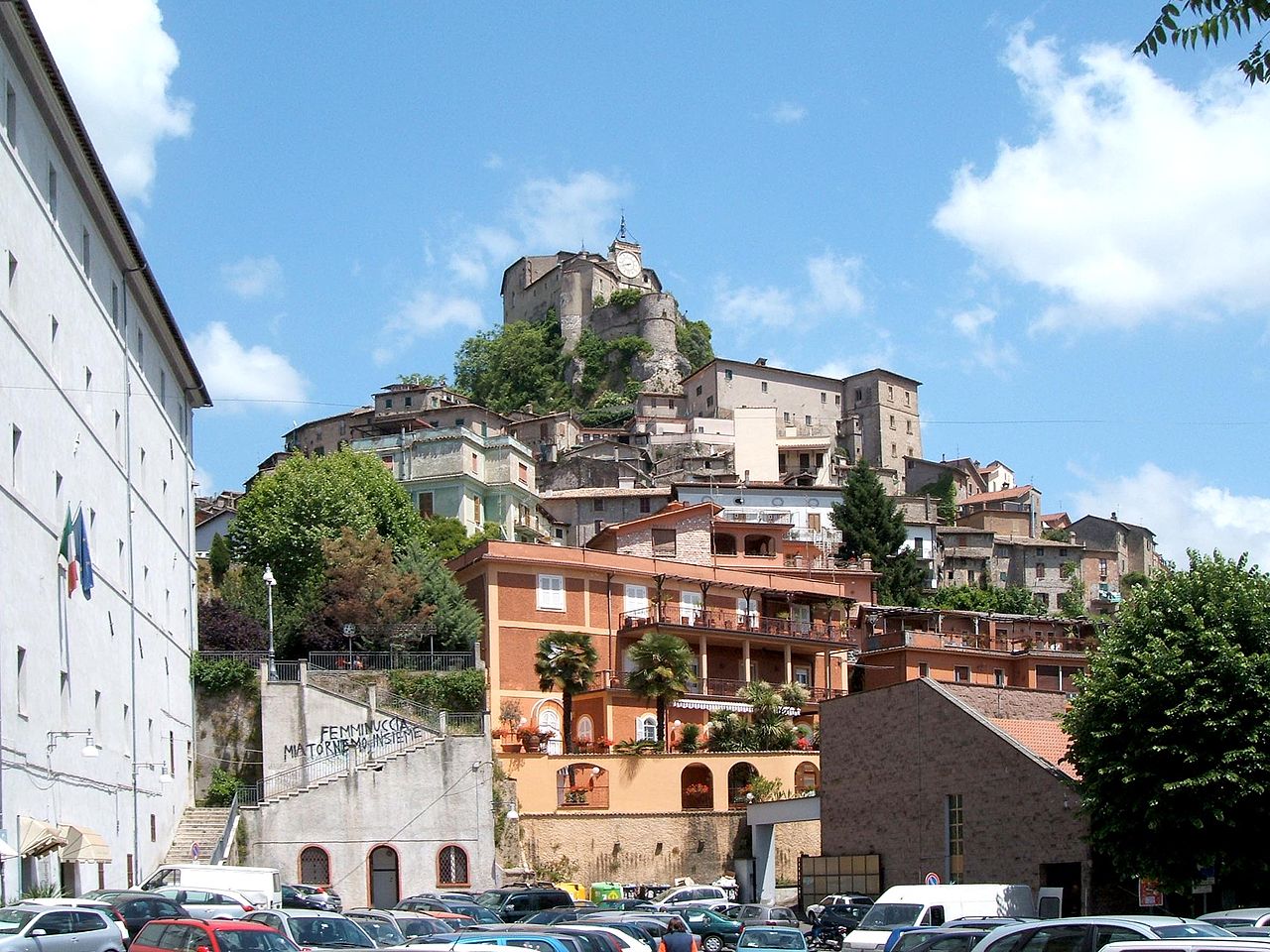
Photo No machine-readable author provided. Pippo-b assumed (based on copyright claims)., Public domain
Roma · Lazio
In Subiaco the atlas lists 12 historic places: 6 abbeys and monasteries, 2 museums, 2 archaeological sites, 1 historic village and 1 castle.
Of these, 2 list opening hours.
Don’t miss: Monastery of Saint Benedict, Italian monastery.
Subiaco is a city in Lazio in Italy. The Benedictine Order originated here, and the city is thus a major site for religious pilgrimage.
The Emperor Nero built a villa here, and the name of the town comes from the fact that he dammed the River Aniene to make lakes, and the town was below the lakes, or Sublacus in Latin.
At the age of fourteen, in around 494 AD, St. Benedict took up residence in a cave, where he stayed for three years. A monastery already existed in the area, but Benedict chose to live alone in the cave, living only on scraps of food lowered in a basket by a monk. The cave, or grotto, became the cradle of the Benedictine Order, and St. Benedict later built twelve other monasteries.
Text from Wikivoyage, CC BY-SA, abridged · Wikivoyage


By car: From Rome take the E80 Autostrada in the direction of L’Aquila. Leave at Arsoli and follow the SS411 in a southeasterly direction to Subiaco.
Text from Wikivoyage, CC BY-SA, abridged · Wikivoyage
Monastery of St. Benedict (Sacro Speco). Daily 09:30-12:30 and 15:00-18:00. This is built on the side of a forested mountain cliff. The oldest parts of the monastery are the lowest levels. The Upper Church was constructed in the 13th and 14th Centuries and contains frescoes by the Sienese and Umbrian schools of the 14th century. On the front wall is a portrait of Benedict seated on a throne, accompanied by saints and members of his family. Stairs lead down into the Lower Church. This is decorated with frescoes from the 13th century. A chapel on the left side of the Lower Church contains the Sacred Cave where St. Benedict lived. Twelve red lamps hang over the cave, representing the twelve monasteries that Benedict founded. In the cave itself is a marble statue of the saint by Antonio Raggi (1657), disciple of Bernini. A spiral stairway leads from just outside the Cave Chapel up to St. Gregory's Chapel, which contains some of the oldest frescoes at the monastery. The frescoes date from the early 13th century. In the corner is a full-length fresco of St. Francis of Assisi that was painted during his lifetime. St Francis is believed to have visited the monastery. From St.
Text from Wikivoyage, CC BY-SA, abridged · Wikivoyage · Underlined names link to our own pages.