

Photo patano, CC BY-SA 3.0
Genova · Liguria
Things to see in Genoa – page 2
Page 2 of 5 of historic places in Genoa.
Genoa: Le Strade Nuove and the system of the Palazzi dei Rolli
- 463historic places
- 558,745inhabitants
- 20 maltitude
The town
Genoa (Italian: Genova, Ligurian: Zena) is a historic port city in northern Italy, the capital of the Liguria region. As a tourist attraction, it is often overshadowed by cities such as Rome or Venice, even though it has a long history as a rich and powerful trade centre. However, with its multitude of hidden gems behind cozy alleyways, excellent cuisine (notably pesto, focaccia, and seafood), renovated old port, beautiful sights (including one of Europe's biggest aquariums), and its position as the European Capital of Culture in 2004, the birthplace of explorer Christopher Columbus (Cristoforo Colombo) is an enticing place which is gradually becoming more included in the tourism market.
Text from Wikivoyage, CC BY-SA, abridged · Wikivoyage
463 places
Villas and palaces 297


Show all 65 places
 Palazzo Lomellini-Serra
 Palazzo Sinibaldo Fieschi
 Villa Imperiale Scassi
 Palazzo Branca Doria
 Palazzo Gio Andrea Cicala
 Palazzo Gio Vincenzo Imperiale
 Frugone Collection
 Villa delle Peschiere
 Villa Gentile Bickley
 Palazzo del Banco di Napoli
 Palazzetto Criminale
 Villa Croce
 Villa Grimaldi
 Villa Lercari Sauli
 Villa Saluzzo Bombrini
 Palazzo Agostino e Benedetto Viale
 Palazzo dell'Accademia ligustica di belle arti
 Palazzo della Banca d'Italia
 Palazzo Doria De Fornari
 Palazzo Filippo Lomellini
 Palazzo Giovanni Garibaldi
 Palazzo Sauli
 Villa Asplanati Morsello
 Villa Di Negro Rosazza dello Scoglietto
 Villa Spinola Canepa
 Villa Imperiale Casanova
 Villa Spinola Muratori
 Villa Spinola Narisano (Genoa)
 Villa Serra Richini
 Palazzo Adorno
 Palazzo Agostino De Franchi
 Palazzo Cattaneo Della Volta (Genoa)
 Palazzo dell'Università
 Palazzo della Regione Liguria
 Palazzo Domenico Grillo
 Palazzo Grimaldi Gio. Battista
 Palazzo Lazzaro Grimaldi
 Palazzo Orzali
 Palazzo Piero Durazzo
 Palazzo Vincenzo Giustiniani Banca
 Villa Imperiale
 Villa Lomellini Rostan
 Hotel Bristol Palace
 Palazzo Agostino Spinola
 Palazzo Giustiniani
 Palazzo Bartolomeo Invrea
 Palazzo Basadonne
 Palazzo Bernardo e Giuseppe De Franchi
 Palazzo Brancaleone Grillo
 Palazzo Centurione-Gavotti
 Palazzo Francesco Borsotto
 Palazzo Gaspare Basadonne
 Palazzo Gio Battista Saluzzo
 Palazzo Giorgio Doria
 Palazzo Jacopo Spinola
 Palazzo Lorenzo Cattaneo
 Palazzo Marc'Aurelio Rebuffo
 Palazzo Marcantonio Giustiniani
 Palazzo Spinola Nicolò
Museums 65


Fortresses and towers 46






Historic theatres 22


Abbeys and monasteries 15


Getting there
By plane: Genoa Cristoforo Colombo Airport (GOA IATA). Provides several daily flights from major European cities such as Rome, London, Munich, Amsterdam, Paris and Madrid. From the airport, it is fairly easy to rent a car or take a bus to the city centre. The main airport bus, Volabus, drops off at the ferry terminal (Via Milano) and the two train stations. On the way back, it picks up only at the two train stations and near the Metro at Piazza De Ferrari. It can only be boarded with the METDaily 24-hour ticket which costs €10 (can be bought on the bus). However, this will then be valid for most public transport options in the city for connections and exploring (see “Get Around”). The Genova Airlink connects only to the nearby railway station. Taxis from the airport to the city center have a fixed rate (plus an extra fee for large groups and a per-person fee at night).
By train: It is easy to travel to Genoa by train from Milan, Turin, Rome, Tuscany (Pisa, Livorno and Florence (changing train in Pisa or Viareggio)) and France (changing train in Ventimiglia). There are regular InterCity trains of Trenitalia every 1-2 hours per direction with regional trains running every 20-60 minutes in all directions.
A direct ÖBB Nightjet night train runs several times a week from Munich and Vienna, taking 14 hr 20 min via Klagenfurt, Villach, Padua, Vicenza, Verona Porta Nuova and Milan Rogoredo to Genoa Piazza Principe, and continuing to La Spezia.
Text from Wikivoyage, CC BY-SA, abridged · Wikivoyage
What to see, according to Wikivoyage
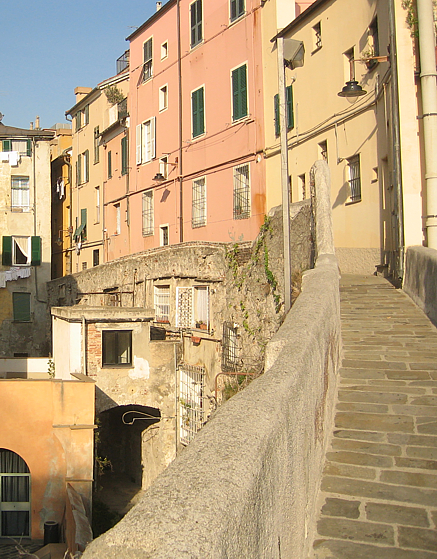
Old City: Genoa has one of Europe’s largest preserved historical centers, made up of an incredible number of tiny streets and alleys called Caruggi. Walking through it will plunk you right back to olden times when Genoa was the most important harbor of the Mediterranean sea.
Christopher Columbus House (Casa di Cristoforo Colombo) (Piazza Dante). The house where Columbus lived as a child.
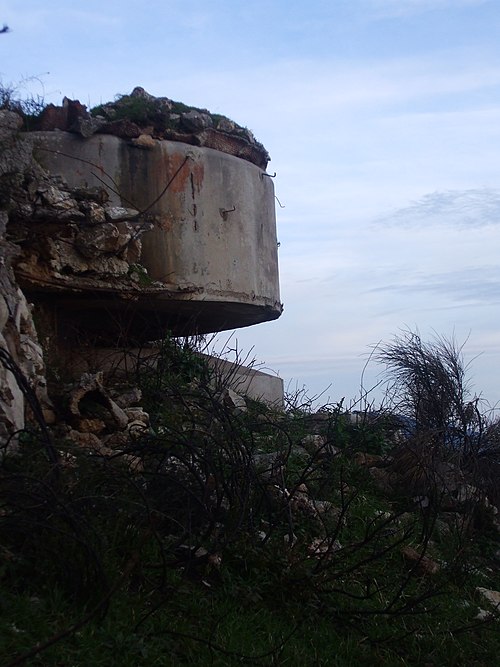
The impressive fortification belt built on the hills surrounding the city, originating in the 16th century.
Spianata Castelletto. A nice belvedere where one can have a pleasant view of the city and of the seaport. It can be reached by public lift from Piazza della Nunziata or on foot from that very same square. Via Garibaldi. also known as Via Aurea and Strada Nuova.
Some similar buildings are also found in Via Balbi.
The Old Harbour (Porto Antico) (north of the Aquarium). An entertainment area with museums, cinemas, cafés and also a beautiful promenade along the sea. Lanterna di Genova.
A lot of beautiful churches, some of which date back to the Romanesque time (San Giovanni di Pre', San Donato, Santa Maria del Castello)
Castello d'Albertis (D’Albertis Castle Museum of World Cultures).
Text from Wikivoyage, CC BY-SA, abridged · Wikivoyage · Underlined names link to our own pages.