


- UNESCO
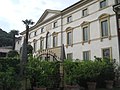
Photo: Syrio, CC BY-SA 4.0 · Wikimedia Commons
Archaeological site
Archaeological site in Marano di Valpolicella
Marano di Valpolicella (VR), Veneto
The temple of Minerva is an archaeological area located on Mount Castelon, in the municipality of Marano di Valpolicella, in the province of Verona. The site, popular as a sanctuary at least since the 6th century BC, became a place of worship dedicated to Minerva in the 2nd century BC.
The site is located on the eastern slopes of Mount Castelòn, between the valleys of Fumane and Marano. In this place, in ancient times, there must have been a source of water that sprung from the rock, and a natural depression where water probably accumulated. This site was visited since the Iron Age, in the 6th century BC: the ancient believers, in addition to allocating the natural cavity to the collection of offerings or sacrificial remains, they set up a space to light a votive fire, that is, a place where to burn gifts for the gods. The archaeological investigations (made by the accumulation of burned earth, which is all that remains of this phase of the site) have returned various organic remains (seeds, wood fragments and remains of food) as well as bronze rings, fibulae, bullae and ceramic pieces.
Since the end of the 2nd century BC the site, which must have acquired a certain importance and cultural value, was home to a stone-made temple dedicated to Minerva. The building technique and architectural style suggest that a Roman-Hellenistic client paid for this intervention. Little is known about this building (which largely lies under the ruins of the most recent temple): it was equipped with a central room paved in pink opus caementicium, with inserted mosaic tiles. To the south of the temple there was an elongated environment, paved in white opus caementicium; to the north another space with pink limestone slabs floor. The temple had to be richly frescoed, since numerous pictorial fragments have been recovered: the decoration was in the so-called "first Pompeian style", which simulated the stone and marble walls of Hellenistic palaces, and, in this case, had a wave pattern along the entire lower part of the walls, perhaps in reference to the water present at the site. …
Text from Wikipedia, the free encyclopedia, under CC BY-SA 4.0. Full article: «Temple of Minerva».
Events and people from Wikidata (CC0).
Distances are as the crow flies, not walking or driving.


Temple of Minerva is in Marano di Valpolicella, in the province of Verona (Veneto), Italy. GPS coordinates: 45.56230, 10.91019.
Nearby you’ll find: Villa Lorenzi (1.3 km away), Villa Ravignani, Guarienti (3.1 km away), Villa Bertoldi (3.1 km away).
Text. Wikipedia, the free encyclopedia (CC BY-SA 4.0).
Data. Wikidata (CC0); opening hours and contacts OpenStreetMap (ODbL).
Photos. Wikimedia Commons, author and licence on every image.
Updated 28 October 2026. All sources and licences