


Photo: The original uploader was AndreaJatta at Italian Wikipedia., GFDL · Wikimedia Commons
Museum
Museo archeologico nazionale Jatta
Museum in Ruvo di Puglia, Italy
At a glance
- Type
- Museum
- Founder
- Giovanni Jatta
- Protection
- Italian national heritage
- Coordinates
- 41°06′49″ N, 16°29′09″ E
- Address
- Piazza G. Bovio, 35, 70037 Ruvo di Puglia
History and description
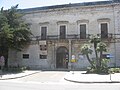
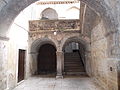
The Jatta National Archaeological Museum in Ruvo di Puglia, a historic and artistic city in southern Italy, is housed in rooms of Palazzo Jatta and represents the only example in Italy of a nineteenth-century private collection that has remained unaltered from its original museographic concept. The finds preserved in the museum were collected by the archaeologist Giovanni Jatta in the early nineteenth century and his collection was subsequently enriched by his nephew of the same name and was sold to the Italian state in the twentieth century.
Since December 2014 the Ministry for Cultural Heritage and Activities has been managing it through the Apulia Museum Complex, which in December 2019 became the Regional Directorate for Museums.
History of the Jatta collection
The year 1822 brought Ruvo di Puglia on the lips of all the citizens of the Kingdom of the Two Sicilies. As Giovanni Jatta junior recalls:
"People no longer came to the city to provide themselves with food; because the vendors of bread, wine and camangiari, housed in small tents, provided the necessary in the same countryside."
The fortuitous discovery in 1820 of the vascular heritage present in the subsoil triggered a real treasure hunt and all Ruvo was turned upside down not so much with the interest of setting up a museum or obtaining historically useful information, but with the intention of selling the precious pieces in order to have a personal advantage. Two years later there was a boom in excavations and even the first intellectuals began to take an interest in the finds. In addition to the looting of the ancient necropolis and the market built around the antiques, some noble Houses from Ruvo, such as Caputi, Fenicia, Jatta, Lojodice and others, set up private museums. However, all these Houses, with the exception of the Jatta, then dispersed their archaeological heritage by selling it to private individuals and often abroad, thus causing a dispersion of the stolen historical riches. The exception was represented by the Jatta, especially by Giovanni Jatta senior, magistrate in Naples, who financed various private excavations with the aim of expanding his small collection, mostly composed of coins. Aided by his brother Giulio, in 1844, the year of Giovanni Jatta's death, the collection included about five hundred finds. The heir of this huge patrimony was the nephew Giovannino, son of Giulio Jatta and Giulia Viesti, however in the will the jurist had ordered the heir to give the wealth to the King of the time to keep them in the Archaeological Museum of Naples. But Giovannino, being still too young, was taken over by his mother Giulia who, after her husband also died, decided to ask the Royal Government to leave the Jatta collection in Ruvo to be exhibited in a building used as a residence and museum. In 1848 the king consented to Mrs. Viesti's requests. With Giovanni Jatta junior's coming of age, the collection had already passed to two thousand specimens and it was up to him to arrange all the finds in the four rooms set up for the museum and in a fifth dedicated to jewelry and coins: the room-by-room arrangement of the finds. it has come down to us intact. In the following centuries some pieces discovered and found by Antonio Jatta were added. …
Exhibition itinerary
In the first room there is an inscription in Latin which commemorates the founders of the Museum. Mainly there are terracotta vases with geometric decorations and dating back to the Peucetian age of the seventh and sixth centuries BC. In the center of the room there is a gigantic jar reassembled and once used for the collection of food liquids. Under the large window a tuff sarcophagus has been reconstructed with unpainted finds inside. Next to the sarcophagus there are two inscriptions engraved on Roman sepulchral plates dating back to the 2nd century: the first collects the dedication of the spouses Marcus Licinius Hermogenes and Licinia Charite to their son who died at the age of seven; the second inscription shows Julia Eutaxia's dedication to her husband.
In the adjacent showcases there are fragmentary remains of architectural decorations, statuettes called prayers for the position of the arms, a long series of tools and statuettes of divinities. The tintinnabula, small ceramic animals containing a pebble and used by children as toys arouse curiosity.
The second room, the largest, contains about 700 vases of Greek or local production. The vases were created with the technique of red figures, or red images on a black background. At the entrance to the room it is possible to admire a large crater with masks from the 4th century BC. depicting Apollo in the act of shooting arrows at the Niobids, the work of the Baltimore Painter. The vase is flanked by two amphorae from the same period but by the painter Lycurgus: the first bears the scenes of Heracles in the temple with Antigone and Creon and of the fight between Amazons and warriors around Heracles; the second, instead, the delivery of weapons to Achilles by the Nereids. Noteworthy is the Attic bell-shaped crater depicting the rise of Heracles to Olympus.
The showcases arranged all around contain a great variety of finds ranging from amphorae and vases of ever smaller dimensions to objects of funeral and daily use. In addition, a Latin inscription is preserved in this room which recalls the construction of the walls of the Roman Rubi (Ruvo). …
Text from Wikipedia, the free encyclopedia, under CC BY-SA 4.0. Full article: «Museo archeologico nazionale Jatta».
Timeline
- 1993Opened
People
Events and people from Wikidata (CC0).
Photos
Getting there
Ruvo di PugliaTrain, nearest
600 m as the crow flies
Museo archeologico nazionale JattaPiazza G. Bovio, 35, 70037 Ruvo di Puglia
Aeroporto di Bari-Palese22.6 km
Distances are as the crow flies, not walking or driving.
Loading map…
Nearby
See on the mapMore museums in Puglia (Apulia)


- Free 1st Sunday

- Free 1st Sunday

- UNESCO

Frequently asked questions
Where is Museo archeologico nazionale Jatta?
Museo archeologico nazionale Jatta is in Ruvo di Puglia, in the province of Bari (Puglia (Apulia)), Italy. Address: Piazza G. Bovio, 35, 70037 Ruvo di Puglia. GPS coordinates: 41.11361, 16.48583.
What are the opening hours of Museo archeologico nazionale Jatta?
According to OpenStreetMap the opening hours are: Mo-Fr 08:30-13:30; Sa 14:30-19:30; Su [1,3] 08:30-13:30; Su [2,4] off. Always check the official website before your visit.
Can I visit Museo archeologico nazionale Jatta for free?
Yes: entry is free on the first Sunday of every month, under the Italian “Domenica al museo” scheme.
What else is there to see near Museo archeologico nazionale Jatta?
Nearby you’ll find: Palazzo Jatta (0 m away), Palazzo Spada (200 m away), Palazzo Caputi (300 m away).
Sources and licences
Text. Wikipedia, the free encyclopedia (CC BY-SA 4.0).
Data. Wikidata (CC0); opening hours and contacts OpenStreetMap (ODbL).
Photos. Wikimedia Commons, author and licence on every image.
Credits for the 9 photos
- CortilePalazzojatta2 — The original uploader was AndreaJatta at Italian Wikipedia., GFDL
- Manifattura apula, rhyton a forma di scilla, iv secolo ac. (ruvo di puglia, museo nazionale jatta) 01 — Sailko, CC BY 3.0
- Museo Nazionale Jatta - Ruvo di Puglia — TONIODELBARRIO6464, CC BY-SA 4.0
- Ruvo di Puglia - Museo nazionale Jatta - 2025-09-22 20-39-17 001 — Sabrina.colacicco, CC BY-SA 4.0
- Ruvo di Puglia - Museo nazionale Jatta - 2025-09-22 20-42-20 003 — Sabrina.colacicco, CC BY-SA 4.0
- Museo Jatta — Dominy Talosyen, CC BY 4.0
- Pittore della nascita di dioniso (cerchia, taranto), cratere a volute con momenti prima del combattim. tra eracle e kyknos, 410-390 ac ca. (museo naz. jatta, ruvo dp) 01 — Francesco Bini, CC BY-SA 4.0
- Pittore di tarpoley, cratere apulo con fine del simposio, 395-380 ac ca. 01 (museo jatta) — Francesco Bini, CC BY-SA 4.0
- Hector Astyanax MN Jatta — Jastrow, Public domain
Updated 28 October 2026. All sources and licences