



- Free 1st Sunday
Photo: antmoose, CC BY 2.0 · Wikimedia Commons
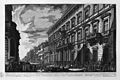
The Galleria Doria Pamphilj (often Doria Pamphilj Gallery or Doria Pamphili Gallery in English) is a large private art collection housed in the Palazzo Doria Pamphilj in Rome, Italy, between Via del Corso and Via della Gatta. The principal entrance is on the Via del Corso. (Until recently, the entrance to the gallery was from the Piazza del Collegio Romano.) The palace façade on Via del Corso is adjacent to a church, Santa Maria in Via Lata. Like the palace, it is still privately owned by the princely Roman family Doria Pamphili. Tours of the state rooms often culminate in concerts of Baroque and Renaissance music, paying tribute to the setting and the masterpieces it contains.
With some earlier and later exceptions, the bulk of the collection consists of works from the 16th and 17th centuries, a high proportion of them of exceptional quality.
The large collection of paintings, furniture and statuary has been assembled since the 16th century by the Doria, Pamphilj, Landi and Aldobrandini families now united through marriage and descent under the simplified surname Doria Pamphilj. The collection includes paintings and furnishings from Innocent X's Palazzo Pamphilj (in Piazza Navona), who bequeathed them to his nephew Camillo Pamphilj.
The Palazzo has grown over the centuries; it is likely to be the largest in Rome still in private ownership. The main collection is displayed in state rooms, including the chapel, complete with the mummified corpse of the family saint. However, the bulk is displayed in a series of four gilded and painted galleries surrounding a courtyard. An extensive suite of further rooms have now been converted to permanent well-lit galleries, containing the more medieval and Byzantine art in the collection.
The palace was renovated for the marriage of Andrea IV Doria Pamphilj Landi to Princess Leopoldina Maria of Savoy, daughter of Louis Victor, Prince of Carignan, and Christine of Hesse-Rotenburg in 1767. Work was carried out under the supervision of Francesco Nicoletti, an architect from Trapani.
Diego Velázquez's Portrait of Innocent X (previously Cardinal Giovan Battista Pamphilj, who became Pope in 1644) is considered to be the collection's masterpiece. Velázquez, while not idealizing the Pope's countenance, is not unflattering in the portrait; Innocent X's features were believed by his contemporaries to symbolise a despotic lifestyle and vindictive character. The portrait painted to commemorate the Holy Year was commissioned by his hedonistic sister-in-law Olimpia Maidalchini, who was his close confidante and adviser, and some say mistress. Since 1927, Velázquez's portrait has been placed in a specially designated small room along with a sculptured bust of the same pope by Gian Lorenzo Bernini. …
The family chapel was designed by architect Carlo Fontana in the late 17th century, but has since been altered. The ivory crucifix was carved by Ercole Ferrata.
The Saletta Gialla and Saletta Rossa contain Gobelins tapestries, including those depicting the signs of the zodiac by Claude Audran.
Sala del Poussin: Landscapes by Claude Lorrain. Birth of Adonis and the Rape of Adonis by Nicolas Poussin and Giacomo Eremiti.
1st Gallery: Mary Magdalene by Annibale Carracci; Christ in the House of the Pharisee by Ludovico Cigoli; Saint Roch with an Angel by Carlo Saraceni, and Tancred and Erminia by Guercino.
2nd Gallery (Galleria degli Specchi): Velázquez and Bernini portraits, antique Roman statues, and The Crossing of Red Sea by Antonio Tempesta.
Saletta del Seicento: Caravaggio's Penitent Magdalene and Rest on the Flight into Egypt
Saletta del Cinquecento: Double portrait by Raphael, Salome by Titian.
Saletta del Quattrocento: works by Ludovico Mazzolino and Antoniazzo Romano.
3rd Gallery: Saint Jerome by Lorenzo Lotto, Return of the Prodigal Son by Guercino; Madonna in Adoration of the Child by Guido Reni; Crucifixion by Marcello Venusti; Holy Family by Sassoferrato; Landscape with Hunting Scene by Paul Bril.
4th Gallery: bust of Olimpia Aldobrandini by Alessandro Algardi; Saint John the Baptist by Caravaggio; Christ in the Temple by Mazzolino.
Saletta degli Specchi: Landscape by Domenichino; Saint Joseph by Guercino; Angel by Titian, Christ in the Garden by Venusti.
Salone Aldobrandini: antique sculptures and marble reliefs by François Duquesnoy.
Room of Andrea Doria: St Anthony with a Donor by Jan Mabuse and the Portrait of Andrea Doria by Sebastiano del Piombo.
Green Salon: large mid-15th century Tournai tapestry with the medieval legend of Alexander the Great; bronze of Innocent X by Algardi; Portrait by Lotto; and Filippo Lippi's Annunciation.
Note: The Palazzo housing the Gallery Doria Pamphilj should not be confused with the Palazzo Pamphilj, in Rome's Piazza Navona, now the Brazilian Embassy. Nor should this palace be confused with a second Palazzo Doria-Pamphilj, a summer urban villa, in Valmontone near Rome; this palace, though badly damaged during the Second World War, is renowned for its late Baroque fresco series by Francesco Cozza, Pier Francesco Mola, and Mattia Preti.
Text from Wikipedia, the free encyclopedia, under CC BY-SA 4.0. Full article: «Galleria Doria Pamphilj».
Events and people from Wikidata (CC0).
Distances are as the crow flies, not walking or driving.


Galleria Doria Pamphilj is in Rome, in the province of Roma (Lazio), Italy. Address: Via del Corso, 305. GPS coordinates: 41.89798, 12.48156.
According to OpenStreetMap the opening hours are: Monday to Thursday: 9:00–19:00; Friday to Sunday: 10:00–20:00. Always check the official website before your visit.
There is an admission charge. Up-to-date prices are on the official website.
According to OpenStreetMap data, the site is partly wheelchair accessible.
Wikidata dates it to 1651.
Nearby you’ll find: Palazzo Doria-Pamphilj (0 m away), Via Lata (0 m away), Palazzo Mancini (100 m away).
Text. Wikipedia, the free encyclopedia (CC BY-SA 4.0).
Data. Wikidata (CC0); opening hours and contacts OpenStreetMap (ODbL).
Photos. Wikimedia Commons, author and licence on every image.
Updated 28 October 2026. All sources and licences