


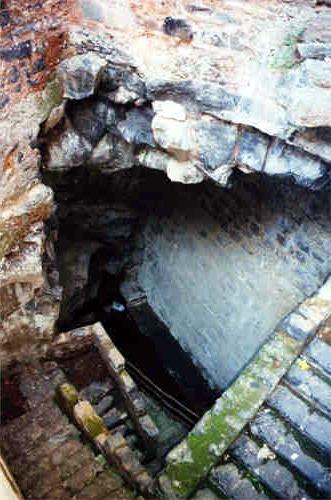


- UNESCO
Photo: Maurizio Moro5153, CC BY-SA 4.0 · Wikimedia Commons
Castle, 1239
Thirteenth century castle built on the will of King Federico II, Catania, Italy
Castello Ursino (Sicilian: Casteddu Ursinu, lit. 'Bear Castle'), also known as Castello Svevo di Catania, is a castle in Catania, Sicily, southern Italy. It was built in the 13th century as a royal castle of the Kingdom of Sicily, and is mostly known for its role in the Sicilian Vespers, when it became the seat of the Sicilian Parliament. The castle is in good condition today, and it is open to the public as a museum.
Castello Ursino was built between 1239 and 1250, as one of the royal castles of Emperor Frederick II, King of Sicily, closing a chapter on the turbulent time in Sicily that followed the death of his predecessor, William II. Local lords had attempted to assert independence, and in 1220 Frederick II had ordered the destruction of all non-royal castles in Sicily. Castello Ursino was built to stress royal power as well as for the defence of the capital, and was considered impregnable at the time.
In 1295, during the Sicilian Vespers, the Parliament which declared deposed James II of Aragon as King of Sicily, replacing him with Frederick III, was held here. The following year it was captured by Robert of Anjou but was later again in Aragonese hands.
King Frederick III resided in the castle, as well as his successors Peter II, Louis, Frederick IV and Maria. Here the latter was kidnapped by Guglielmo Raimondo III Moncada to avoid her marriage with Gian Galeazzo Visconti (1392). King Martin I held also his court in the castle.
After the move of the capital away from Catania and the appearance of powder weapons, the castle lost its military role and was used as a prison. It is one of the few buildings in Catania to have survived the earthquake of 1693.
When the castle was first built, it was on a cliff looking out to sea, however as the result of volcanic eruptions, and earthquakes, it is now a kilometre inland. The former moat too in the 17th century was filled with lava from an eruption by Mount Etna. Its present location, surrounded by streets and shops in a typical Catania piazza, may strike some visitors as unusual.
The castle was acquired by the city of Catania in 1932, and it was restored. The Museo Civico opened in the restored castle on 20 October 1934. Today, the museum houses artifacts and artwork from the castle as well as the greater geographical area. These items date from the Classical era onward, representing the diverse influences throughout Sicilian history. Frequently, the castle hosts also temporary exhibitions or artistic events (theatrical representations and concerts). It is also possible to use the historical site to celebrate a civil union.
Further restoration work was carried out in November 2009.
This houses the museum's ticket office as well as Jewish inscriptions and inscriptions from the medieval senate-house where the decision was taken to expel the city's Jewish population in 1492, including a copy of the Julia Fiorentina inscription from the Louvre. It also houses a medieval keystone, a 16th-century cannon, parts of an ancient Roman mosaic showing the months, a 16th-century inscription mentioning a castellan from Toledo and a statue of Ignazio Paternò Castello Principe di Biscari, by Antonio Calì, displayed with a copy of his book Viaggio per le Antichità della Sicilia.
The room is, however, named after its large collection of weapons.
This room and those following it display finds from the city's Roman theatre, including a huge headless statue, a torso of Hermes and a plinth found by Biscari in 1770 showing a trophy crowned by two Victories and two barbarian prisoners on its sides.
This houses fragments of Roman mosaic, statue of Hercules and a plaster copy of Costanza d'Aragona's sarcophagus.
The main works exhibited here include:
a mosaic of putti from the Terme Achilliane, showing them inviting you to enjoy your stay in the baths ("Vtere Feliciter")
fragment of a frieze showing Apollo and Artemis in a gigantomachy, 3rd century AD
male torso, dedicated to Jupiter, found near the monastery of Sant'Agostino by principe Biscari in 1737.
statue of Hercules in a lionskin just after killing the Nemean Lion
statue of Hercules resting, Farnese Hercules type, holding one of the apples of the Hesperides
plinth with dolphins
This houses displays of clay statues of subjects such as Aphrodite, a small dog fighting a cockerel, a nymph on a rock and a prehistoric head. Particularly notable is a colossal ram, whilst the most important work in the room is a fragment of a cavalryman, probably from a historiated column, found near porta Carlo V.
Named after its previous use as a storehouse for salt, it now houses a mosaic showing a head, thought to be an allegory for Africa, and a bust of an Egyptian woman. …
Text from Wikipedia, the free encyclopedia, under CC BY-SA 4.0. Full article: «Castello Ursino».
Events and people from Wikidata (CC0).
Distances are as the crow flies, not walking or driving.


Castello Ursino is in Catania, in the province of Catania (Sicily), Italy. Address: Piazza Federico di Svevia. GPS coordinates: 37.49897, 15.08439.
Wikidata dates it to 1239.
Nearby you’ll find: Civic Museum of Catania (0 m away), Mura di Carlo V (100 m away), Pozzo di Gammazita (200 m away).
Text. Wikipedia, the free encyclopedia (CC BY-SA 4.0).
Data. Wikidata (CC0); opening hours and contacts OpenStreetMap (ODbL).
Photos. Wikimedia Commons, author and licence on every image.
Updated 28 October 2026. All sources and licences