
- UNESCO

Photo Agostino Artnoir Sella, CC BY-SA 2.0
Siracusa · Sicily
In Syracuse the atlas lists 106 historic places: 44 archaeological sites, 21 historic villas and palaces, 14 museums, 11 fortresses and towers, 5 lighthouses, 4 abbeys and monasteries, 4 castles and 3 historic theatres.
Of these, 12 list opening hours, 1 has free entry and 4 are part of a UNESCO World Heritage Site.
Don’t miss: Museo archeologico regionale Paolo Orsi (1878), museum in Italy.
By date of construction, the most common period is the Modern era (50% of dated places) and Antiquity (20% of dated places).
Syracuse (Italian: Siracusa, Sicilian: Sarausa or Seragusa) is a city of 122,000 people (2017) on the eastern coast of Sicily. The city has a rich Greek and Roman history, culture, amphitheatres, and architecture. Syracuse is a good base for exploring south-east Sicily, including the Baroque towns of Ragusa and Noto, several archaeological sites, and the lively city of Catania. "Syracuse and the Rocky Necropolis of Pantalica" have been listed on the UNESCO World Heritage list.
Text from Wikivoyage, CC BY-SA, abridged · Wikivoyage


 Greek Dockyard
 Catacombs in Syracuse
 Temple of Olympian Zeus
 Gymnasium
 Catacombs of San Giovanni Evangelista
 Stentinello
 Temple of Apollo
 Terme di Dafne
 Via dei Sepolcri
 Roman amphitheatre of Syracuse
 Arco augusteo
 Altar of Hieron
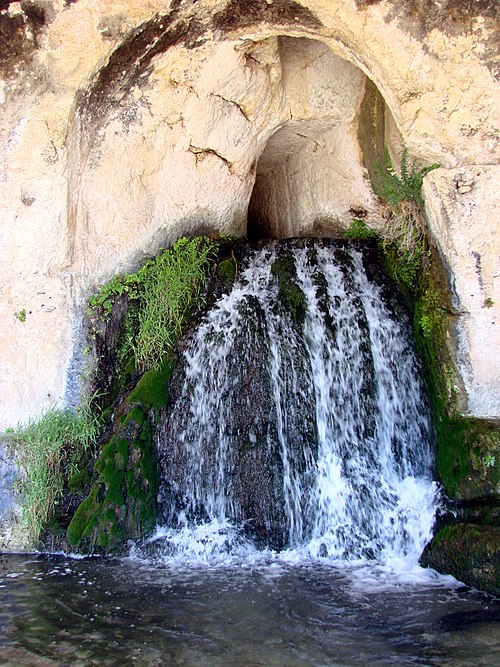 Grotta del Ninfeo
 Latomia dei Cappuccini
 Necropolis of Cassibile
 Foro siracusano
 Necropoli Santa Panagia
 Archaic Greek theatre of Syracuse Epipoli Sanctuary of Demeter and Kore Bagno ebraico - Mikveh Acquedotto del Paradiso Area archeologica Santa Panagia Basilica di San Pietro ad Baias Catacomba Belloni Catacombe di Vigna Cassia Ipogeo Gallitto Ipogeri La Galera Latomie Beneventano-Grottasanta


 Archbishop's Palace
 Palazzo Impellizzeri
 Palazzo Arezzo della Targia
 Hotel des Ètrangers
 Reimann's Villa
 Palazzo dell'Orologio
 Palazzo Gargallo del Carmine
 Palazzo Migliaccio
 Palazzo Bonanno Toscano
 Palazzo Bongiovanni
 Palazzo Gargallo Interlandi
 Palazzo Lanza – Bucceri
 Palazzo Pupillo
 Palazzo Bonanno Landolina


By plane: Catania-Fontanarossa airport is 50 km north of Syracuse. Inter-city buses between Catania and Syracuse all call at the airport, journey time is just over an hour. Otherwise, take a bus or taxi from the airport to Catania railway station, from where there are frequent trains to Syracuse.
Ragusa airport (Aeroporto di Comiso "Pio La Torre") is closer but has fewer flights, and no onward public transport.
By bus: Intercity bus hub, Corso Umberto, 196 (next to the railway station). Regular bus connections with Catania, Noto, Modica, Ragusa and Gela other destinations nearby provided by Interbus and A.S.T.. There are also daily buses to Palermo (Interbus), and long distance ones towards Messina, Naples and Rome (Bus Ticket and Sais Trasporti).
Some regional buses (Interbus, etc.) make a number of stops in the city, so check with their website if one of them would be more suitable. Tickets for this particular buses can also be bought on board.
By train: Direct trains run along the coast from Messina eight times a day (2 hr 30 min), via Taormina-Giardini and Catania.
There are two or three direct trains daily from Rome (11 hours) via Naples (9 hours) and the Straits ferry.
There are five train connections a day from Palermo via Enna and Catania (4 hr 30 min). Connections via Messina take 7 hours.
Six regional trains run M-Sa via Noto, Pozzallo (one hour; for the ferry to Malta), Modica and Ragusa (two hours) to Gela. No Sunday service.
Text from Wikivoyage, CC BY-SA, abridged · Wikivoyage
Isola di Ortigia: Ortigia island is the oldest part of Syracuse. It's connected to the rest of the city by two bridges. Boat trips leave from the channel here.
Tempio di Apollo. The first sight you reach after crossing the bridge are these remnants of a temple to Apollo, with two columns and part of the wall. You can't enter, just look over the railings. Cattedrale della Natività di Maria Santissima (Santa Maria delle Colonne). This was built as a Greek Temple of Athena in the 5th century BC on older foundations. In the 7th century it was converted to a church, incorporating most of its former construction including the Doric columns. In the 9th century, it became a mosque; in the 11th century the Normans converted it back into a church adding a new roof with mosaics in the apses. Chiesa di Santa Lucia alla Badia, Piazza Duomo. In the apse, behind the altar, there was a large painting of the "Burial of Saint Lucy" by Caravaggio which was returned to Chiesa di Santa Lucia al Sepolcro. Free.
The midpoint of Ortigia is Piazza Archimedes, honoring the famous citizen who lived and worked here circa 287-212 BCE. His brilliance lay in combining pure mathematical reasoning (e.g.
Text from Wikivoyage, CC BY-SA, abridged · Wikivoyage · Underlined names link to our own pages.


