
- Free 1st Sunday
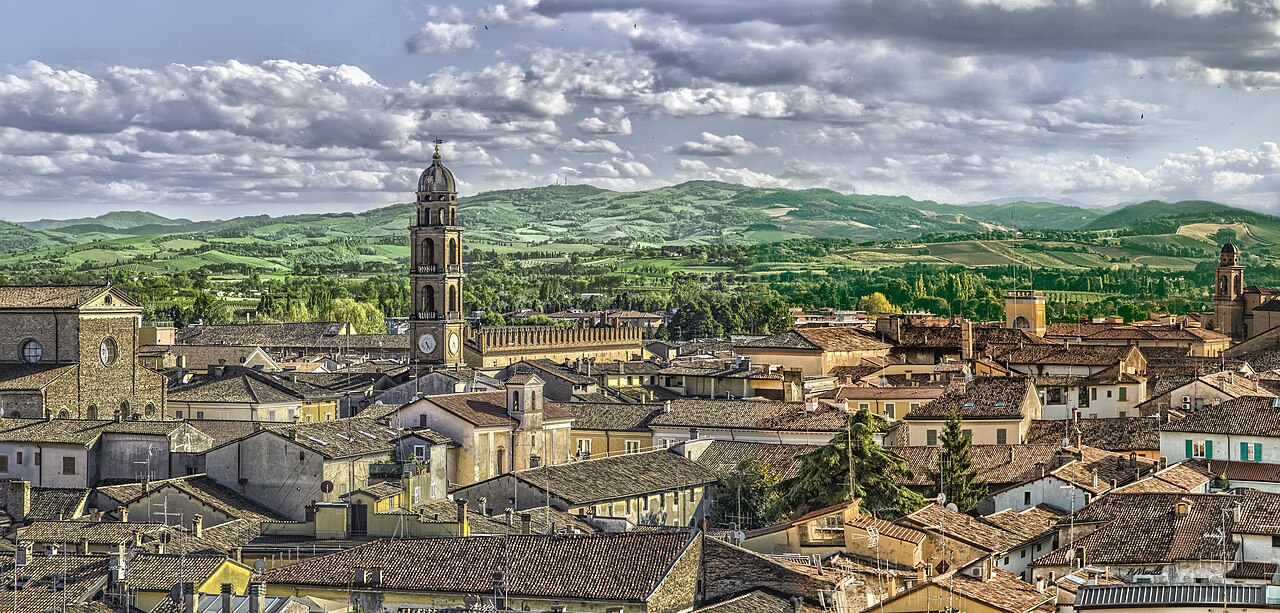
Photo Pmorelli1969, CC BY-SA 4.0
Ravenna · Emilia-Romagna
In Faenza the atlas lists 66 historic places: 21 historic villas and palaces, 18 abbeys and monasteries, 15 museums, 8 fortresses and towers, 2 historic theatres, 1 castle and 1 archaeological site.
Of these, 2 list opening hours and 2 have free entry.
Don’t miss: Museo internazionale delle ceramiche (1908), ceramic art museum in Faenza, Ravenna.
By date of construction, the most common period is the Early modern period (38% of dated places) and the Middle Ages (31% of dated places).
Faenza is a comune of 59,000 people (2020) in Emilia-Romagna. Faenza, at the foot of the first sub-apennine hills, is surrounded by an agricultural region including vineyards in the hills, and cultivated land with traces of the ancient Roman land-division system, and fertile market gardens in the plains. In the nearby green valleys of the rivers Samoggia and Lamone there are a great number of 18th and 19th century stately homes, set in extensive grounds or preceded by long cypress-lined driveways.
Text from Wikivoyage, CC BY-SA, abridged · Wikivoyage

Faenza (RA)


Museo Internazionale delle Ceramiche (MIC). International Ceramics Museum is one of the most important museums of art ceramics in the world. In its collections there are works of Italian ceramic workshops from the Middle Ages to 19th nineteenth century, and also from Middle East, Mediterranean area including the Hellenistic era, pre-Columbian and Islamic. Palazzo Milzetti (Museo Nazionale dell'età neoclassica in Romagna). Cattedrale di San Pietro apostolo (Duomo). A Renaissance basilica. Construction began in 1474. Teatro Masini. Free (by prior booking). Chiesa della Commenda, Piazza Frà Saba. An old Romanesque church.
Text from Wikivoyage, CC BY-SA, abridged · Wikivoyage · Underlined names link to our own pages.


