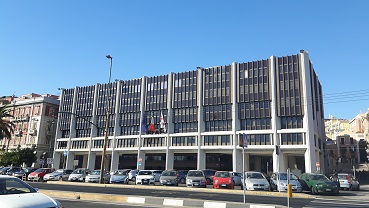
- Free 1st Sunday

Photo cristianocani, CC BY 2.0
Cagliari · Sardinia
In Cagliari the atlas lists 99 historic places: 31 museums, 26 archaeological sites, 18 historic villas and palaces, 14 fortresses and towers, 6 historic theatres, 2 abbeys and monasteries and 2 castles.
Of these, 11 list opening hours and 1 has free entry.
Don’t miss: National Archaeological Museum of Cagliari (1800), National Archaeological Museum of Cagliari.
By date of construction, the most common period is the Modern era (48% of dated places) and the Early modern period (22% of dated places).
Cagliari (Sardinian: Casteddu, "castle"; Latin: Caralis) is the capital city of the Italian island of Sardinia.
Cagliari is an Italian metropolitan city and the capital of an autonomous region of the island of Sardinia. The city has about 155,000 inhabitants (2015), while its metropolitan area (including 16 other nearby municipalities) has more than 431,000 inhabitants (2017).
Infopoint, Via Roma n. 145 (Palazzo Comunale), ☏ +39 070 6777397, Apr-Oct: 09:00-20:00; Nov-Mar: Mon-Sat 10:00-13:00 14:00-17:00, Sun 10:00-13:00.
You can download audio and PDF guides from the Cagliari tourist website organized by 6 walking tours.
Text from Wikivoyage, CC BY-SA, abridged · Wikivoyage


 Museo civico d'arte siamese Stefano Cardu
 EXMA - Exhibiting and Moving Arts
 Mem - Mediterranean Media Library
 Museo Ferroviario Sardo
 Museo di Bonaria
 Lazzaretto di Cagliari
 Santa Restituta
 Sardinian Art Collection "Luigi Piloni"
 Galleria rifugio di Don Bosco
 Passeggiata coperta Bastione Saint Remy Museo Sant'Eulalia Museo dell'arciconfraternita dei Genovesi Museo del Mattoncino Karalisbrick Museo di storia naturale Aquilegia Museo etnografico regionale Collezione Luigi Cocco Spazio San Pancrazio Centro della cultura contadina Villa Muscas Museo del Duomo di Cagliari Museo di mineralogia "Leonardo De Prunner" Museo Fra Nicola da Gesturi Ex Regio Museo Archeologico Casa Massonica MUACC Museo universitario delle arti e delle culture contemporanee Collezione Archeologica "Evan Gorga" Museo di Antropologia Sarda e di Zoologia


By plane: Aeroporto di Cagliari-Elmas (CAG IATA) (next to Elmas, approximately 6 km northwest from central Cagliari). The busiest airport in Sardinia. Cagliari is served directly by a number of domestic and international flights, while well-connected Milan-Linate and Rome-Fiumicino airports can also serve as intermediate stops to this airport.
Ground connections: By train
Stazione di Elmas Aeroporto (next to the airport). Trenitalia railways connect the airport to the city (10-min ride, every 20-min or so) and the rest of the island.
By taxi
A number of taxi companies serve the airport.
By car
The airport is on the SS130 road.
By boat: Stazione Marittima di Cagliari. Connections by Tirrenia ferries with Civitavecchia via Arbatax (the ferry leaves Civitavecchia at 19:00 and arrives at 08:00), Naples and Palermo. Other ferry connections to Cagliari by Grimaldi Lines can be found online here.
By train: Stazione di Cagliari (Cagliari railway station). Connections to Elmas airport, Sassari (and the ferry terminal at Porto Torres), Olbia (and the ferry terminal at Golfo Aranci), Oristano, Iglesias and Carbonia Serbariu.
By bus: While ARST is the main regional bus service provider to the city, a few other companies are also operate in the region. Notably, Turmo Travel runs buses to Olbia (and the airport) and Santa Teresa Gallura.
Stazione ARST Autolinee (regional bus terminal), Piazza Matteotti, toll-free: +39 800865042.
Text from Wikivoyage, CC BY-SA, abridged · Wikivoyage
The best thing is to walk through the old city and discover it. Almost everything you have to see in a quick visit of Cagliari can be reached on foot. Plus there are some spectacular views, for example of the Gulf of Cagliari seen from the old city that are best seen from points that are not reachable by car.
Old town: The core of the old town is the Castello district which lies on top of a hill facing the Gulf of Cagliari.
Cattedrale di Santa Maria di Castello (Cathedral of St. Mary and St. Cecilia), Piazza Palazzo 4/a. Cagliari Cathedral is a beautiful 13th-century church with Neo-Gothic façade. Do not miss the Shrine of the Martyrs, excavated out of the rock. Free. Palazzo di Città (Ex Palazzo di Città). Palazzo Regio (Viceregio). The building was the residence of the royal representatives during the 14th century. Bastione di Saint Remy (Piazza Costituzione). This impressive fortification was built in the late 19th century. Climb the huge stairways to be rewarded by a stunning view of the city, the sea and the mountains. Or use the elevator. free. Bastione di Santa Croce. Porta Cristina. The gate built in 1825 in neoclassical style. Chiostro di San Domenico, Via XXIV Maggio.
Text from Wikivoyage, CC BY-SA, abridged · Wikivoyage · Underlined names link to our own pages.