


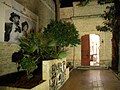


Photo: Visit Abruzzo, CC BY-SA 2.0 · Wikimedia Commons
Historic villa / palace, 1935
Palazzo di Città
Town hall of Pescara
At a glance
- Period
- Modern era, 1935
- Style
- Rationalism
- Architect
- Vincenzo Pilotti
- Coordinates
- 42°27′51″ N, 14°12′51″ E
- Address
- Piazza Italia
History and description
The Pescara Town Hall (Palazzo di Città) is a historic building in Pescara, serving as the seat of the city council and the mayor's offices.
Constructed in 1935 based on a design by Vincenzo Pilotti, the building is one of the most emblematic examples of Rationalist architecture from the Fascist regime in the city. Together with Piazza Italia, it forms what was conceived as the administrative center of Pescara, created in the 1930s following the merger with the municipality of Castellammare Adriatico and the elevation of the city to provincial capital. Along with the Clock Tower, the Palazzo di Città is considered one of the symbols of Pescara's citizenship.
History
At the beginning of the 20th century, the rapid development of the urban centers of Pescara and Castellammare Adriatico led to their unification, decreeing the creation of the Province of Pescara in 1927. Already in the early 1920s, local administrative authorities began to reconsider the urban layout of the territory, expressing a clear intention to give a monumental appearance to the heart of the new city.
The selected area was the Vallicella – a zone located on the border between the two boroughs, close to the northern bank of the Aterno-Pescara river – which represented a compromise between the demands of Castellammare Adriatico, which claimed a specific role in the formation of the city after conceding on the name, and those of Pescara, which was not willing to yield dominance, leveraging support from Gabriele D'Annunzio. The podestà Berardo Montani entrusted the project to architect Vincenzo Pilotti, who envisioned a large octagonal square to concentrate the main public buildings of the new capital, including the Pescara town hall.
Designed by Pilotti in August 1933, the Palazzo di Città was completed and inaugurated two years later along with Piazza dei Vestini, now known as Piazza Italia. A series of changes made in 1935 to Pescara's urban plan reduced the original scenic appearance of the square. However, the complex comprising Palazzo di Città, the Clock Tower, and the Government Palace was built very quickly by 1936, adhering to the characteristics of Fascist regime Rationalist architecture, reflecting Pilotti's alignment with the academic classicism favored by Fascist hierarchs. Originally, the construction of Palazzo di Città included, on the side facing the river, a landing stage specifically designed by D'Annunzio for his seaplane trips. Until the advent of World War II, the loggia of the civic tower was topped with the iron inscription "duce".
Description
Palazzo di Città is one of the architectures that define Piazza Italia. Built according to the characteristics of early 20th-century Italian rationalism, the building is imbued with the monumental emphasis of the Fascist period and interprets a solemn vision of civil power, based on the values of man and lineage. The palace develops over three levels, following an L-shaped plan that places the bell tower at the intersection of the two bodies. The building is entirely constructed in travertine and bricks – which create a color contrast – and is distinguished by its formal and material relationships. The main entrance, located within the L, is preceded by a wide staircase and topped by a stone inscription bearing the name of the palace. The area in front is dedicated to Vincenzo Chiola, mayor of the city in the 1950s, as commemorated by a plaque on the entrance.
On the side of the same facade, there are a series of marble niches containing three female statues that allegorically represent poetic and artistic glory, as well as the sanctity of the place. The side facing the river is decorated with three male statues representing the abundance of river waters, a fisherman, and a miner. The side entrance is topped by a marble inscription "Ave dulce vatis flumen / Ave vetus urbis numen" ("Hail, sweet river of the Bard / Hail, ancient deity of the city"), taken from a 1927 couplet in homage to Gabriele D'Annunzio, dictated by Domenico Tinozzi as the first president of the newly established province of Pescara. …
Text from Wikipedia, the free encyclopedia, under CC BY-SA 4.0. Full article: «Palazzo di Città».
Timeline
- 1935Built
Events and people from Wikidata (CC0).
Photos
Getting there
Pescara Porta NuovaTrain, nearest
800 m as the crow flies
Palazzo di CittàPiazza Italia
Aeroporto internazionale d'Abruzzo Pasquale Liberi4.5 km
Distances are as the crow flies, not walking or driving.
Loading map…
Nearby
See on the mapMore historic villas and palaces in Abruzzo


Frequently asked questions
Where is Palazzo di Città?
Palazzo di Città is in Pescara, in the province of Pescara (Abruzzo), Italy. Address: Piazza Italia. GPS coordinates: 42.46423, 14.21410.
How old is Palazzo di Città?
Wikidata dates it to 1935.
What else is there to see near Palazzo di Città?
Nearby you’ll find: Teatro Massimo (100 m away), Museo delle genti d'Abruzzo (200 m away), Pescara fortress (300 m away).
Sources and licences
Text. Wikipedia, the free encyclopedia (CC BY-SA 4.0).
Data. Wikidata (CC0); opening hours and contacts OpenStreetMap (ODbL).
Photos. Wikimedia Commons, author and licence on every image.
Credits for the 9 photos
- Palazzo di Città, Pescara — Visit Abruzzo, CC BY-SA 2.0
- Palazzo di Città, Pescara (2) — visit_abruzzo, CC BY-SA 2.0
- Pescara - Palazzo di Città - 2025-09-03 22-32-09 001 — Terragio67, CC BY-SA 4.0
- Palazzo del Municipio - panoramio (1) — maury3001, CC BY 3.0
- Canal port in Pescara — Visit Abruzzo, CC BY-SA 2.0
- Comune di Pescara - Italy (2022) — Terragio67, CC BY-SA 4.0
- Comune di pescara — Sayatek, CC BY-SA 4.0
- Pescara - foce del fiume e torre municipio — Luca Aless, CC BY-SA 4.0
- Pescara - Municipio 01 — Luca Aless, CC BY-SA 4.0
Updated 28 October 2026. All sources and licences