



- Free 1st Sunday
Photo: G.Frau, CC BY-SA 4.0 · Wikimedia Commons
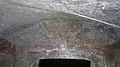
The Civic Archaeological Museum "Alle Clarisse" of Ozieri is one of the most important museums in Northern Sardinia. Since 2003 it has been transferred to the former Poor Clares' convent. Its showcases contain the most significant finds found in the municipal area of Ozieri: the materials on display date from prehistoric times to the Modern Age.
The Civic Archaeological Museum, inaugurated in 1985 in a Franciscan convent of the sixteenth century, moved in 2003 to the eighteenth-century former convent of the Recoletas de Santa Clara, restored and renovated for that purpose. The convent, officially established in 1753 to house the Poor Clares of Tempio, was instead occupied by the nuns of Orosei, due to the poverty in which they lived. Due to the Ratazzi law, in 1889 the building was requisitioned to house the military, that turned it into the "Pietro Micca" barrack. In 1953 the military left the building and the following year a part of it was donated to the church, while the other part, which remained in the Municipality's ownership, was used for school and social activities and eventually for public housing. Following the regional and European funding for the recovery of monumental buildings, that made it possible, the building was restored and, after the end of the restoration in 2002, became the new headquarters of the Civic Archaeological Museum of Ozieri and for this reason called "Alle Clarisse" ("At the Poor Clares"). The original entrance was located in Azuni street and led to three vaulted rooms, connected to each other and with a large vaulted corridor.
The military moved the entrance exactly on the opposite side: reinforced the old Spanish walls, transforming them in the current ramparts and building an embankment that became the parade ground, built a staircase in granite, which became the main entrance of the structure, and added an upper floor on part of the structure, that for that reason differs from the other part of the structure, being covered by Piedmontese-style timber trusses.
Outside: Courtyard – in the courtyard there is a small lapidary, that houses an arched stele from a Giants' grave, the Nuragic basins and the lintel of the rural Church of S. Luca.
First floor:
ROOM I: Prehistory (Pre-Nuragic Sardinia) – The Middle Neolithic (4,900 – 4,400 BC) is represented by ceramics, a mother goddess in bone and a stone ring from the Bariles, Baldosa and Bisarcio sites. The Late Sardinian Neolithic (4,100 – 3,500 BC), mainly characterized by the San Michele or Ozieri culture, is represented by materials coming mainly from the cave of the same name and from the contiguous one of Mara, that return a panorama of the imaginative ceramics of the period belonging to both the horizon of the S. Ciriaco Late Neolithic and the classical Ozieri phase of the final Neolithic, among all the famous Pyx, and the early Sub – Ozieri Eneolithic.
ROOM II: The Nuragic civilization – This room is dedicated to the territory during the Nuragic civilization, which spans from the Bronze and Iron ages up to the Roman one. The presence of metal deposits and agro-pastoral resources and their exploitation caused an important frequentation of the area, evidenced today by 123 nuraghes and other monuments of the time. The ceramics, including braziers, boilers, askòs, loom weights and spindles, stone tools, such as mortars, smoothers, millstones and mammillary ashlars speak of diversified activities. The Aegean – Cypriot ingot from Bisarcio, and other finds made up of metal objects, document the importance of the territory, which was placed at the center of communication routes already in the prehistoric age. …
Text from Wikipedia, the free encyclopedia, under CC BY-SA 4.0. Full article: «Ozieri civic archaeological museum».
Distances are as the crow flies, not walking or driving.


Ozieri civic archaeological museum is in Ozieri, in the province of Sassari (Sardinia), Italy. Address: Piazza Baden Powell, 07014 Otieri/Ozieri. GPS coordinates: 40.58588, 9.00373.
According to OpenStreetMap the opening hours are: Tu-Fr 09:00-13:00,15:00-19:00; Sa,Su 10:00-13:00,15:00-18:00; easter off; Dec 25,Jan 01,Nov 01,13,Dec 08 off. Always check the official website before your visit.
Nearby you’ll find: Convento di San Francesco (300 m away), Museo Taverna dell'Aquila (300 m away), Grotte di San Michele (600 m away).
Text. Wikipedia, the free encyclopedia (CC BY-SA 4.0).
Data. Wikidata (CC0); opening hours and contacts OpenStreetMap (ODbL).
Photos. Wikimedia Commons, author and licence on every image.
Updated 28 October 2026. All sources and licences