





Photo: sailko, CC BY-SA 3.0 · Wikimedia Commons
Castle
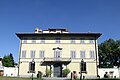
Castello di Montalto
Building in Castelnuovo Berardenga, Italy
At a glance
- Type
- Castle
- Style
- Medieval architecture
- Coordinates
- 43°22′05″ N, 11°32′49″ E
History and description
The castle of Montalto lies east of Siena, Italy, in an area known as ‘la Berardenga’, which is an extensive territory in the Chianti region of Tuscany. Its position right on the border between the territories of Siena and Florence gave it great strategic importance during the 13th, 14th and 15th centuries. Much of the castle is from medieval times and parts date back to 1000 or earlier; extensive restorations were performed in the 16th century and again in the 19th century.
Description
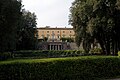
Montalto stands on a hill overlooking the upper Ambra river. An entry archway surmounted by a turret leads into a courtyard with a well. To the right is the church of San Martino, and a fresco on the inside of the entry tower depicts the famous scene of the saint sharing his cloak with a beggar. To the left is a loggia with four arches from which one has access to the main villa and the Sala d’Armi (Hall of Arms) with its large fireplace and collection of lances, armor and weapons dating from the 14th century onward. The upper portion of the walls in the Sala d’Armi is decorated with frescoes depicting farmhouses belonging to the castle in the 16th century and vignettes of every-day activities on the land of the Berardenga (hunting, farming, etc.).
The watchtower has loop-holes and ramparts which hint to the castle's past as a stronghold on the highly contested border between the rivaling towns of Siena and Florence.
The complex includes six other buildings and is surrounded by a wall of stone and brick attesting to repeated war damage and reconstructions. Ground fill within the wall circle brings ground level to within 1 meter of the top of the wall on the inner side.
History
The tower appears to have been constructed by the Longobards in the 6th or 7th century, but the main part of the castle was erected during the first millennium by early descendants of Winigis, the first count of Siena under the Franks in the 9th century, and his son Berard from whom the Berardenga land takes its name. There are many references to the Berardeschi (= descendants of Berard) family in documents relating to Montalto, the area surrounding it, and the nearby Monastery of San Salvatore a Fontanabuona that was founded by Winigis in 867 and later expanded by his sons Raineri and Berard.
The earliest extant documents regarding the castle are from the 11th century, and imply that Montalto was already a well-established community by then. A census document from 1202 shows over 40 families living in its court (which included not only the castle but the land belonging to it as well). However, there are a number of documents between 1104 and 1212 registering donations and sales of land to others (including the nearby Monastery), indicating perhaps that the Berardeschi family may have been encountering increasing economic difficulties.
Montalto overlooked an important medieval road that was a gateway to the Mediterranean Sea for Arezzo’s territories, and was of great strategic importance to Siena because of its position right on the border between the lands of Siena and those of Florence and its allies.
The Florentines aimed to put all of Tuscany under their control; Siena on its part wished not only to retain its independence, but also to annex the town of Montepulciano which controlled the main trading route between France and Rome. From 1201 to 1553 Florence and Siena were eternally at war with each other, and the castle of Montalto was therefore often under attack. …
Present day
Starting in the 1950s and continuing through the 1970s, small scale farming in Italy became less profitable and farmers abandoned the land to search for work in larger towns. This agricultural exodus left Montalto without a regular farming staff, and it became a burden to the Palmieri heirs. In 1970 the last members of the Palmieri family, the Princess Sobilia Palmieri Carafa di Roccella and her sister Contessa Vittoria Palmieri Forquet, ceded the castle to the former's cousin Giovanni Coda Nunziante, a professor of agricultural economics from Naples. The land is still cultivated, but to supplement the income from agriculture many abandoned buildings were restored as vacation homes. Currently the estate is used for organic farming and for “Agriturismo” (vacation rentals in a country/farm setting).
The current estate farm is certified organic and encompasses an area of 270 hectares, about 650 acres (2.6 km2). While two thirds are woodlands, the rest is cultivated. Annual crops include wheat, sunflowers, alfalfa, canola and others, depending on the year. A portion of the land is planted in olive groves. Montalto's lands are also used for honey production by local bee keepers.
Text from Wikipedia, the free encyclopedia, under CC BY-SA 4.0. Full article: «Castello di Montalto».
Photos
Getting there
Castelnuovo BerardengaTrain, nearest
8.4 km as the crow flies
Castello di Montalto
Distances are as the crow flies, not walking or driving.
Loading map…
Nearby
See on the mapMore castles in Tuscany


Frequently asked questions
Where is Castello di Montalto?
Castello di Montalto is in Castelnuovo Berardenga, in the province of Siena (Tuscany), Italy. GPS coordinates: 43.36815, 11.54702.
What else is there to see near Castello di Montalto?
Nearby you’ll find: San Salvatore a Fontebona (2.3 km away), Villa Arceno (3.1 km away), Villa di Sestano (4.1 km away).
Sources and licences
Text. Wikipedia, the free encyclopedia (CC BY-SA 4.0).
Data. Wikidata (CC0); opening hours and contacts OpenStreetMap (ODbL).
Photos. Wikimedia Commons, author and licence on every image.
Credits for the 4 photos
- Castello di montalto, 01 — sailko, CC BY-SA 3.0
- Castello di montalto, cappella, int. 02 — sailko, CC BY-SA 3.0
- Castello di montalto, cortile con loggia — sailko, CC BY-SA 3.0
- Castello di montalto, torre 02 — sailko, CC BY-SA 3.0
Updated 28 October 2026. All sources and licences